

New CA Law Aims To Slash Gas Prices – But It Might Not Save Drivers Money
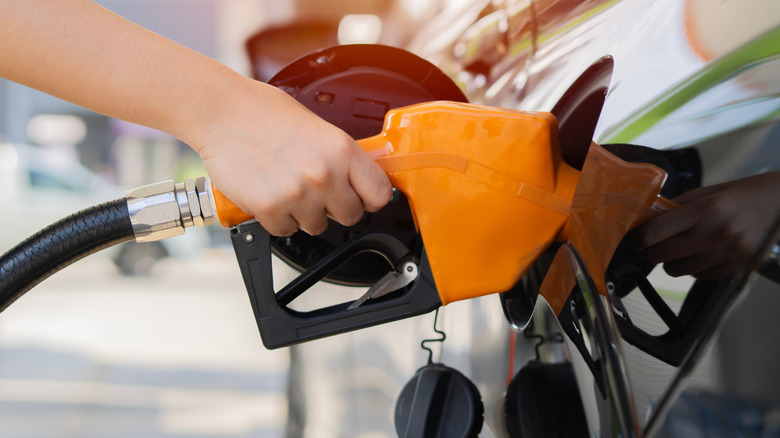
California consistently has the highest gas prices in the country. As of October 2025, drivers in the Golden State were paying on average $1.58 more per gallon than any other driver anywhere in the U.S., including Hawaii, which is often dinged as one of the most expensive states. There are several reasons why gas is sky-high there, including state taxes and additional fees, environmental compliance costs that can add more than $0.50 per gallon, and mandated special blends that are intended to reduce pollution and improve air quality.
The environmental initiatives seem logical and timely, but it's still a bitter pill to swallow for many state residents, especially considering that gas prices once hit almost $10 per gallon in certain parts of the state! In September 2025, state lawmakers passed a bill that allows the sale of E15, a blend of gasoline that contains 15% ethanol. This blend is sold in every other state, though the majority of gasoline sold in the U.S. is still E10, with 10% ethanol and 90% petroleum. A study by the University of California estimated that this fuel could lower gas prices in California by as much as $0.20 per gallon, and Governor Gavin Newsom signed the bill in early October.
Despite passing and signing the bill, California still has roadblocks to full implementation of E15, and if it does hit gas stations permanently, its status as a potential "alternative fuel" could mean that it won't save drivers any pain at the pump.
Uncertain future for E15 in California
It seems like a simple enough concept. A cheaper blend means cheaper gas prices, right? Maybe. In California, the new bill allows blends with 10.5% up to 15% of ethanol to be sold only until the California Air Resources Board (CARB) finishes an assessment of the fuel. At that point, the state will tighten up the rules and regulations surrounding the sale of E15, or halt sales of the blend altogether if CARB finds that it does not meet the state's air quality regulations.
If CARB does allow sales to continue, it could go one of two ways. The board could revise the standards that are already in place to include E15, which would allow gas stations to stock the blend in regular pumps. Or it could classify E15 as an alternative fuel, like biodiesel. This would mean that gas stations would have to sell E15 with special pumps dedicated only to that type of fuel.
According to Ethanol Producer Magazine, CARB claims that classifying E15 as an alternative fuel would make it easier and faster to market, but it will, in reality, increase the cost for gas stations that would need special equipment just to sell it. It also has the potential to confuse drivers, who may think E15 is not meant for standard vehicles. While available in every state, E15 is sold at only about 3,000 gas stations in the U.S., and it appears hurdles remain for its future in California.