

How Much It Could Actually Cost You To Run An Electric Heater This Winter
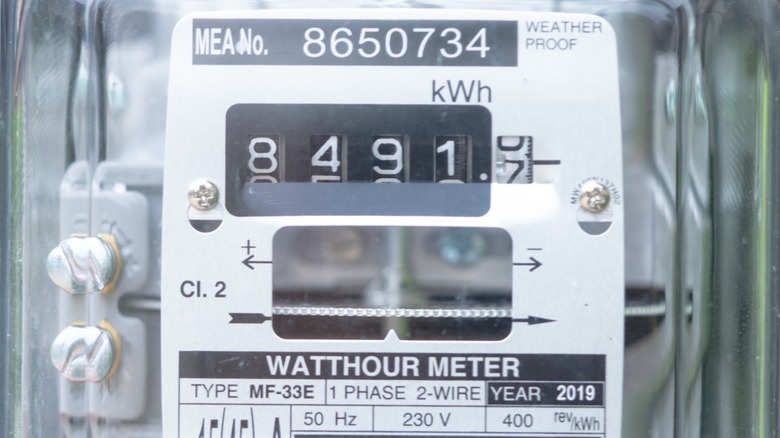
Many homes in the United States have gas or oil heating systems, but others rely on electricity from wall outlets to stay warm in the winter. The two main factors in home heating costs are the severity of winter and electricity cost, both of which depend on location. Electric companies sell power in kilowatt hours(kWh); 1 kWh equals 1,000 watts used for one hour. this can also break down into 500 watts used over two hours or 2,000 watts for 30 minutes. Residents of large cities typically pay more per kWh than people in smaller cities or rural areas. For example, Los Angles residents pay $0.30/kWh while those in Oklahoma City pay just $.0.12/kWh. The average Idaho resident pays a little less than that, while in Hawaii the cost is almost $0.43/kWh.
To determine how much running a heater will cost over time, you need to know how much power it consumes. Costco's highest-rated space heater is a Lasko tower model with a maximum capacity of 1,500 watts. To run this heater at full power for four hours uses 6 kW of energy; in Oklahoma City this would cost $0.72. If you ran it for that long every day, it would add up to just over $5 a week. In Los Angeles, running a 1,500-watt heater for four hours costs $1.80, and four hours a day adds up to $12.60 per week. For Minneapolis residents who pay $0.19 per kW/h, those same four hours would cost $1.14 each day and $7.98 per week. Where you set your thermostat also matters; the Department of Energy recommends a winter setting of 68-70ºF while you're awake and a little lower while sleeping.
Electric furnaces use much more power than portable heaters

The Lasko heater has a thermostat that turns it on and off as well as settings that consume less than maximum power. If it's used in a small, well-insulated room, the heater may only run 50% of the time or at half power to maintain a comfortable temperature. Heating one room with an electric heater should cost less than $1 an hour, but an electric furnace that heats your whole home will be more expensive to run throughout the winter.
To keep a 2,000 square-foot home comfortable in a cold climate might require a 5,000-watt furnace. To run one that size at 50% capacity around the clock costs $11.40/day in Minneapolis or almost $350 per month. You can use the energy bill tool at calculator.net to estimate home heating costs based on local rates and the system in your home. Make sure you account for all of your heating appliances when estimating consumption. Some highly rated electric garage heaters can use up to 10,000 watts, and using a 1,500-watt electric fireplace for 10 hours a day will increase your power bill by about $170 per month in Los Angeles.
Electric heater safety tips
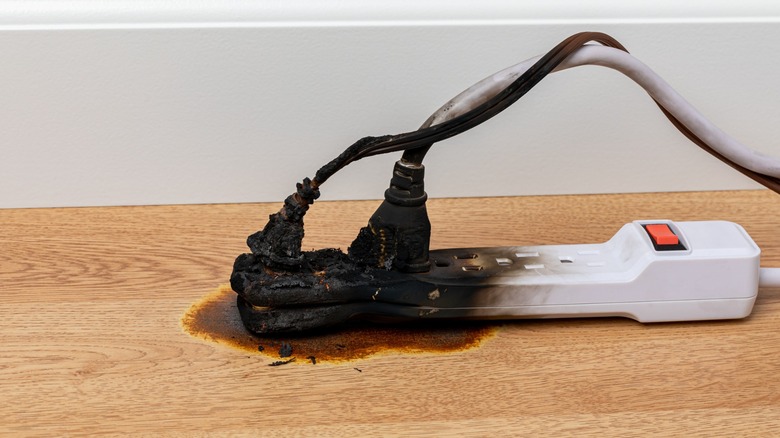
Using an electric heater improperly could lead to costs far beyond a higher electric bill. The National Fire Protection Association (NFPA) says that for the five years ending in 2024, 11% of all home fires were caused by heating equipment. That added up to over 186,000 fire department calls with "417 civilian deaths, 1,260 civilian injuries, and $1.2 billion in property damages." While most modern space heaters have safety features that cut the power in case they're tipped over, these systems sometimes fail and there are other things to watch out for.
You should never plug a heater into a power strip, and the current needed for an electric heater will also overload most extension cords. The NFPA also recommends leaving at least 3 feet between a space heater and anything flammable like furniture, pet beds, or drapery. Don't overload any outlets or disable circuit breakers, and aways unplug space heaters before leaving the room or going to sleep. Keep them clean and free of dust and debris, and always plug space heaters directly into grounded three-prong wall outlets.