

5 Leaf Blower Models From Major Brands You Should Avoid, According To Users
We may receive a commission on purchases made from links.
If you're looking to purchase a leaf blower to help whip your yard into shape, you'll want to pick a good one with enough power to meet your needs and a solid reputation for reliability and performance. Buying power tools from a major brand is usually a pretty sound strategy. Reputation is everything to these companies, and so each of their products generally tends to go through arduous quality control testing long before they ever make their way to the shelves of your local hardware store. That said, even the biggest brands have been known to miss the mark on occasion.
Leaf blowers are relatively simple machines in terms of their basic functionality. A motorized impeller fan draws air through an intake port, accelerating it and compressing it through a rigid, elongated nozzle, allowing the user to direct the pressurized air wherever they please. You might think that this would mean that there isn't much that could go wrong with their manufacturer, but as simple as the design may be, there are still a handful of models out there that have left customers less-than-satisfied with their purchase. The reasons for their frustration can vary. Short cordless runtimes, excessive noise, heating issues, weak blowing power, and inconsistent performance are among the biggest problems customers have encountered. A few of these models have received significantly more poor reviews than others, suggesting that the problems themselves are not isolated incidents. That's why those looking to get a new blower might want to know which models their fellow consumers have suggested are better off avoided.
1. DeWalt 20V Max XR Brushless Cordless Handheld Blower (DCBL722P1)
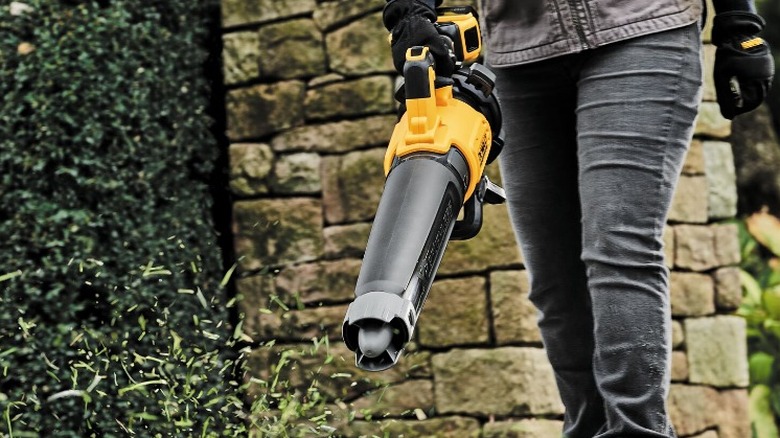
DeWalt is one of the top names in the power tool world and is often regarded as one of the best major power tool brands, but a few of the company's tools aren't rated as highly as the rest. One of the more prominent examples is the DeWalt 20V Max XR Brushless Handheld Blower. This blower promises 125 MPH and 450 CFM airflow, but many users aren't overly happy with its performance in practical applications.
The 20V Max XR Brushless Handheld Blower only has a 3.5 out of 5 on DeWalt's own website, though it has a better 4.1 out of 5 at Home Depot. The same few complaints are registered on both sites over and over. The first is that many users find the blower too weak for anything beyond light cleanup, with several reporting that it struggles with wet leaves and heavier debris. A few other reviewers have reported having issues with keeping the blower tube attached to the device. But the most common problem seems to be that the blower eats through battery packs incredibly fast. DeWalt offers batteries in its 20V Max system in a range of capacities, but even the larger packs can't keep this tool running for long. One user said a 5Ah battery lasted 10-15 minutes, another reported it lasted only 15 minutes before draining a 6Ah battery, and several other reports noted similar results. So, unless you already have a sizable supply of large-capacity DeWalt batteries, it seems that you shouldn't expect much from this blower.
2. Craftsman 20V Cordless Axial Leaf Blower (CMCBL700B)

Craftsman is actually owned by the same company that owns DeWalt, having acquired the brand from Sears back in 2017, so it might not be too much of a surprise to find one of its leaf blower models on this list as well. The Craftsman 20V Cordless Axial Leaf Blower is one of the company's cheaper models, retailing for $90. It's a battery-powered 340 CFM tool that can move air up to 90 MPH, powered by a brushed motor and a dual-speed trigger.
This blower's reviews are actually a little all over the place. It has a 2.0 out of 5 on the Craftsman website, a 3.6 on Lowe's, a 1.8 on Acme Tool, and a 4.0 on Amazon. That's a lot more variation than we see with most other models, but there are a few complaints repeated across multiple platforms. Several users have complained about the tool's battery life, just like with the DeWalt. Even on Amazon, where its weighted score is highest, there are 76 negative reviews that mention the leaf blower completely drains batteries in 5-10 minutes, though most don't specify the battery capacity they used. A few mention that the tool isn't as powerful as they'd like, but the other major complaint that keeps coming up is the dual-speed switch. Several reviewers have stated that this Hi/Low switch will abruptly stop working, leaving the tool stuck at a single speed. A few have mentioned that they've had trouble obtaining warranty coverage for this repair and that a replacement part isn't available.
3. Milwaukee M18 Fuel Dual Battery Backpack Blower (3009-20)

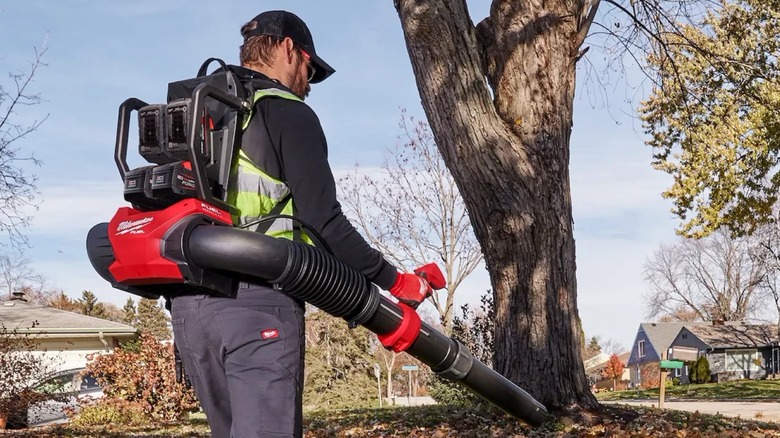
Another vacuum that you might want to avoid comes from Milwaukee. The M18 Fuel Dual Battery Backpack Blower looks promising on its face. Milwaukee claims it can deliver "a higher blowing force than up to 60cc gas" thanks to its PowerState brushless motor and the legendary performance of the M18 Tools System. Its specs state that it can deliver 650 CFM at speeds up to 155 MPH. It promises low noise and fast ramping speed, while coming with an ergonomic adjustable harness to keep it balanced and comfortable while you work. All this performance comes with a hefty pricetag, however, as the blower retails for $499.00.
It seems that some customers haven't been entirely satisfied with this purchase. The Milwaukee M18 Fuel Dual Battery Backpack Blower has a promising 4.6 out of 5 on Milwaukee's website, but a much less stellar 3.7 on Home Depot. Several reports claim the tool struggles to maintain pressure, with several leak points between the hose and the bag causing it to lose air. Several others repeat some of the complaints we've seen on other battery-powered blowers about them draining batteries in a fraction of the 30-minute runtime that Milwaukee claims. "Pure garbage," said one reviewer. "If you manage to connect the tight point out of the box, it will leak and not stay in place. The batteries that come with it are not forged, so they do not perform as expected. I could not return this fast enough. Worst Milwaukee purchase I ever made." There are a few other reports that using it with a full complement of four batteries attached can also make the blower heavy and uncomfortable.
4. Black and Decker 3-in-1 VacPack Leaf Blower (BEBL7000)

Black and Decker is definitely one of the more value-oriented name brands on the market today, so you probably shouldn't expect to get the same levels of performance from its products as you would from one of the premium-tier brands. That said, the Black and Decker 3-in-1 VacPack Leaf Blower seems to be particularly problematic among consumers. This last one is a little different from the others on this list because it isn't just a blower but also functions as a vacuum and mulcher.
The tool has a 3.7 out of 5 on the company's own website, a 3.9 on Home Depot, and a 3.9 at Walmart. Those aren't terrible scores in and of themselves, but the ratio of one-star reviews on both sites is pretty high, suggesting that a sizable percentage of buyers have been very unhappy. Multiple reviews indicate that the tool stopped working for them within days or weeks of purchase, while others report that it lasted a few years before failing. Many of these reviews state that the motor gave out or that the blower simply wouldn't turn on one day.
There are also several reports of its components deteriorating rapidly–particularly the seams of the bag and the gasket around the blower port. These frustrations have been compounded by limitations in the warranty, which customers complain doesn't allow sufficient coverage for returning the tool when it breaks. Frequent clogging, lower power output, and poor suction are also cited in some reviews. A video review posted on YouTube by TheStrawberryAnia Home & Garden also stated that the tool struggles with wet leaves and commented that the back for catching and mulching should be much bigger than it is.
5. Ryobi 40V HP Brushless Cordless Blower/Mulcher/Vacuum (RY404150)

The other multi-purpose tool from a major power tool brand that seems to receive a lot of criticism is the Ryobi 40V HP Brushless Cordless Blower/Mulcher/Vacuum. As part of the company's 40V HP line, this tool features two battery ports for extended power and promises a bit more juice than most 20V products we've seen. The product description promises more than double the performance of a gas-powered tool, 25 minutes of runtime with two 40V 4Ah batteries, 600 CFM, and a 100 MPH blower speed. It also has an impeller mulching system in the bag, a variable speed cruise control dial, and a specialized speed tip.
This blower has a 3.7 on Ryobi's website, a 3.1 on Home Depot, and a 2.7 on Amazon. Most complaints have to do with the tool's basic functionality and durability. "The leaf mulcher is substandard quality, easily gets jammed when there's even a small pile of leaves," one reviewer claimed. "The motor on this blew out in less than a year, which is sad given that the other Ryobi products work really well. Avoid this the reviews are real." Other reviewers have reported various other quality issues. There is a litany of reports of the handle breaking across all three platforms. Others claimed that the knob for switching modes breaks easily, and still more reported issues with the plastic component that changes the tool between blower and vacuum, which can easily get jammed, damaged, or completely break. This is understandably frustrating in a $300 tool.
How we listed these tools

I've been using power tools for decades and have been a professional in the tool review space for several years. To make this list, I started by looking at the lowest-rated blower tools on Amazon, Home Depot, Lowe's, and several other sites to see which models had the lowest customer satisfaction ratings. I rooted out the cheaper models from lesser-known brands and focused exclusively on those from major brands that customers typically associate with good build quality and performance.
Once I had a few of these blowers picked out, I examined the reviews, looking for patterns in poor performance, noise levels, battery life, and component breakage. I chose the five tools that appeared to have one or more of the issues frequently mentioned to warn customers of potential performance or quality-control issues. I then reported on these tools' specs and the various ways customers were dissatisfied with their performance.