

Here's What Could Happen If You Overtighten Your Lawn Mower Blades
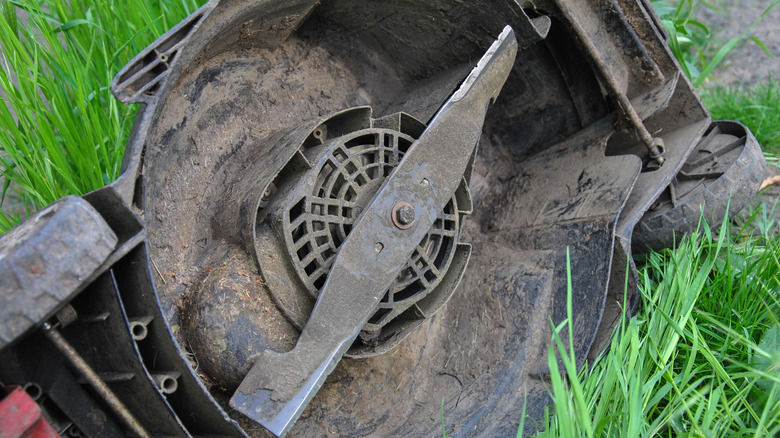
As the part of the lawn mower that takes the most abuse throughout the mowing season, the blade will reach the end of its lifespan eventually. The lawn mower blade should be replaced on a routine basis, and perhaps even more important than replacement frequency is performing the swap correctly. Though it may seem simple enough to remove the mounting bolt, take out the old blade, and connect the new one, there's some nuance to this job. For one, there's a right amount of torque for tightening the blade; otherwise, you could face some consequences for overtightening.
You can face a range of problems with an overtightened mower blade. For example, when your next replacement rolls around, you may struggle to remove the current blade. Not only that, but it can damage the bolt threads, wearing down this crucial piece prematurely. Speaking of putting additional wear on the bolt, overtightening can put added pressure onto this piece while the blade is in motion. It's not unheard of for the bolt to snap under pressure, sending the blade flying and ending your mow before it's over. This can damage the deck and other elements of the mower, in addition to being incredibly hazardous to the user's safety and that of those in the area. Getting blade tightening right is easy, though, if you know what to look for.
Tightening a lawn mower blade the correct way
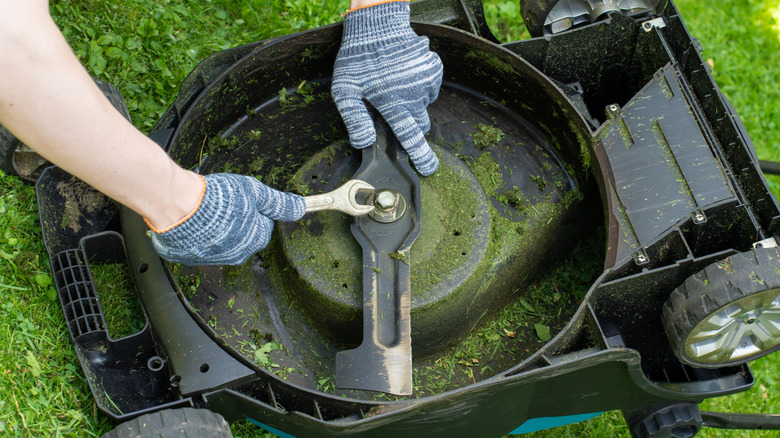
Getting blade tightening right doesn't require much. All major lawn mower brands clearly specify how to go about torquing the mounting bolt, with this information readily available in your model's manual. If you don't have it on hand, most brands have digital versions on their websites, or you can look around online or reach out to your mower brand's customer service to make sure. When it comes to blade tightening, you can't be too cautious, so the extra effort is undoubtedly worth it.
In addition to following manufacturer instructions, there's the spin test. Once you've put your new blade on, or your current mower blade that you've sharpened, ensure the bolt is straight-on. Then, torque the bolt to the correct specifications, ensuring your blade is able to spin freely by hand, as it would if the mower were turned on with the blade active. It should feel secure in place and not wobbly, yet not so tight that you can't move it without extreme amounts of effort. In this case, you'll likely want to use a hand-operated tool like a torque wrench rather than something powered like an impact driver. This way, you have superior control over your tightening and don't accidentally tighten your mounting bolt beyond safe limits.