

Pressure Washing Vs Power Washing: What's The Difference?
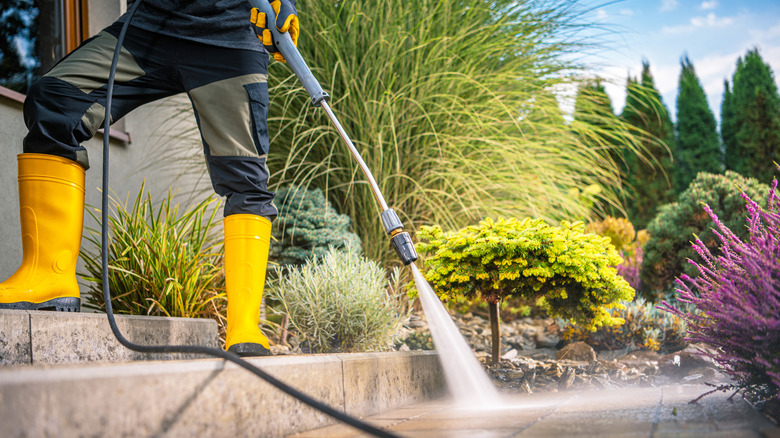
Choosing between pressure and power washing can be tricky since the two terms are often used interchangeably. Both cleaning methods utilize high-pressure blasts of water to remove dirt, muck, and grime from outdoor surfaces. Both use PSI (pounds per square inch) and GPM (gallons per minute) as performance metrics. PSI measures the water pressure, while GPM measures how much water gets used. Despite all the similarities, there is one important distinction: power washing uses warm water while pressure washing uses cooler water.
This might not seem like a big difference at first glance. After all, water is water, right? In reality, temperature has a considerable impact. Heated water is particularly effective at breaking down grease and oil. Power washing has an advantage when cleaning driveways, machinery, equipment, and other surfaces covered in oil. However, it is not the universally best option, and you'll want to avoid the pressure washing mistakes that could ruin your car. That's because when combined with high-pressure blasts, heated water can damage certain surfaces, gouging wood or stripping paint off. Pressure washing is the more suitable option for rinsing away caked-on mud and grime around the house or on your car.
Which washing method should you use?
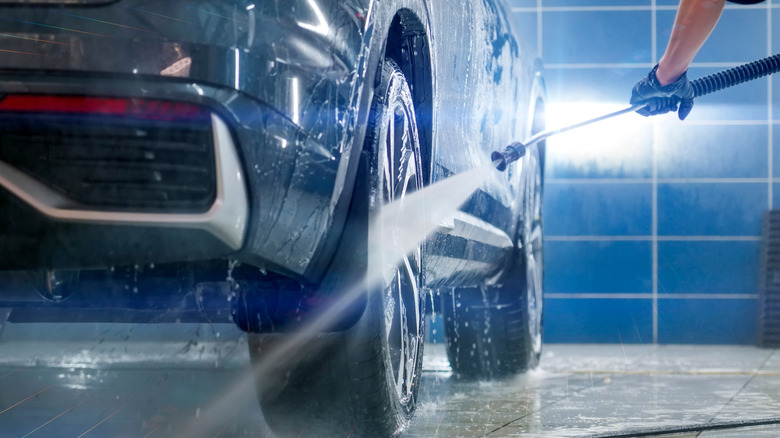
Pressure washers are generally the cheaper option. On average, residential units will run you several hundred dollars, and they come in two main configurations: electric and gas-powered. Electric models are quieter, lighter, and easier to maintain, making them a great choice for small cleaning jobs around the house. You have the option of corded and battery-powered washers. Corded units are the most affordable option. Battery units are portable and can be pretty pricey, but performance varies by model. Gas-powered washers, as the name suggests, operate on gasoline. They're also more powerful than electric models, outputting higher PSI and GPM, making them better suited for tougher tasks. However, they do require regular maintenance. You might have to replace spark plugs or change the oil.
For major cleaning projects at home or a business, power washing is the way to go. As mentioned earlier, heated water is better suited to removing grease and oil from concrete surfaces and machines. Power washers are the more expensive and bulkier option. Much of the added cost comes from the built-in water-heating systems. As an example, gas-powered models start at $3,000 at Lowe's and only go up from there. Note that neither method is superior to the other. The best washer depends on the job. Be sure to research the recommended cleaning process for your intended surface before buying (or renting) a pressure washer.