

3 Disadvantages Of Ceramic Space Heaters
We may receive a commission on purchases made from links.
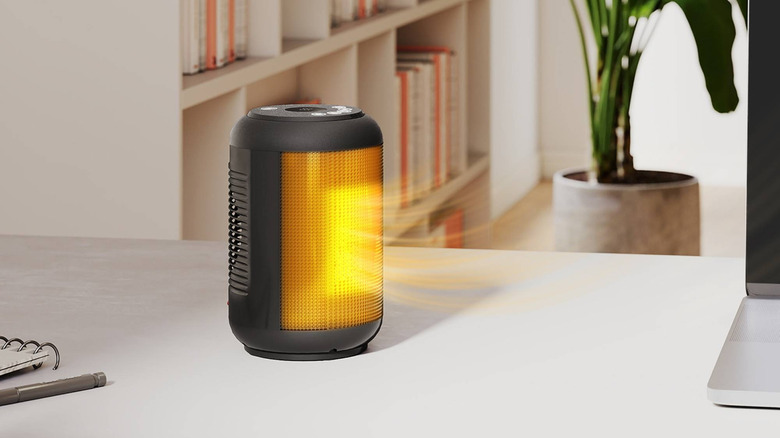
A space heater becomes an essential gadget during the winter, and the ceramic variety is a good choice. These heaters have a ceramic plate that heats up and warms the surrounding air instantly. Some units also have built-in fans that blow the hot air around, making them great heaters for warming up small rooms. Also, ceramic space heaters are quite affordable, and you can get a high-quality unit for less than $40. They're also portable and are safe to carry around because they have cool-touch housing.
Many modern ceramic heaters are highly efficient. For instance, they have a thermostat that shuts off the heater when the desired room temperature is reached. The heater turns on again after the room temperature drops below a certain threshold. A thermostat also helps keep the heater from overheating. Some units even have tip-over protection, which shuts down the heater the moment an internal sensor senses that it has been tipped over.
On the downside, ceramic heaters have limited range. And since they often use a fan, you can also expect some audible noise. Furthermore, the heat produced by a ceramic heater dissipates quickly. Knowing these downsides of ceramic space heaters is important because it will position you to use them effectively and safely.
They're most effective in small rooms
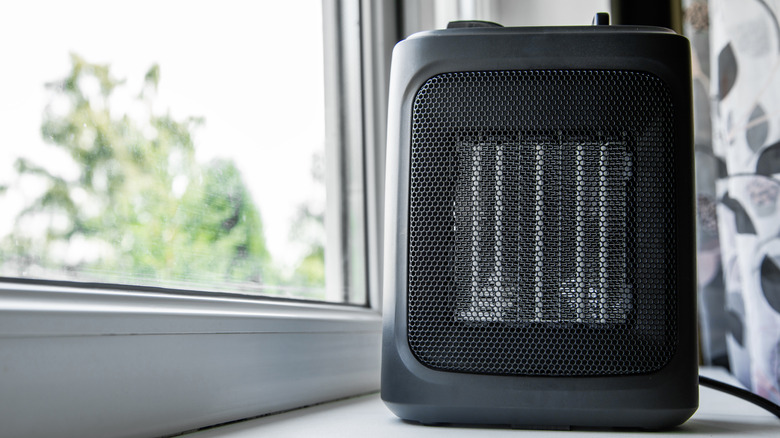
Standard ceramic space heaters usually have a maximum rating of 1,500 watts. Already, this puts a limit on the amount of heat they can generate. When coupled with their weaker fans, they can only push the heat so far. When operating alone, a 1500-watt ceramic space heater with a built-in fan can effectively warm a small room or home office that is between 100 and 150 sq ft. If the space has central heating, that can usually be pushed up to 250 sq ft if the ceramic space heater is there to provide supplementary heating.
Because ceramic space heaters produce localized warmth, there will be some inconsistent heat distribution around the room. Specifically, you have to sit close to them if you really need to get warm because the heated air dissipates the further away it moves from the heater. Also, even if the room is in the effective range of 100 to 250 sq ft, if the ceiling is high, that's more air to warm. An oscillating heater can distribute the warmth in a wider area so you don't have to be directly in front of it to feel warmer. However, it doesn't make up for the lack of higher wattage or a stronger fan to fill a larger space with warmth.
Heat retention is also a problem with ceramic space heaters

Ceramic space heaters don't store any heat inside their ceramic plates that they can gradually distribute. Even if you are not done using them, there are instances where you need to shut them off. This is especially true if you're worried about the cost of running a heater continuously during the winter. So when using ceramic space heaters, it's best to know that it will be for short, targeted sessions rather than sustained heat after shutdown.
If the room's walls, ceiling, and floors are well insulated, it will do a better job of keeping the warmth in for longer. If not, retrofitting insulation into a home can require a professional, which can be expensive. But that doesn't mean you can't do small things to maximize the heat distribution and retention without opening up the walls, ceiling, and floors.
For instance, you can ensure that the heater is in an open area without objects in front of it that can block its airflow. You can also install thermal curtains, which have fabric with insulating properties that form a barrier inside the home. During the summer, they help keep the heat out, but in the winter, they help stop it from escaping. Also, thick carpets and rugs can make for good insulators, especially on hard floors. You should also seal up any drafts around your doors and windows.
Fan noise can dominate the environment
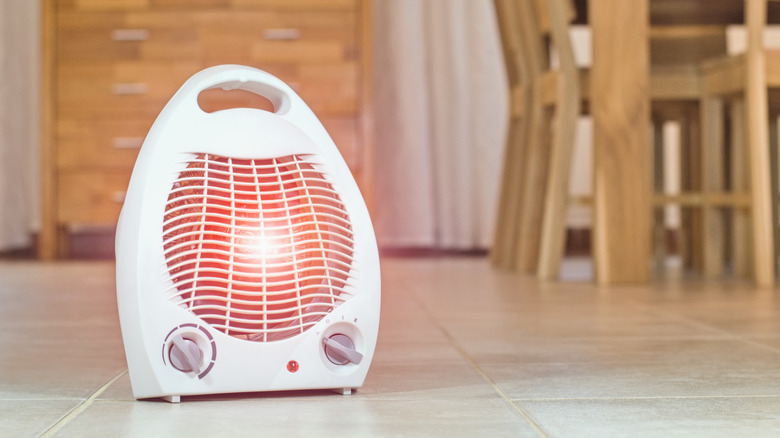
As mentioned, ceramic space heaters work best when they're close to you. If they have a quiet fan, it might not be effective at spreading warmth. So if you're going for something quiet, you might be sacrificing the power needed to make the room cozy enough for your liking.
This can be seen in tests done by TechGearLab. Among the 10 space heaters it tested, the Dreo Atom One Space Heater, which is a ceramic space heater, was the quietest, with a Noise Rating of 39.3 dBA. According to Consumer Reports, when it listed six of the quietest space heaters, "the level of background noise in a typical house ranges between 25 dBA and 40 dBA." Anything above 40 dBA will be noticeable and can be disruptive if you like a quiet environment (remember that you need to be close for better warmth). However, when TechGearLab rated the Dreo Atom One Space Heater's Room Heating score, it scored a 5.7 out of 10. The highest Room Heat score was a 7.3 out of 10 for the Vornado AVH10, but its Noise Rating was 44.2 dBA.
If you need something quiet that can warm you up quickly, there are infrared space heaters. However, the drawbacks of infrared space heaters are that they aren't good at heat distribution, and whatever heat they distribute doesn't last. Some units also have a risk of burning you if their metal grilles get too hot.