

Who Makes Bobcat Tractors And Where Are They Manufactured?
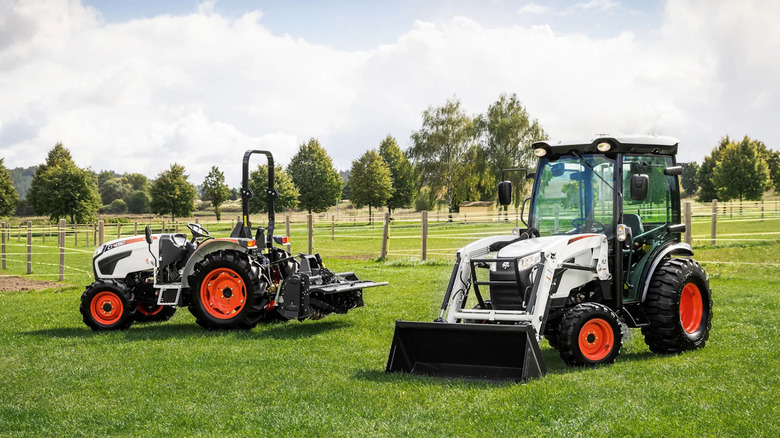
Bobcat traces its origins to North Dakota, United States, where the Melroe Manufacturing Company was established in 1947. The company initially manufactured agricultural equipment and introduced the world's first skid-steer loader in 1960. The Bobcat brand was trademarked in 1962, although it only officially became Bobcat Company in 2000. Today, its product range extends across several categories of construction and agricultural machinery, including loaders, excavators, and compact tractors. Despite its American roots, Bobcat's compact tractors have an international manufacturing arrangement.
Bobcat compact tractors are manufactured by South Korean agricultural machinery company Daedong, which also sells tractors under its Kioti brand. It manufactures Bobcat's compact tractor lineup in South Korea before shipping them to the United States for assembly. Bobcat handles the final stage of manufacturing at its Statesville facility in North Carolina, where the tractors are assembled for the U.S. market. The companies have maintained their partnership through original equipment manufacturer (OEM) agreements. Meanwhile, Bobcat is owned by South Korea's Doosan Group, which acquired the company in 2007.
South Korean connection behind Bobcat's compact tractors
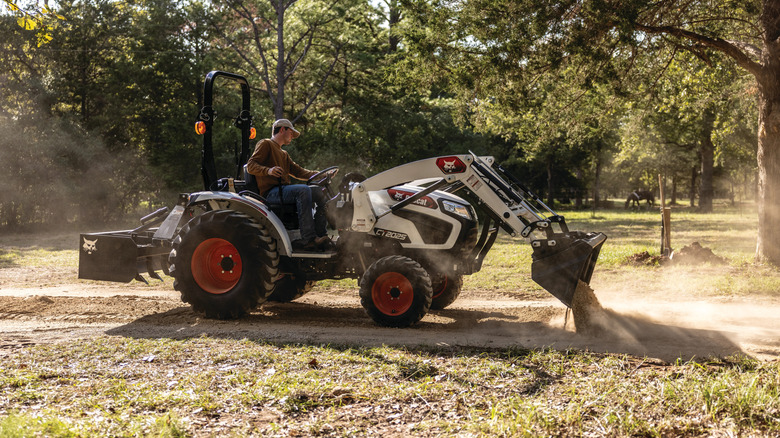
Daedong Corporation, founded in South Korea in 1947, is an agricultural machinery manufacturer with experience producing tractors, engines, and other farming equipment. Bobcat's relationship with Daedong dates back to 2007, when the two companies agreed to develop and manufacture Bobcat-branded compact utility tractors. The partnership allowed Bobcat to enter the agricultural equipment market without having to establish an entirely new tractor manufacturing operation of its own. The original partnership eventually came to an end after Bobcat decided not to renew its five-year OEM agreement with Daedong. In October 2012, the company confirmed that it would leave the compact tractor business and concentrate on its core equipment offerings instead.
That exit was short-lived. In July 2018, Doosan Bobcat signed a new development agreement with Daedong to bring another generation of compact tractors to the North American market. Bobcat unveiled 15 models across four platforms in September 2019, ranging from 21 to 58 hp. In December 2024, the two companies signed their latest OEM supply agreement, covering 20- to 70-hp tractors and powertrains through 2028. The agreement is valued at approximately $270 million.
Bobcat tractors are assembled in Statesville, North Carolina
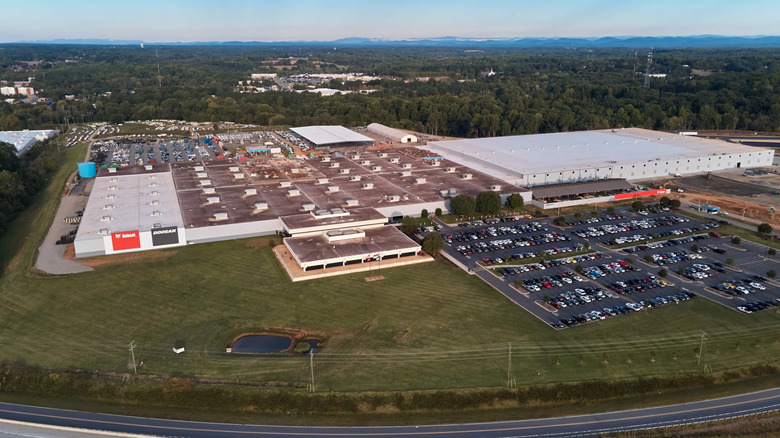
Daedong manufactures compact tractor equipment in South Korea, which is then imported to the United States for assembly at Bobcat's Statesville facility in North Carolina. The company's Statesville manufacturing facility has assembled these compact tractors since their introduction in 2019. Statesville is one of Bobcat's major manufacturing locations in North America and is also responsible for producing other equipment, including mini track loaders, small articulated loaders, generators, air compressors, and light towers.
Bobcat also had plans to bring some of its compact tractor manufacturing to the United States. In 2020, the company had acquired the intellectual property for three of the five compact tractor platforms it was selling, with plans to manufacture them domestically within the next decade. However, Bobcat's current facility information still describes the Statesville tractor operation as an assembly line, while its latest OEM agreement confirms that Daedong will continue supplying tractors and powertrains through 2028.
The company announced a $70 million investment in the Statesville facility in May 2021 to expand its manufacturing capabilities and accommodate growing demand for its equipment. The project initially called for approximately 580,000 square feet of additional manufacturing and warehouse space, alongside plans to create new jobs over five years. The expansion was completed in October 2022, increasing the facility's footprint to more than one million square feet across a campus spanning over 150 acres.