

What Does It Cost To Ship A Car To Another State In 2026?
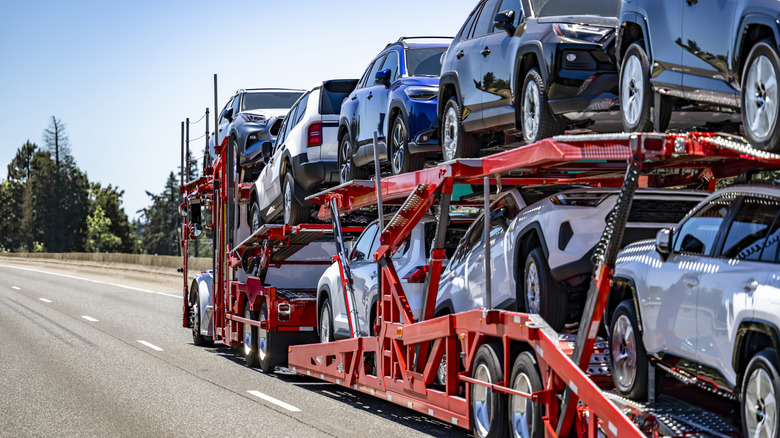
When moving across state lanes, bringing your belongings involves renting a truck, loading it up, and taking the trip — or paying someone else to do it. But if you have multiple vehicles, you sometimes can't load them or drive them all yourself to your new destination. That's where shipping serves as a solid alternative. Beyond that, you'll also have to ship any vehicles you import or purchase overseas. Of course, that could make one wonder what it costs to ship a car to another state, and the cheapest way to make it happen.
Most shipping providers include a tool or reference sheet for prices, which you can review individually if you know who you're using. According to Nexus Auto Transport, the average shipping cost for a car is $650, and further research estimates paying around $0.40 to $2 per mile if you use a transport service. It also depends on what type of vehicle you're shipping, what type of transportation you choose, and where you are and how far it's going. The time of year and what provider you select are other important factors. As you might expect, there are a lot of variables, but the average still stands.
To ship a sedan over a distance of 500 to 2,500 miles, for example, it will cost about $725; it's roughly $775 for a compact SUV, and $925 for a traditional truck. Perhaps unsurprisingly, shorter distances are cheaper, while longer distances can be more expensive. Another company, AmeriFreight, estimates the average cost to be between $500 and $2,000.
What is the cheapest way to ship a car across the country?
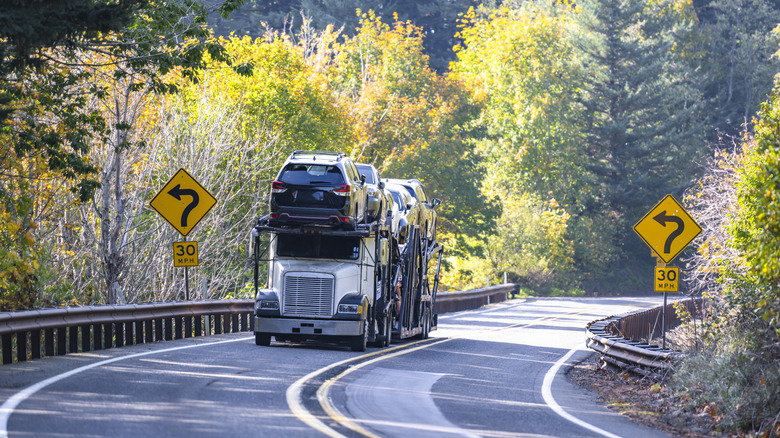
Depending on where the vehicle is going, there are different transports for the job. For anything going overseas, for instance, a carrier ship is necessary, as they can carry thousands of cars at a time. If you have money to burn, you can ship a car by private jet. If you're shipping within the country, unless you're going to Hawaii, you won't need water or air transports at all. You can't ship by train except for select routes, either.
The next best thing is via trailer transport, which come in closed and open-air varieties. Open-air transport is the cheapest, up to 40% cheaper than alternatives because more cars can be included in a single trailer. The downside is any vehicle you send this way will be exposed to the elements, and not just dust, rain, or bugs, but also potential hazards like rocks or debris. An enclosed transport, similar to a box car on a train, completely protects the vehicle inside a hard trailer. It's more expensive, but it's also a better option if you have a show vehicle, or unique and limited edition models, and you want to be absolutely sure it gets to its destination in pristine condition.
Between the two, expect double the price for an enclosed transport. Where a trip might cost you $650 to $900 for open-air, you'd be paying around $1,300 to $1,800 for enclosed transports. In addition, you'll need to choose between door-to-door service, which can be more expensive, and terminal-to-terminal shipping. If you choose the latter, the vehicle is sent from one shipping hub to another and you'll have to pick it up at your destination and drive it home, versus having it delivered right to your doorstep.
It can be more expensive to ship a car in the winter (and take longer)
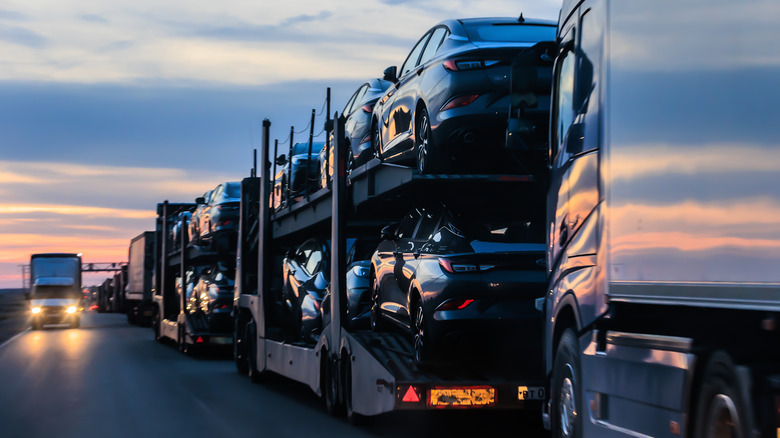
The time of year you're planning the move can also directly affect the cost and length of the trip. Several factors, such as driver availability and schedules, weather during the trip, and the ease of the delivery location can all increase costs and timelines. If the transport has to travel through inclement weather, especially snowy or icy conditions, expect that to add quite a bit of time onto the trip and raise costs.
Another factor is demand, which may be much higher at certain times of the year, and with limited resources, the costs may be higher, timelines may be extended, and you may be unable to find a timely option. During the later parts of the year, or early months in the new year, lots of people make moves or ship vehicles, which affects both rates and trip times.
All of this is just to say that it may be wise to plan your move around the slowest seasons, or at the very least, frontload the reservations and make sure you have everything paid for and booked before the season kicks into gear. Some of the best times to ship a vehicle are early spring, around March, and late Fall, between October and November, just before the holidays or end of the year rush.