

How Many MPG Could You Lose When Using E85 Fuel?
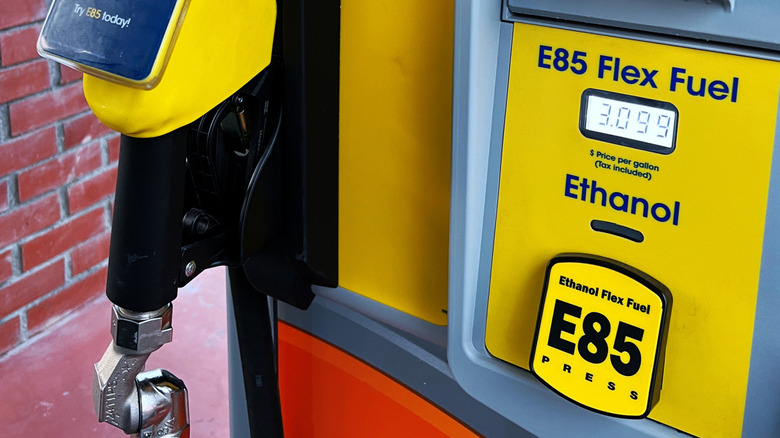
Miles per gallon, or MPG, is a massive dimension in advertising vehicles, and while there's an argument to be made that it's not worth obsessing over the number, it can be an important consideration when selecting fuel. With fuel prices reaching staggering highs, fuel economy has become a serious concern for many people's budgets.
E85 gas, which is also known as flex fuel, is a gasoline-ethanol blend that contains between 51% and 83% ethanol, depending on location and season. Some have championed it as a way to reduce the United States' dependence on foreign oil, but fueling up with it can have a deleterious effect on your car's fuel economy. In fact, filling your tank with E85 can cause a drop of between 15% and 27% in your typical MPG.
This lower efficiency is due to energy density. Traditional gasoline yields around 114,000 British thermal units (BTU) of energy per gallon. Pure ethanol, however, comes in at a much reduced 76,000 BTU. Because ethanol contains less energy than gasoline, E85 has a lower energy density. A blend that contains 83% ethanol has about 27% less energy per gallon compared to gasoline, while lower ethanol blends have a smaller energy deficit.
Other considerations when selecting your fuel
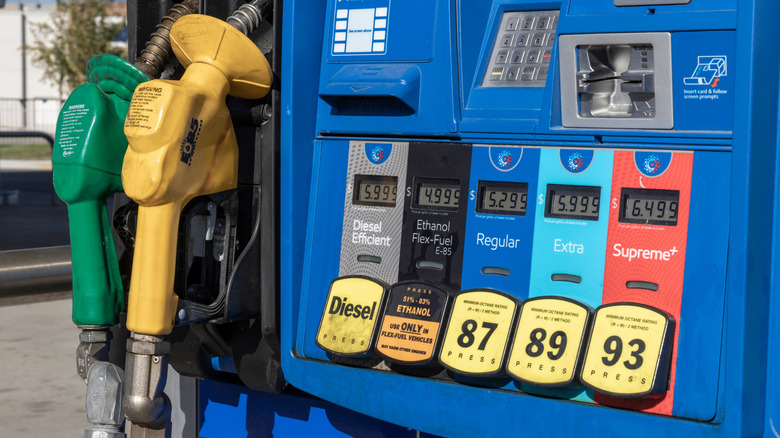
While MPG may suffer, performance can actually increase when fueling up with E85. Interestingly, despite the reduction in energy density, ethanol makes for a natural race fuel. It boasts a high octane rating, a measure of a fuel's resistance to engine knock, which happens when unburned fuel ignites prematurely from heat and pressure instead of burning in a controlled manner.
The more resistant, the less likely harmful engine "knocking" is to happen. In engines specifically designed to take advantage of a flex-fuel like E85, higher torque and horsepower are possible, though it does ultimately mean consuming fuel at a faster rate.
However, E85 has some notable downsides. For one, it requires a compatible vehicle and can be hard to find, and while it may look cheaper at the pump than standard gas, the loss in MPG can negatively offset the lower cost and may lead to you having to fill up more frequently. Ethanol is also harder to ignite in the cold, so it may be even more challenging to source if you live in a chillier part of the country.