

Xbox Series X Vs Steam Machine: Which Offers More Power For The Price?
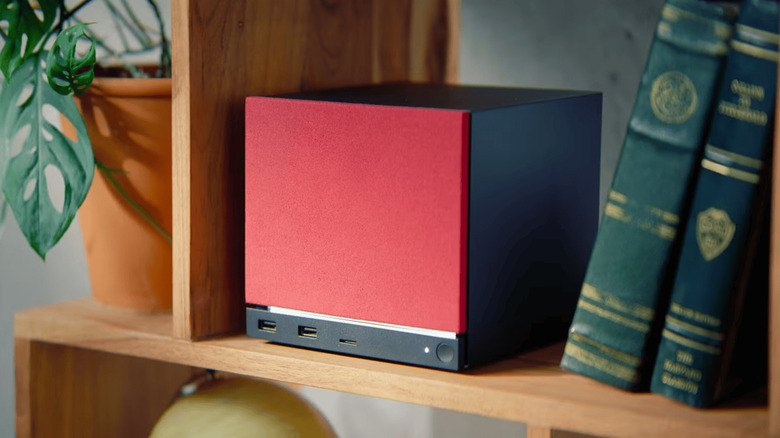
Unlike the PC market, the console market is limited to Xbox, Nintendo Switch, or PlayStation. These are good systems, but the lack of competition has allowed companies to engage in practices such as charging a subscription to play multiplayer games or preventing users from buying games through other marketplaces. Valve's Steam Machine is the latest entrant in the console market. It lets you download games from different storefronts and even install another operating system, including full-blown Windows 11.
Given what the Steam Machine promises, choosing between it and the Xbox Series X isn't easy. You have to consider what matters most to you. As for specifications, the Steam Machine is powered by a semi-custom AMD Zen 4 processor (up to 4.8 GHz, 30-watt TDP) and an RDNA 3 GPU featuring 28 compute units (110-watt TDP). This is paired with 16 GB of DDR5 and 8 GB of GDDR6 VRAM. The Xbox Series X, meanwhile, features an older AMD Zen 2 CPU and an RDNA 2 GPU with 52 compute units. Yes, the Steam Machine has the advantage with newer features like AMD FSR, but the Series X still has slightly more raw GPU power.
While both are pretty evenly matched on power, pricing is a different story. Thanks to the RAM and storage price surge, the Steam Machine starts at $1,049, considerably more than the $800 you'd pay for the Series X. Also, the Series X will get "Grand Theft Auto VI" at launch, while the Steam Machine won't. Here's how the rest stacks up.
What does the Steam Machine do better than the Series X?
Some of you may remember the original Steam Machine. It promised much of the same but failed to deliver on the one thing that mattered: gaming. Back then, gaming on Linux wasn't as widespread. Fast-forward to 2026, and the popularity of handhelds with features like the Steam Deck has turned the tide. Developers are optimizing their games, and the Proton layer, which translates native Windows games to run on Linux, has been a great initiative. Currently, there are over 30,000 supported games on Linux.
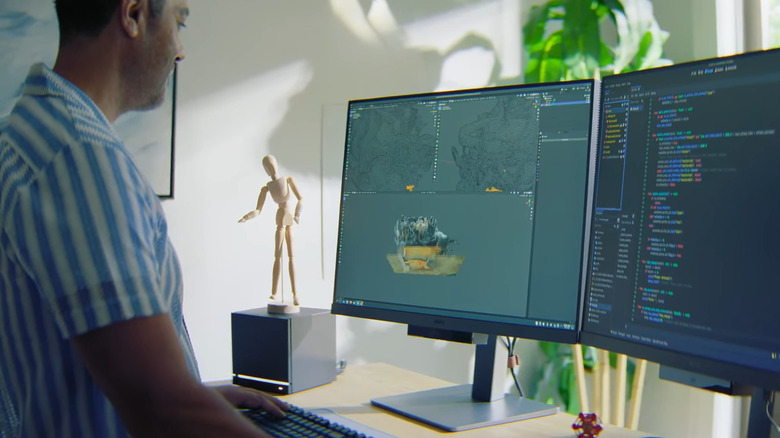
However, the biggest reason to buy the new Steam Machine is the flexibility. You boot into SteamOS and don't like it? You can install another operating system, such as Windows or Linux. This lets you transform the little cube into a regular PC, where you can edit spreadsheets, work in Microsoft Word, and complete your homework. You won't be able to do any of those things on the Xbox Series X.
Steam's Big Picture UI has evolved considerably over the years. The machine has the speed of other consoles and a similar ability to pick up games right where you left off. HDMI-CEC lets you control other connected devices, like a soundbar, from your Steam Machine. There's also a partnership with iFixit to repair the console without visiting a service center, and compatibility with many third-party accessories.
What about the gaming performance?
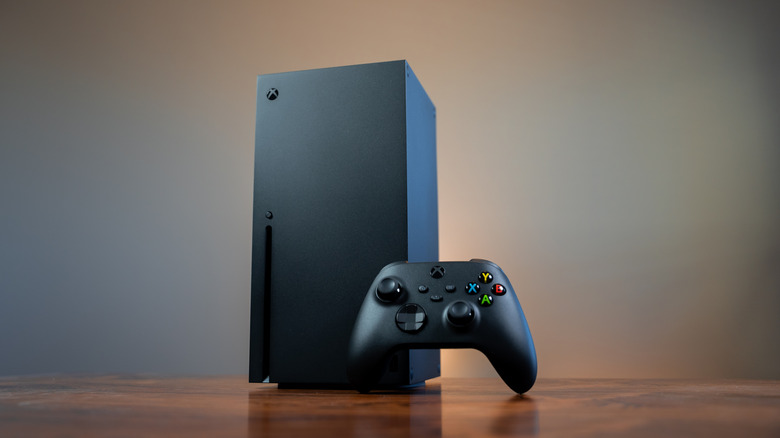
We wouldn't be writing this comparison if the Steam Machine were a clear winner in every department. It's not perfect, and it shows the most in gaming. The Series X has more raw performance. In games like "Cyberpunk 2077," both systems managed similar frame rates, with the Series X locked at 60 FPS. The problem becomes clearer in games such as "007 First Light," where the Steam Machine averages around 60 FPS, but its frame rate occasionally drops to around 35 FPS. While that's a very noticeable difference, you can lower the resolution from 4K to 1800p and get steady frame rates on the Steam Machine.
Games that use ray tracing, such as "Doom: The Dark Ages," are the Steam Machine's Achilles' heel. In the Linus Tech Tips review, the team could only find one configuration where the Steam Machine ran the game at 60 FPS. That was the handheld preset, meant for a small 7-inch display, not a 65-inch 4K TV.
And that's the thing: the Steam Machine can only match the performance of the Series X at best. While that might seem acceptable, you may be forgetting that the Series X is six-year-old hardware, and the next generation of consoles could be coming as soon as 2028. Even if they don't arrive that soon, newer games that require ray tracing may not run well on the Steam Machine.
Which one should you buy?
Choosing between the Series X and the Steam Machine comes down to what matters most. If you've been a lifelong PC gamer and want a living room console that can play your entire Steam library, the Steam Machine is for you. Performance should be sufficient for most games, though some tinkering may be required. SteamOS has that console-like seamlessness but also provides Windows and Linux support, which is a major advantage for students living in dorms who can have only one device for both gaming and work.
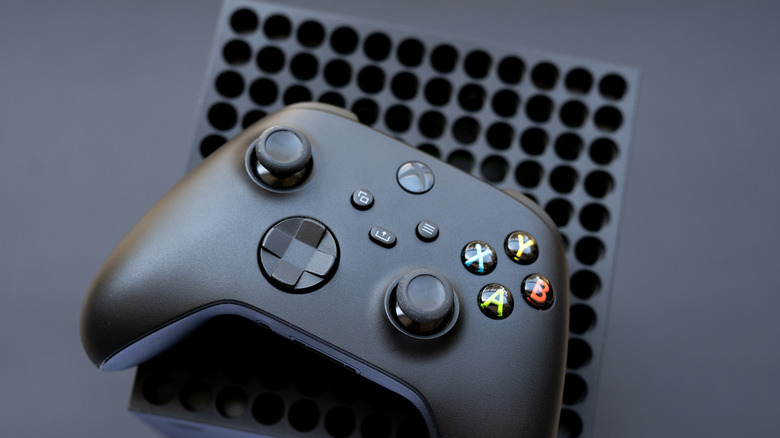
The Xbox Series X, on the other hand, is solely made for gaming. Despite being older, it still outperforms the Steam Machine in several games, and you can rest assured that newer titles will be optimized for the console. Then there's Xbox Game Pass. The Ultimate tier costs $22.99 per month, but you have access to a library of more than 500 games. So, if all you want is a gaming console, save the $300 and get the Series X.