

Are Husqvarna Chainsaws And Motorcycles Owned By The Same Company?
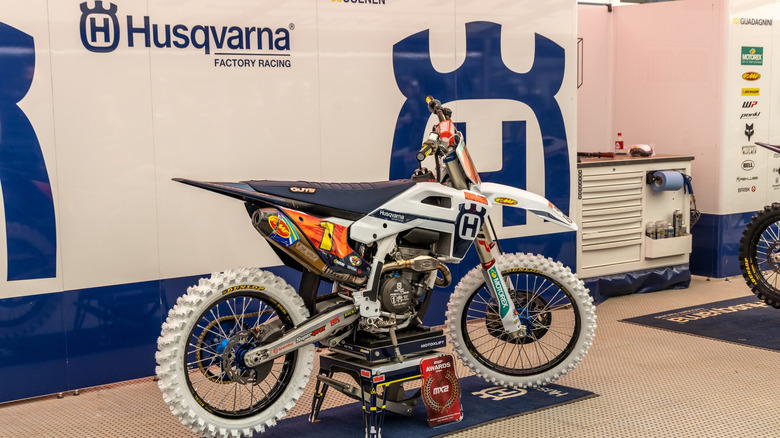
Simply put, the company producing chainsaws isn't owned by the same one building motorcycles. Husqvarna sold its motorcycle division to Italian manufacturer Cagiva in 1987. Today, the motorcycle brand is under Bajaj Mobility AG, which in turn sits underneath Bajaj Auto International Holdings AG, owned by India-based Bajaj Auto Ltd. Bajaj Mobility AG also has a controlling stake in KTM AG, which includes Austrian brand KTM motorcycles. Adding another layer, there are several brands owned by KTM as well, including Husqvarna (purchased in 2013), making this quite a successful acquisition.
While the Husqvarna company hasn't been involved with motorcycles for some time, its remarkable history and industry contributions are notable. The brand has shown its willingness to stand the test of time, and its motorcycle operation is no exception. While iconic brands like Harley-Davidson and Indian are cited as some of the earliest motorcycle manufacturers, Husqvarna was right alongside industry pioneers with production starting in 1903. So, even though the Swedish company stepped away from motorcycles in the late 20th century, it had been a major player for more than eight decades by the time it passed the torch.
Husqvarna's contribution to motocross
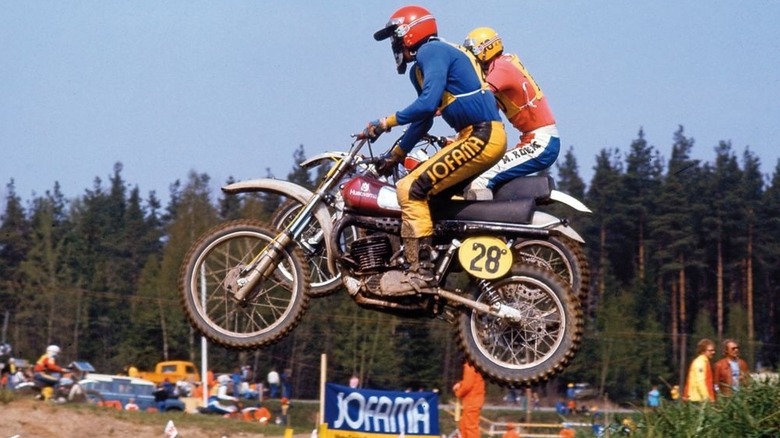
Not only was Husqvarna among the first companies to build motorcycles, but its commitment to racing and eventual focus on off-road competition was pivotal to modern motocross. It was the 1950's which saw Husqvarna launch the exceptionally lightweight Silver Arrow. The bike tipped the scales at less than 166 pounds, which meant riders as young as 16 could operate them. The Silver Arrow featured a 175cc 2-stroke motor that along with its lightweight design, became a popular option for off-road use and the burgeoning sport of motocross, following some customer modifications.
Husqvarna began testing the waters with off-road models that came equipped with a more powerful 250cc engine, and enhanced suspension system. Although, these weren't officially sanctioned by upper management and were built in a somewhat secret fashion by the factory. Swedish born, Rolf Tibblin rose to fame in the late 1950's, competing in the European Motocross Championship on a Husqvarna dirt bike. It was in the 1960's, that Husqvarna officially recognized motocross motorcycles as part of its lineup, offering competitive options to riders.
However, it was a determined American salesman, Edison Dye who would help popularize motocross in the states via Husqvarna. Lobbying to represent the Swedish manufacturer through his company, MED International, Dye eventually got Husqvarna to agree to sell its motocross bikes in the U.S. in 1966. A desert race in California effectively contrasted the difference between modified street bikes (classic scramblers) and the more all-terrain capable Husqvarna motocross 2-stroke bikes and Swedish professional racer Torsten Hallman arrived on American shores wowing U.S. audiences on Husqvarna machines. Since then, the two-stroke engine disappeared from motocross, but Husqvarna had already cemented itself in the states.
What happened to Husqvarna's motorcycle division?
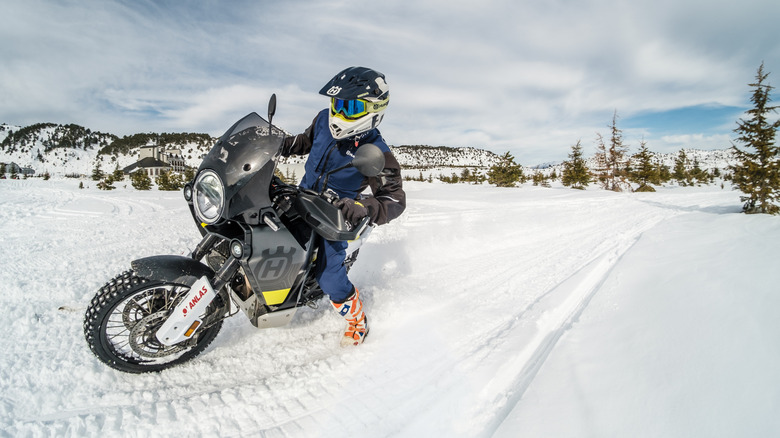
Essentially, beginning in the late 1970s, Husqvarna and its motorcycles changed ownership multiple times. First, Electrolux, a massive company out of Stokholm known for its appliances, purchased Husqvarna in 1977. Electrolux was more interested in the tools rather than the motorcycles, which weren't showing the same return potential. It created a motorcycle division with production moving to another facility, until Electrolux dropped it in the late 1980's handing it over to Cagiva. Production moved again, relocating to Cagiva's native Italy.
When a longstanding company changes hands, things like management style, operations, and priorities can shift dramatically. This was certainly the case with Husqvarna and its veteran employees soon fled for other opportunities, which changed the company landscape. In the 2000's BMW bought Husqvarna motorcycles but ultimately control of the company landed with KTM. KTM Group also owned Husaburg, a brand started by key Husqvarna team members that left the company following the purchase by Cagiva. Despite the fact that these bikes have changed owners, due to the influence of major industry players, you can find plenty of recent examples of the best Husqvarna motorcycles ever made.