

Are Carbide Chainsaw Chains Worth Paying Extra For?
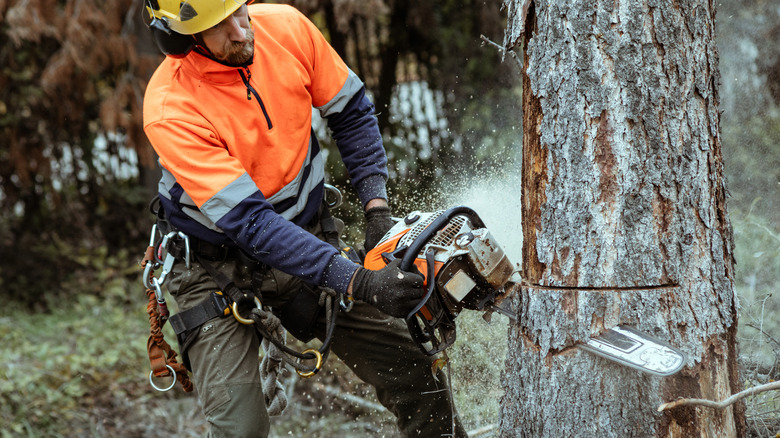
Whether you regularly use a chainsaw on the job or at home, you may eventually need to replace the chain. This could be a fairly inexpensive purchase, depending on what you buy, as some standard models can range from under $20 up to $30 or more. Carbide chainsaw chains can start under $20 as well, but can go into the hundreds, or even thousands for bulk reels, depending on the model.
Carbide chains have cutting teeth with tips made from tungsten carbide, a compound of tungsten and carbon. By combining with carbon, the tungsten becomes nearly as hard as a diamond, and the compound's melting point is a whopping 5,198 degrees Fahrenheit. Along with the ability to stay sharper longer, carbide chains are an ideal option for cutting tree roots, hardwood, and dirty wood. So if you're tackling demanding tasks and need a durable solution that can handle the pressure, a carbide chain may be the right one for you.
However, if you're only occasionally using a chainsaw on your property, a standard model could be the right choice. Made from hardened steel, a conventional chain can handle everyday tasks like cutting clean firewood. These chains can keep an edge relatively well, and though they might need more sharpening as part of their regular maintenance than a carbide model, standard chains are still a good option. In the end, it's about deciding if what you need the chain for is worth the money you'll spend to get it.
The drawbacks of carbide chainsaw chains
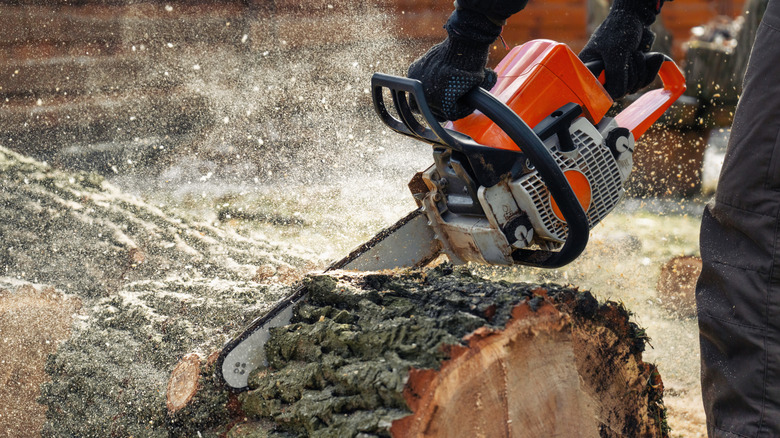
Carbide chainsaw chains can be tougher to sharpen than standard steel chains. In fact, conventional sharpening methods that work on steel chains may not work on carbide. The process is so involved that it might make more sense to just send the chain to a sharpening service to ensure it's done right. That's because carbide chains need specific sharpening equipment, which some pros may not even have.
Improper sharpening can have an impact, especially if one side of the chain is sharper than the other. This could result in the chainsaw pulling to one side as you're cutting, which reduces the amount of control you have over the tool. A dull chain, whether it's carbide or steel, also may not move through the material as effectively as it otherwise would. This means that instead of the chain sliding smoothly through the wood, you may have to physically push down harder than usual. You also may not get wood chips when crosscutting, as a dull chain could instead give you sawdust.
Carbide chains may also not cut through clean wood as fast as a standard steel chain can. This might not be a dealbreaker to some users, however, since carbide chains typically keep a sharper edge when working in tougher environments. But if you are mostly cutting clean wood and need to maintain a faster pace, you could potentially notice a difference using a carbide chain.