

5 Disadvantages Of Battery-Powered Video Doorbells
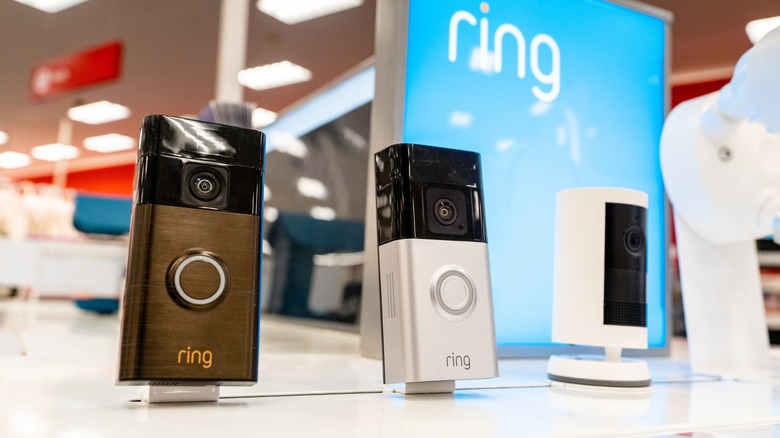
In the sphere of home surveillance tech, video doorbells have become one of the most common devices. They provide a clear view of your home's front door and allow you to interface directly with any visitors, as well as receive notifications in case you don't hear the actual chime, some even without a subscription service. These are all very convenient features, and arguably, the optimal way to make the framework even more convenient would be to eliminate the need to wire the doorbell into your home's power grid.
Of course, battery-powered video doorbells from multiple big brands are already a properly-established spin-off of this tech, and certainly, they bring some extra convenience to the table, particularly for those who rent their homes or aren't comfortable with electrical wiring. However, as is often the case when messing with power frameworks, switching to a battery-powered video doorbell over a hard-wired one will definitely bring some changes to your usage of it. Depending on your personal preferences, these changes could make all the difference between that sought-after convenience and an entirely new batch of irritating headaches.
Needs to be periodically recharged
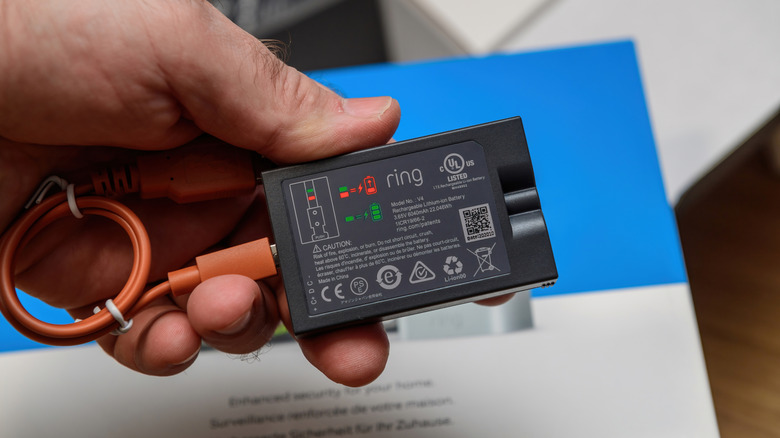
The first thing you'll immediately be made cognizant of when using a battery-powered video doorbell is, of course, the battery. Rather than needing to be wired directly into your home's power grid, a battery-powered video doorbell runs off an internal rechargeable power source. This is the primary feature that lets you just install it anywhere near your front door. With the use of a rechargeable battery, however, comes the unspoken implication that you need to periodically recharge it.
The good news is that the batteries on a video doorbell are generally pretty hearty, able to last anywhere from several weeks to an entire month before needing to be recharged. That said, you do need to recharge it on a fairly tight window, and if you forget to do so, the doorbell will simply stop working. Some brands of video doorbells may send you automatic push notifications when the battery is running low, which is helpful if you're forgetful, but it can also be annoying to keep receiving these notifications and having to tend to the battery at inopportune times, especially since you'll be without a doorbell while it's charging (and some take many hours to recharge).
Heavy usage runs the battery down
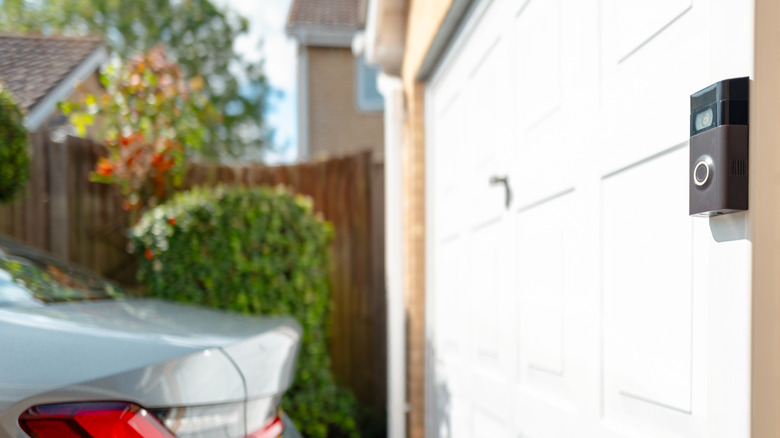
The battery on a video doorbell can last for a variable amount of time. The reason that we can't provide an exact lifespan of the battery's single charge is because that lifespan is heavily dependent on what you're doing with the doorbell, not to mention the conditions it's operating in.
When a battery-powered video doorbell isn't in active operation, it's sleeping in a low-power state, which decreases battery usage. Whenever it starts recording footage or using it's additional features like two-way audio, it turns on and starts consuming battery power at the regular rate. If you're using these features very frequently every day, your battery is naturally going to run down faster, which means more frequent recharges are required. Additionally, certain environmental conditions, like intense heat and cold, may cause greater battery draw than usual, which increases the need for recharges during the peaks of summer and winter.
May not offer continuous recording

A battery-powered video doorbell's functions are largely built around the fact that it draws from a battery. In other words, where a hard-wired video doorbell can just keep recording footage in perpetuity without worrying about power, a battery-powered doorbell can't do that, or else it'd run out of juice very quickly. This is why many models of battery-powered video doorbell simply don't offer continuous recording functionality, or at least don't have it as the default setting.
Instead, battery-powered video doorbells may opt instead for "event-based recording." This means the camera only turns on when, for instance, the motion sensor is tripped in its line of sight, or someone walks right up to the camera and presses the chime button. If you only care about recording footage when someone's at the door or an animal is running around on your lawn, that's not the end of the world, but if you were hoping for the full, round-the-clock surveillance experience, you're probably not going to get that here. The only way you could circumvent that is by setting up additional cameras around your property with 24/7 surveillance, but at that point, why even bother with the battery-powered doorbell?
May have slightly slower response times
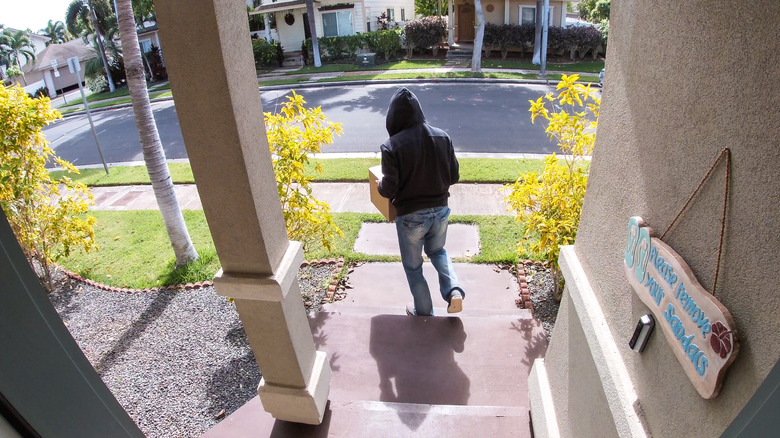
Have you ever noticed that, when your phone's battery is running low, it seems to take a little longer to wake up from sleep mode than it normally would? Battery-powered devices allocate portions of their available power in order to run their basic functions, with a little bit expended on every wake-up to kick things in gear. It's not dissimilar to the extra gas that's used up every time you start your car. Naturally, this little quirk also applies to battery-powered video doorbells, but that extra second of wake-up can have annoying knock-on effects.
If your battery doorbell has a low battery, or it's just generally getting old and outdated, it may experience slightly slower response times to stimulus. If you were hoping for the doorbell to immediately capture a motion event, for example, that increased response time could result in the camera missing whatever triggered the event, rendering the entire recording worthless. This is another advantage wired doorbells have over battery-powered ones; because they're always drawing power, they don't have to go to sleep, so they don't experience that reduced response time.
Some features may be diminished
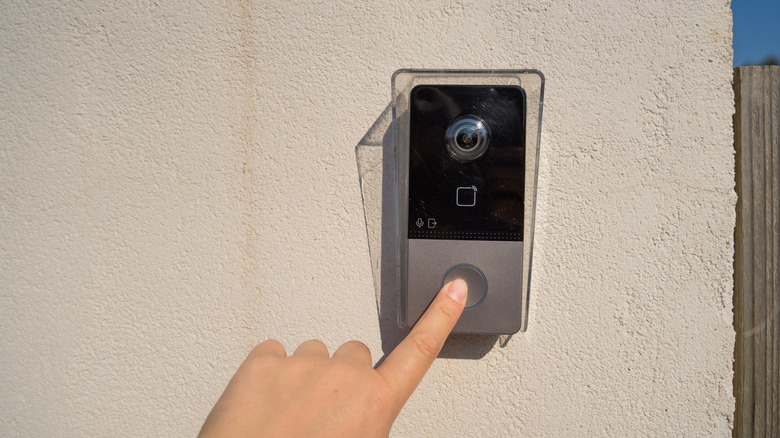
In the same vein as response times and non-continuous recording, even if a battery-powered video doorbell shares some features with its wired counterparts, there's a distinct chance that those features will be slightly diminished or otherwise less effective. The primary perk of a battery doorbell is its flexibility, the fact that you can set it up anywhere with a few screws, but oftentimes, with flexibility comes reduced specialization. "Jack-of-all trades, master of none," as the old saying goes.
For example, both wireless and wired video doorbells often possess facial recognition and recording functionality, but while wired doorbells are supplemented by additional recognition software, battery-powered models don't have the necessary power to run those functions, and so may be less effective. For example, as one Reddit user recounts, not once did their battery-powered doorbell camera manage to successfully record anyone's face despite having the feature; the only footage they ever got of anyone on their doorstep was of people leaving after visiting. If you're hoping to make extensive use of features like facial recognition on your doorbell camera, this is a bit of a cautionary tale.