

What Does It Mean When A Boat Honks Its Horn Twice?
As far as pastimes go, boating ranks among the more expensive hobbies you can choose. It is also one of the more complicated hobbies out there, as there are plenty of rules and regulations you need to know before you hit the water for the first time.
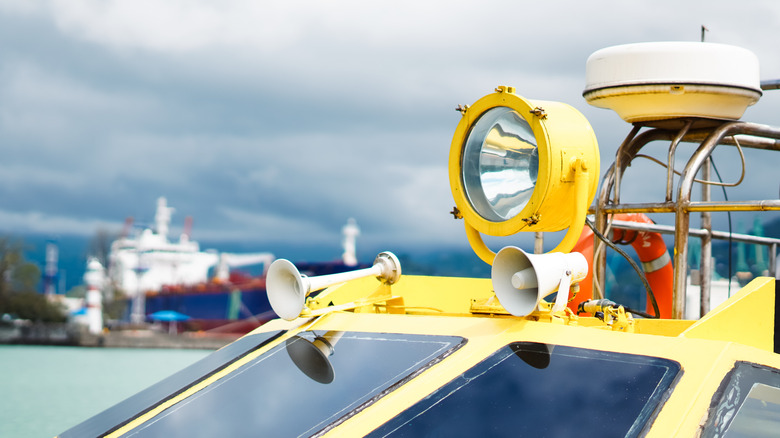
That includes knowing the sometimes intricate ins and outs of the multi-color buoy system, not to mention the handling of the boat itself. On top of that, there are any number of potentially life-saving horn signals that might pass from one boat to another. Yes, most larger boats are equipped with horns that can be used to get the attention of other vessels in the water. When it comes to boats, however, different honks can be used to convey vital information, including a boat's intent to change course.
That is precisely what it means when an approaching vessel offers two honks from its horn. More specifically, when an approaching boat signals two short honks, it signals the vessel's intent to turn to port. For those who are not well-versed in the ways of the water, that means it will turn to the left. If you hear that signal from an approaching vessel, you are expected to take the exact same measure and turn your own vessel to port as well. It should go without saying, but failure to take the correct course of action could easily result in a dangerous collision on the water.
Other horn signals boaters need to be aware of
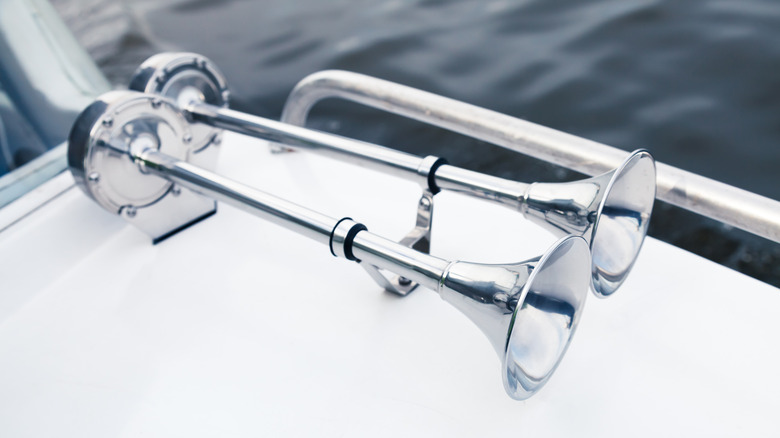
There are several more boat horn signals that should be fully understood before you set out into open waters. For instance, if you're out on the water and you hear one short honk from an approaching vessel, that means it's changing directions to starboard, or to the right. The other boat across the water is also expected to change course to starboard to avoid a potential collision.
If you hear one prolonged honk from a ship, it's a way for a motor-driven vessel to make its presence known in foggy conditions or to signal it is leaving the docks. Two prolonged blasts, on the other hand, means a motor-driven vessel is free-floating in the water without using its engine or an anchor. A prolonged honk followed by two short ones that repeats every couple of minutes can mean several things, including the approach of a sailing or fishing boat, a towing vessel, or a ship without commanding personnel present. It can also signal a ship that may be too big to maneuver in the water or is unable to properly maneuver at all.
Meanwhile, if you hear a ship signal with three short horn blasts, it means that ship is slowing, stopping, or operating in astern (reverse). That means you'll likely need to navigate around them. Finally, five short honks signal a lack of understanding regarding another boater's intent. It can also mean there's some sort of danger ahead, and you may want to have your essential safety gear at the ready.