

Launching A Boat For The First Time? Here's What You Should & Shouldn't Do
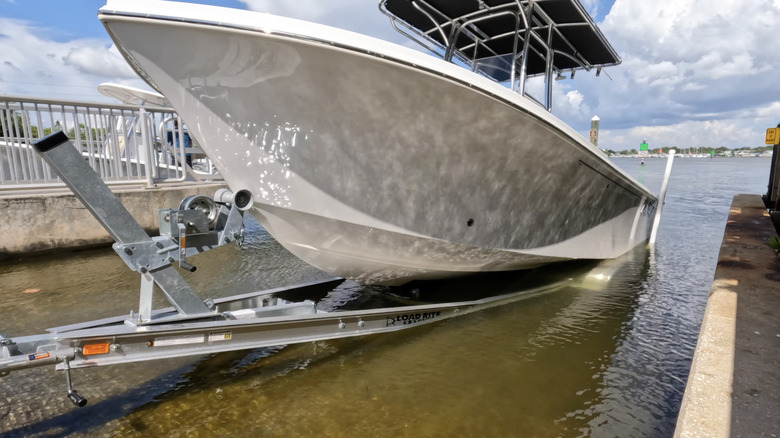
The National Marine Manufacturers Association counts close to 11.8 million registered boats across the country. And on a Sunday when the weather's particularly great, it can feel like half of those are lining up behind you. Any additional pressure, and a new boater can end up jittery. But with just the right series of precautions, you will have nothing to worry about.
To speed things up at the ramp itself, you get a staging area set up away from it to help you prep. While you are there, the first thing you need to make sure you don't miss is the drain plug. Most boaters pull it after every outing so that the rainwater and bilge water can drain off while the boat sits on the trailer, which means it has to go back in before you launch again. Forget that, and water gushes in.
One thing people botch is those transom tie-downs and motor support, which are there to lock the boat to the trailer for the highway. They are designed to strap down the boat, regardless of how deep you back in. So it's best to take them off in the staging area itself, never down at the water's edge. The exception is the winch strap, which stays hooked.
Also, while still parked there, load your coolers and tackle, because you don't want to be rummaging for those when there's a line behind you at the ramp. After that, hang a couple of fenders, the cushions that keep your hull off the dock, over whichever side you plan to tie up on. Clip your dock lines onto the bow and stern cleats, too. Also important: No matter which basic type of boat engine you run, tilt it up a touch so the lower unit clears the pavement.
Good habits for a smoother launch
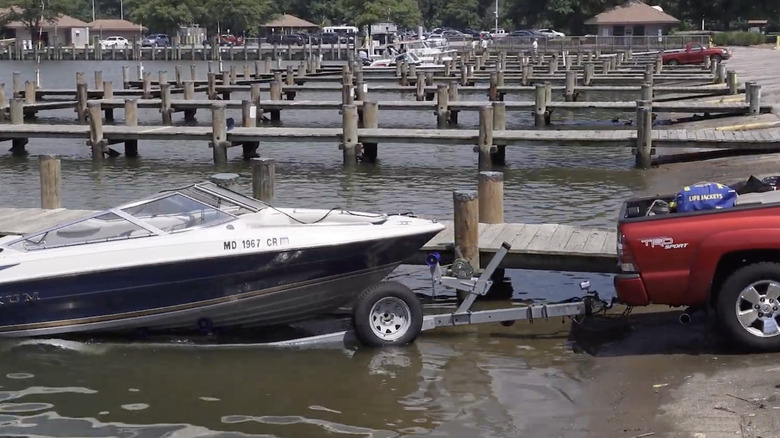
There are also a handful of small habits worth adopting that help separate a smooth launch from a sloppy one. Before actually backing your boat down the ramp, take a minute to study it, specifically its pitch and depth at the bottom, because that's what decides how far you should back in. The same instincts you lean on for safely towing a trailer anywhere else apply here, just in reverse and on a slope.
When you do reverse, lean on your side mirrors. A good hack is having a buddy on shore, ideally one who has agreed on a couple of simple hand signals. As for the final act, drop one hand to the bottom of the wheel, so that the trailer follows it wherever you steer. Roll back slowly until those fenders sit level with the waterline. Unhook the winch strap, then the safety chain, never the reverse. Then just give a gentle push, and you're off.
A couple of additional don'ts: Don't run your headlights while backing down after dark, since the glare blinds whoever is lining up beside you. And just in case the trailer starts wandering crooked, don't fight it by reversing harder, one of the more common towing mistakes. Instead, pull forward, straighten out, and have another go.
Then there are the manners. You should certainly not be rolling up with six friends to "help," because, as established above, one capable mate is plenty to help you navigate. More people mean more parking spots taken up. Moreover, if the ramp's the multi-lane kind, slide to an end rather than camping in the middle. Finally, before you turn the engine over to head out, run the exhaust blower for four minutes to clear any gas fumes from the bilge.