

What Does A Buoy With Vertical Red And White Stripes Mean In Boating?

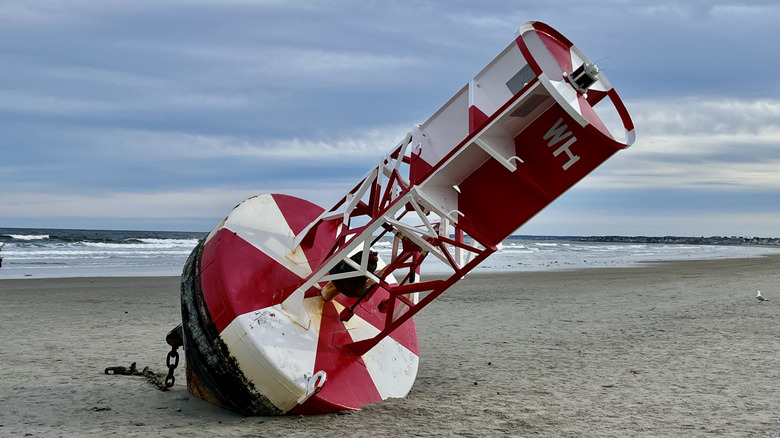
Keeping your eyes peeled for buoys is essential when boating. Buoys provide critical information that helps boaters stay safe out on the water. One important type of buoy you may encounter is a buoy with vertical red and white stripes. These are sometimes known as safe water markers or safe water marks. As you might have guessed, they indicate that the water ahead is safe and free of obstructions on all sides.
These types of buoys differ from others in certain critical ways. For example, red and green buoys serve as navigation aids that mark out channels when boaters require safe routes through the water. When a boater is returning from the open water or otherwise traveling inland, the red buoys should be on the right (starboard) side, and the green buoys should be on the left (port) side.
A boater can legally pass a buoy with red and white vertical stripes on either side. That said, convention holds that they should strive to pass such a buoy so it's to the left of their boat as they pass. Safe water marker buoys can show up in various spots. Sometimes, they appear in open fairways and mid-channel locations to provide boaters with a centerline reference point. They may also show up at the seaward end of a channel. When they do, they indicate that a boater is leaving an established route and entering open water.
The importance of learning the buoyage system
Familiarizing yourself with all the buoys you may encounter before taking a boat out is key to staying safe and avoiding legal penalties. The International Organization for Marine Aids to Navigation establishes a buoyage system you can study to ensure you never come across a buoy whose meaning you can't interpret. Thorough study of this system can also help you appreciate how the meaning of some buoys can vary somewhat depending on the context in which they appear.
For instance, a yellow buoy can indicate a number of potential hazards and restrictions. Examples include (but aren't limited to) safe areas for swimmers and areas where marine life is protected. An orange buoy, on the other hand, is meant to grab a boater's attention for the purposes of conveying important safety information, such as speed limits or no-wake zones.
It's generally wise to treat operating a boat the same way you treat operating a car. Just as you need to watch out for traffic signs and signals when driving, you need to look for buoys when boating. Overlooking or ignoring one could cause safety issues that otherwise would have been easy to avoid.