

What Does An Orange Buoy Mean For Boating?
The sea is full of strange mysteries, like how a ship can flip from horizontal to vertical, or how submarines communicate underwater. However, buoys shouldn't be mysterious. They often convey important, even vital information. If you're new to the water, or even launching a boat for the first time, here's what an orange buoy indicates.
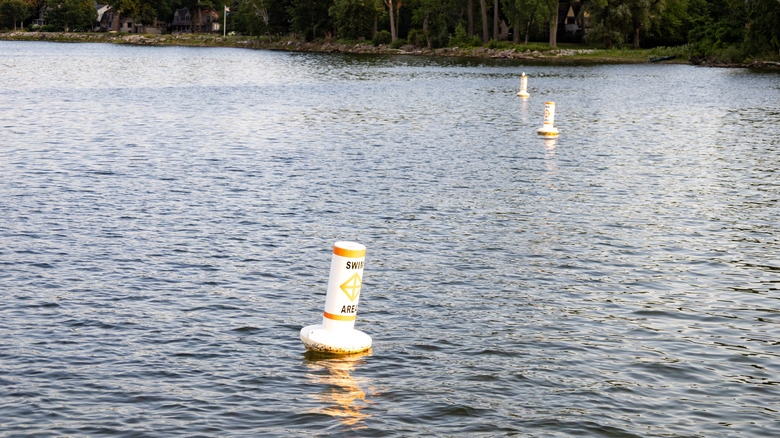
Orange is generally the color of a regulatory or informational marker: It is meant to make a boater slow down, look closely, and follow the instruction or warning displayed. In U.S. inland waters, these markers are typically white with orange bands and an orange symbol. The symbol in the center is the real message.
An orange circle indicates a controlled area where boaters must follow a stated operating rule. That could mean a speed limit, no-wake zone, or horsepower restriction. The marker should include the specific instruction in text, so a circle does not mean every boat must stop, just that the rule on that particular buoy applies. An orange diamond is a warning. It tells operators a hazard is nearby, such as rocks, a shallow area, or a submerged obstruction.
A diamond containing an orange cross has a more direct meaning: boats must keep out. These markers often protect swimming areas, dams, spillways, or water-intake structures. An orange square, meanwhile, provides useful information rather than a restriction or hazard warning. It may identify a marina, point toward a launch ramp, or show a distance.
What to do when you see one

The safest response to an orange buoy is to treat it as a signpost on the water. First, reduce speed enough to read the symbol and any wording. This is especially important on busy lakes and rivers, where a no-wake zone or restricted area may begin close to docks, swimmers, shoreline property, or changing water conditions. A boater who assumes every buoy is a channel marker can make a costly and potentially dangerous mistake.
It also helps to separate orange markers from the familiar red and green aids to navigation. Red and green markers define the sides of a navigable channel and work with the "red, right, returning" rule in the United States. Orange-and-white buoys do not replace that system. They communicate a local condition, restriction, warning, or destination that applies in the immediate area.
For example, imagine entering a narrow cove and spotting a white marker with orange bands and an orange circle reading "NO WAKE." That buoy is not merely offering advice. It identifies an operating restriction, so the operator should immediately bring the boat down to a speed that produces no damaging wake. If the buoy instead shows an open orange diamond with the word "ROCKS," the right move is to slow down, maintain a careful lookout, and steer clear of the indicated hazard. A crossed diamond near a beach means the boat should remain outside the marked area entirely.