

What's The Difference Between Marine Flares And Road Flares?
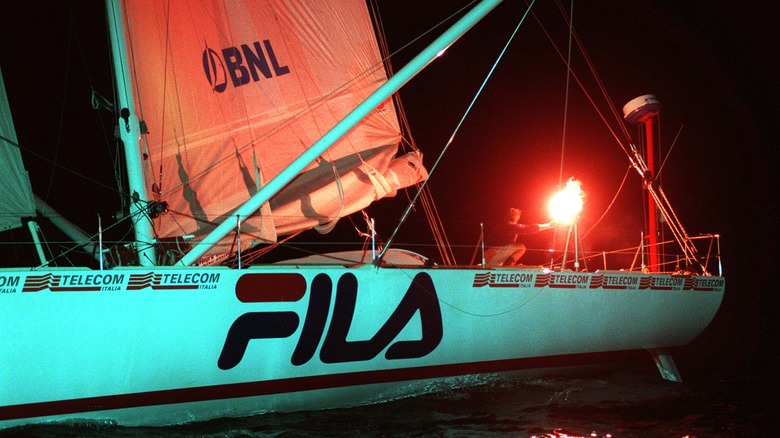
A flare isn't just a flare, especially when you compare those used on the road with those used on the water. Because they differ and serve very different purposes, they aren't interchangeable. Road flares differ from marine flares in that they aren't waterproof or rated for marine visibility distances. Additionally, road flares don't carry any certification from either the United States Coast Guard (USGC) or the International Convention for the Safety of Life at Sea (SOLAS), as established by the International Maritime Organization (IMO). Thus, under no circumstances can a road flare be used in place of the more specialized marine flare.
Federal regulation 33 CFR § 87.01 defines 16 types of signals that can be used for any vessel "in need of assistance." These include pyrotechnic rockets or shells that shoot red stars, parachute flares or hand-held flares that create red light or release an orange smoke signal, and several electronics-based visual distress signals (VDS). Boats and vessels on federally controlled waters – think coastal waters, the Great Lakes, territorial seas, or bodies of water directly connected to any of the aforementioned – longer than 16 feet must carry at least three of these distress signals. Boaters should not expect buoys they come across to have emergency flares.
Every boat must also carry three nighttime use flares (only three if the VDS is approved for both day and night use) and the USCG must approve them all — pyrotechnic-based devices must also include clear manufacture and expiration dates. Such marine flares should also be kept in a waterproof container and stored a good distance away from sunlight or engine heat.
Use the proper flare appropriately
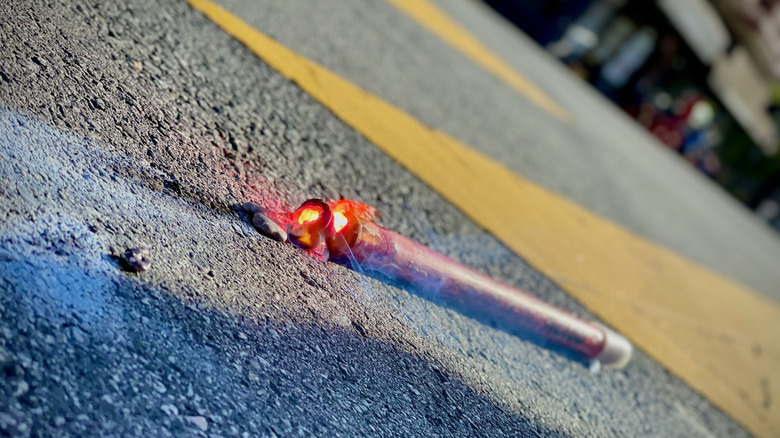
Flares used while out and about on the roads aren't governed by the same rules. In fact, no federal or state law requires the everyday commuter to carry them. And while the National Highway Traffic Safety Administration (NHTSA) establishes safety standards for manufacturers, it has no say in what the ordinary driver carries in their vehicle. On the other hand, commercial vehicles must carry at least six fusee-style flares under Federal Motor Carrier Safety Administration (FMCSA) regulation 49 CFR § 393.95. However, these flare requirements have seen changes with the rise of autonomous trucks.
Brightness also differs significantly between road and marine flares. Road flares aren't normally used to pinpoint a car's exact location, while marine flares are used precisely for that reason. In certain bodies of water where extreme distances are involved, or when they're enveloped by bad weather like squalls or fog, you want a marine flare to be visible. Road flares are typically dimmer, but need to last much longer because they're used to alert other drivers to a breakdown for what can be a long time.
Flares can also burn hot and can damage fiberglass, metal, and flesh. Most flares last an average of 36 to 42 months before the chemicals and propellants inside start breaking down. Expired flares are considered hazardous waste in most states because of those chemicals. For example, Perchlorate is an inorganic compound that the FDA considers such a significant environmental and health concern that it's regulated in food and water testing. Expired flares can't simply be tossed in the trash. While some fire departments and marinas hold periodic hazardous waste take-back events, check local laws for proper disposal.