

How To Spot 'Feathering' On Tires – And What Causes It
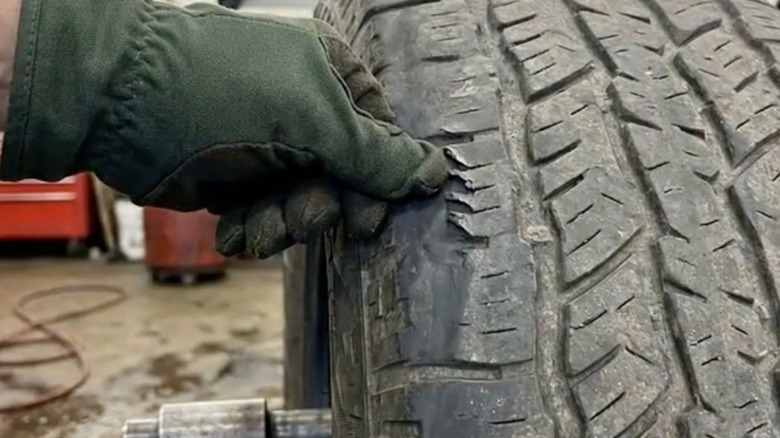
A form of uneven tread wear, "feathering" is what happens when one edge of the tire remains rounded, while the opposite side is sharp. Sometimes referred to as "tire scuffing," there are several ways to know if your tires are experiencing it. In the early stages of feathering, you might be able to feel it with your bare hands. For this to work, you'll first want to park on a flat surface. To get the most accurate results, you'll want to make sure the tire is not expanded from driving. Next, you need to run your fingers on the tire from one edge to another. Typically, a healthy tire will feel the same when dragging your finger coming from both directions, similar to how you pet a dog. A feathered tire should register as smooth in one direction, but going against the wear should have some sensation of resistance, such as sharpness or roughness. Afterward, you'll need to repeat this process across all the tires in your vehicle.
Once the feathering has progressed enough, it might also be possible to diagnose it just by looking. As with the name, the marks will look kind of like feathers. In some cases, you could also potentially feel excessive vibration, which is also a common sign of a wheel alignment issue. Lastly, feathering can result in a pulling sensation or poor handling when you're driving, which can contribute to issues with road traction. If not addressed, this could lead to possible safety risks.
What are the common causes of feathering?
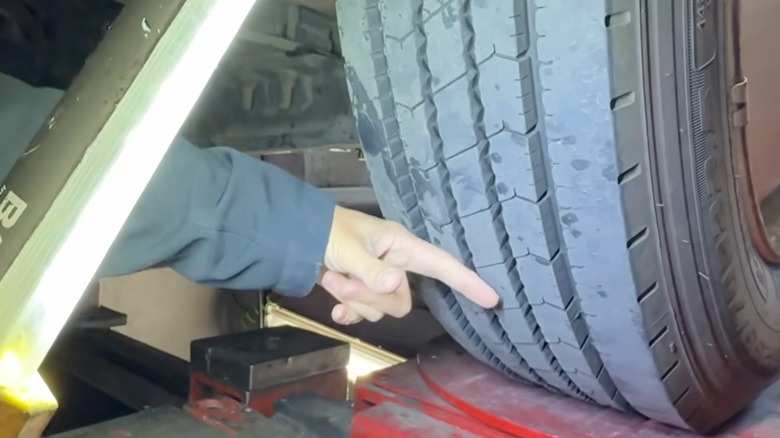
We've mentioned before that feathering is a common red flag that mechanics tend to spot, especially in regard to the health of your car's suspension. In addition, feathering could also be a symptom of poor tire alignment, according to Bridgestone. In particular, it says that an excessive toe and caster could potentially be the culprit. So, if you want to elongate the lifespan of your tire, address any signs of feathering before it's too late. Depending on how bad the feathering is, the right approach to fix it will vary. Because of this, it's best to ask a professional to inspect your tires for you and give their opinion on the best course of action. In some cases, GoodYear says that you could bring your tire back to normal by fixing the root, such as getting your tires aligned. But in others, it cautions that you might be better off replacing the tire entirely.
To avoid feathering in the future, it's important to keep up with your tire health. To do this, you should follow the right maintenance schedule for tire alignment and rotation. Some factors that can affect the right tire rotation intervals are the type of vehicle you own, your driving habits, and the terrain you drive on. Next, you'll want to get an alignment as often as you would get your oil change, which should be around the 6,000 mile mark.