

How To Prepare Your Robot Lawn Mower For Winter Storage
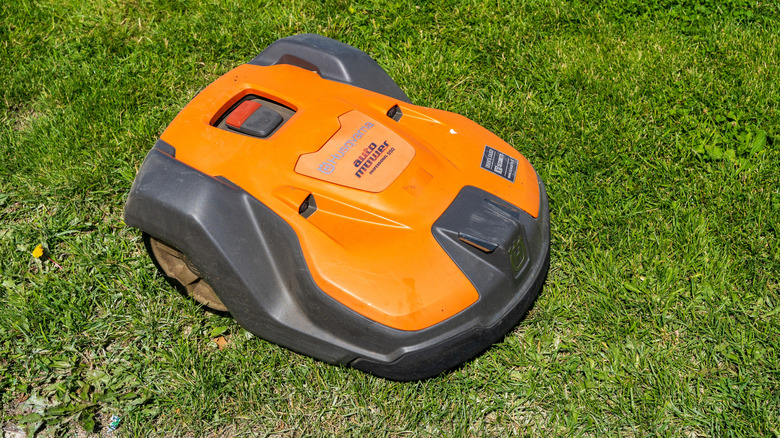
As colder temperatures begin to set in around the country, some homeowners are likely taking steps to winterize their lawn mower for proper storage. While the process for winterizing gas-powered lawn motors has been well-documented, that might not be the case for automatic, robot mowers, which have become popular far more recently. The storage process is a bit different, and it's important to remember that the exact method can vary based on your specific brand and model.
For example, Husqvarna recommends fully charging its Automower before you store it. Certain older models may need to be recharged every three months or so during extended storage as well. You also need to adjust the mower's GeoFence settings as needed, and take the time to clean away any buildup from the unit's moving components and charging contacts. Do a visual inspection, checking the wheels, blade disc, and body panels for any signs of damage. Keep the unit in a dry space indoors and store it right-side down on an even surface, making sure the room's temperature doesn't dip below 32 degrees Fahrenheit.
Meanwhile, Stihl warns against cleaning its iMow models with a pressure washer, or any running water for that matter, before storing them. You should also safeguard and cover the mower's charging station before putting it away for the season if you're keeping it outdoors. When it comes to the timeframe for storing your mower, Stihl recommends doing it before the first frost of the season hits, instead of waiting until winter actually arrives. For storage recommendations and other tips for your exact mower, consult the owner's manual.
How cold weather affects a robot lawn mower battery
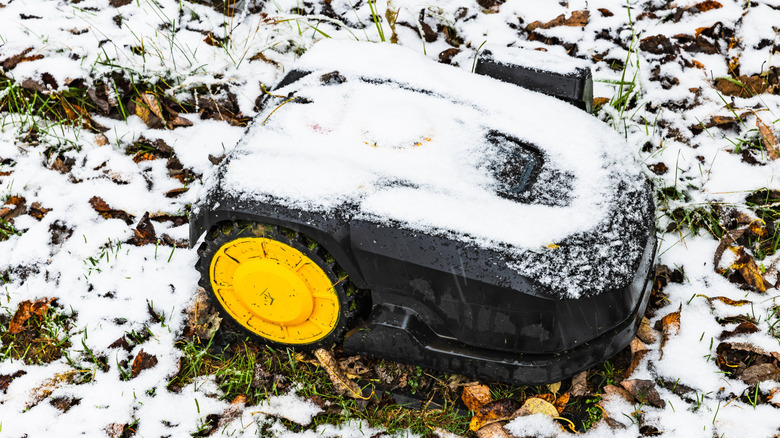
If you're accustomed to storing a traditional gas-powered lawn mower in a freezing-cold storage shed, you may be wondering why you can't do the same with a robot mower. The fact is, an automatic mower's lithium-ion battery can be directly affected by freezing-cold temperatures. That's because the battery's internal chemistry doesn't respond the same way when temperatures begin to drop. This can impact the battery's ability to deliver power efficiently, eventually leading to reduced performance.
It's also important to know that while a lithium-ion battery might still be able to function in cold conditions, that doesn't mean it's safe to recharge one at the same temperature. Charging below freezing can cause metallic lithium to build up on the battery's anode. This can lead to battery cell damage while also increasing safety risks overall. That's why you should let a cold battery get back to the manufacturer's suggested temperature before charging. Once again, you can check your user manual for requirements on your specific model.
Cold weather can also affect how much work a robotic mower can do on a single charge. In a 2021 study published in Applied Energy, researchers tested nine types of commercial energy-storage cells under extremely cold conditions. Lithium-ion batteries showed the biggest decline in performance as temperatures dropped. This means that less stored energy was available for use, and the battery's ability to deliver power was reduced.