

Electric Vs. Tow-Behind Dethatcher: Which Might Fit Your Needs Best This Fall?
We may receive a commission on purchases made from links.
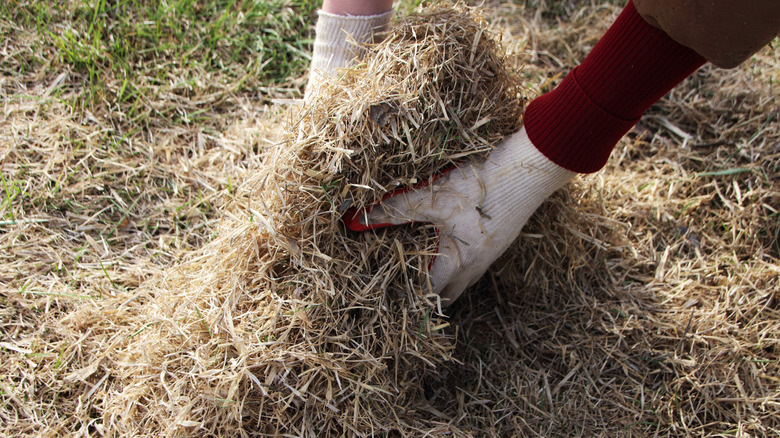
A particular outdoor phenomenon that you're likely to encounter during the fall season is thatch, a thick, brambly amalgam of dead stems, roots, clippings, and leaves that gradually starts to appear on your yard as the temperature drops. A bit of thatch can actually help protect your yard, but too much will start to choke the grass beneath of vital sunlight and water. When the thatch gets too thick, it's time to engage in some cleanup with a dethatcher.
Putting aside handheld, rake-like dethatchers, there are two broad options for heavier-duty dethatching: electric walk-behind dethatchers, and tow-behind dethatchers that need to be hitched to a vehicle like a riding mower. Both of these tool types can get rid of thick thatch, but the best one for your particular situation will depend on various factors like the size of your yard, the types of equipment you already have handy, and the composition of your lawn and local greenery. Generally, though, electric dethatchers are better for smaller lawns, while tow-behind dethatchers are better-suited for larger lawn work.
Electric dethatchers are better for thicker thatch on smaller lawns
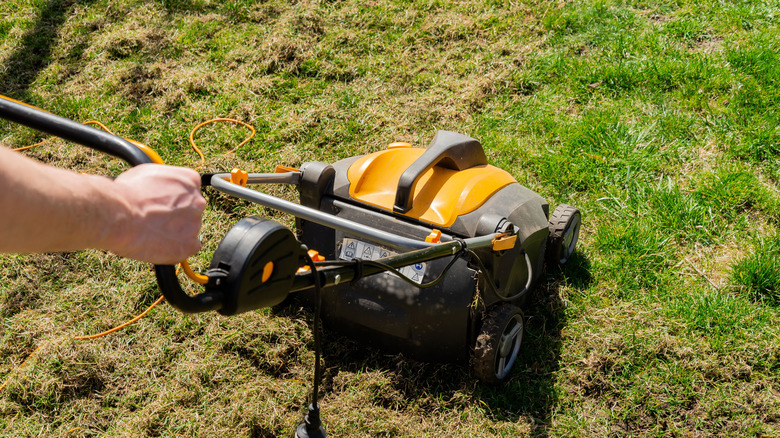
A walk-behind, electric dethatcher like the Ryobi 18V dethatcher works similarly to a lawn mower, except instead of firing up its gas-powered engine, you turn on its battery and push it around your yard. The rotating tines pick up and detangle thatch as they go, with power from the motor helping them to force their way through particularly brambly patches. Many electric dethatchers also have adjustable depth, allowing you to determine how close to the lawn the tines spin, or how deeply they dig in.
Electric dethatchers, thanks to their powered designs, are great for detangling and removing particularly thick clumps of thatch. Some of them also have built-in collection bags to handle cleanup for you. However, because you need to manually push them around yourself, they're best-suited for small to mid-sized lawns with a surplus of thick thatch to deal with. If you have a much larger lawn, it would naturally get tiring manually walking over its entire length, even with the motor helping out. For thinner thatch patches, on the other hand, this heavy-duty tool is a little overkill. It might also be expensive to buy outright, though you might be able to mitigate the cost by renting it instead.
Tow-behind dethatchers are best for quicker jobs
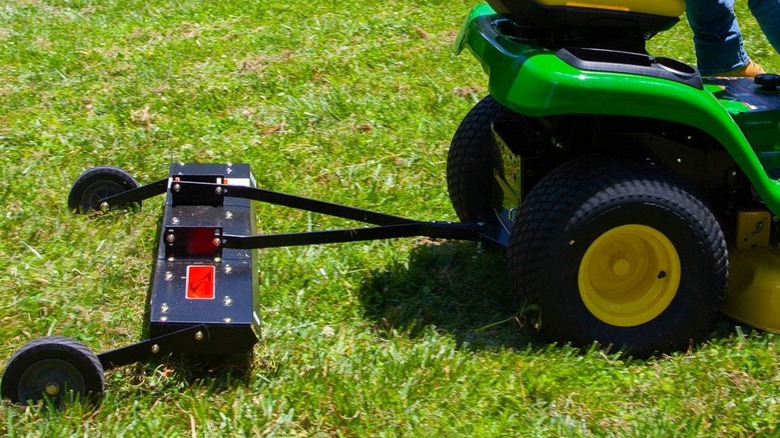
A tow-behind dethatcher works pretty much how the name implies: It's a time-saving attachment hitched to the back of your riding mower rather than a standalone device that needs to be manually pushed. Unlike electric dethatchers, they don't have a motor spinning their tines, instead relying on the force generated by whatever's pulling them. Other than that, the basic principle is similar, with large rows of tines scraping along the ground and detangling thatch piles.
A tow-behind dethatcher is the optimal choice for larger yards, especially for people who already own and regularly use a riding mower. If you're hopping on to tend to the lawn anyway, you can hitch up the dethatcher to handle some accumulated thatch while you perform your regular lawn mowing routine. Tow-behind dethatchers are typically much wider than pushing models, allowing them to grab larger swaths of thatch at once.
However, they may not have an electric model's adjustable depth, so they may not be able to dig down into especially deep, tangled piles. This is why tow-behind models are better-suited for light-to-moderate thatch that is heavy enough to be noticeable, but not so heavy that they require concentrated action to be removed. Tow-behind models may not have collection bags, either, so you'll need to go back and clean it all up after detangling anyway.