

At What Temperature Do Mini Splits Lose Efficiency In Cold Weather?
Mini splits offer an energy efficient alternative to traditional central air conditioning systems designed to keep your home cool in warm, humid climates. Some mini splits include heat pump systems in addition to air conditioners to provide year-round comfort by heating and cooling your home with a single system.
In spite of an extremely common heat pump myth, the heat pumps built into many of today's mini split systems are capable of delivering heat inside a home when outside temperatures are well below the freezing mark. While standard mini split heat pumps can extract enough heat to efficiently operate in temperatures down to 5 degrees Fahrenheit (-15 Celsius), some specialized cold-climate models can operate efficiently at temperatures as low as -25 Fahrenheit (-31 Celsius).
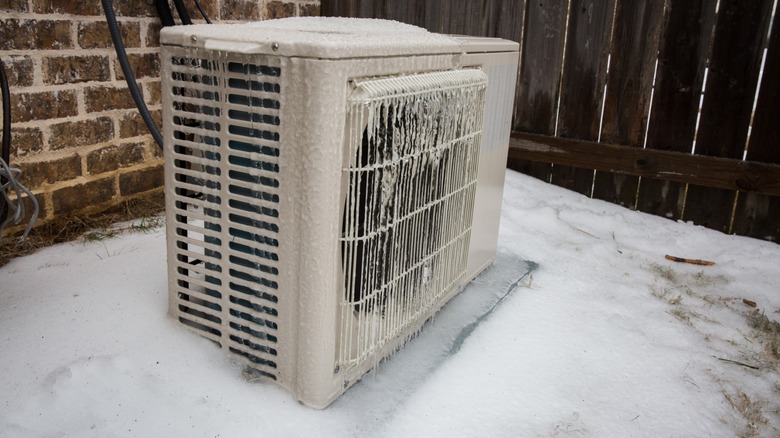
Heat pumps, including those built into mini splits, operate much like air conditioners, only in reverse. As a result, the outside unit's condenser coils can accumulate frost when temperatures are low and humidity is high. To combat excessive frost, which can ultimately block airflow through the heat pump, the unit stops producing heat to run a defrost cycle. As frost conditions increase, the defrost cycles become longer and more frequent, reducing the unit's heating efficiency and lowering temperatures inside the living space.
The location of the outside part of the mini split can play a factor in its cold weather efficiency. When possible, protect the unit from the wind and any accumulation of snow and ice. While it's a good idea to sweep away any snow from the unit and its surrounding area if safe to do so from ground level, you should never scrape, pry, or hammer away any snow or ice accumulation that doesn't come off easily.
Best mini split heat pumps for cold weather

Before investing in a mini split heat pump to keep you cool in the summer and warm through the winter it's essential to do some research, which is likely what led you here. There are obviously some air conditioner models to steer clear of, but with rapidly developing mini split technology there are some newer names that may not be familiar but offer quality units.
Mitsubishi and Fujitsu (now known as General, Inc.) are two mini split brands that top the Consumer Reports' recommended list. The specific models on the Consumer Reports list, Mitsubishi HM Series and Fujitsu LPAS 12LPAS1, were recently discontinued due to the phasing out of R410A refrigerant in new HVAC units under the American Innovation and Manufacturing (AIM) Act, which became law in 2020. The Mitsubishi MSZ-HX mini split replaced the HM Series using R454B refrigerant, while the next-generation Fujitsu Airstage R-32 Series uses R-32 refrigerant as its name implies.
Whichever mini split heat pump you choose, if you live in an area with extremely cold weather, or simply prefer more confidence in your home's heating system, consider having an additional source of heat as a backup. While natural gas or propane furnaces or electric space heaters are typical options, they can fail when the electrical grid fails unless you have backup electrical systems. Options that don't require electricity include ventless gas fireplaces and wood-burning stoves, but any of these alternatives should be researched in depth before winter weather arrives.