

5 Air Conditioner Models You Should Steer Clear Of

With temperatures rising across the planet, air conditioners are less of an option and more of a necessity in many cities. Add to that the increasing frequency and intensity of heat waves, and ACs now have to run for hours continuously during extreme weather.
Effective cooling systems won't set you back too much, but just because it blows cold air doesn't automatically make it safe. Despite stringent manufacturing protocols, even buying from the most reliable air conditioner brands doesn't guarantee a lifetime of safe operation. Technical malfunctions in air conditioners can lead to a variety of concerning problems beyond simple cooling issues, like mold growth, fire, and burn hazards.
Units with more serious, widespread issues undergo recalls and are pulled from circulation. However, people, whether intentionally or unintentionally, might sell these products second-hand at flea markets and online resale platforms. In this article, we discuss five air conditioner models that have been recalled so you can steer clear of them. These models span window ACs, PTACs, and portables. All of these are confirmed Consumer Product Safety Commission (CPSC) recalls, so look out for these models, especially when buying used.
Midea U and U+ Window Air Conditioners
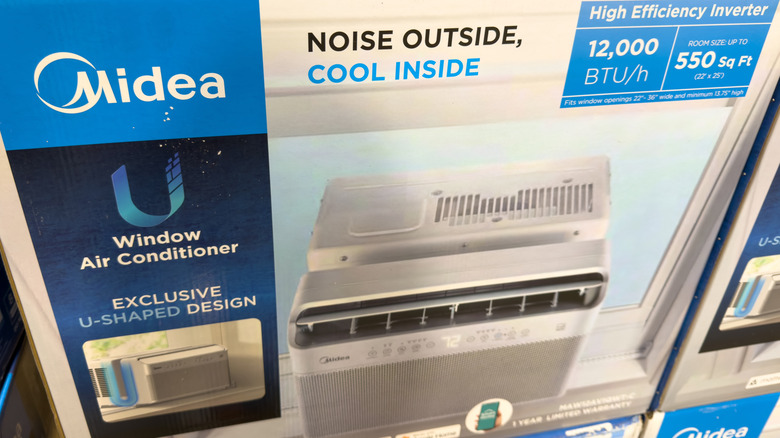
Midea's U and U+ Window AC line spanned over 40 models and was sold under many brand names, including Frigidaire, Danby, Comfort Aire, and Keystone. The unique U-shaped design of the air conditioner allowed it to sit on the windowsill without eating up the entire frame.
For anyone comparing a window AC and mini split, Midea's U-shaped lineup has become a popular alternative, running quietly and obstructing less of the window view than standard window units. The models were sold between 2020 and 2025 at major retailers like Home Depot, Costco, and Amazon. They were even rated Wirecutter's top pick, bolstering their credibility.
This AC model didn't experience a mechanical failure, but its design didn't facilitate quick drainage of water, creating conditions ripe for mold growth. There were at least 152 complaints to the company, with a few customers experiencing allergies, sore throats, and full-blown respiratory infections. Midea issued the full recall on June 5, 2025, pulling back around 1.7 million units.
The organization gave customers the option for a free repair or a full or partial refund, depending on the date of purchase. For buyers opting for a repair, Midea would send a technician to install a new drain plug or mail a DIY repair kit. If you're a current owner or are planning to purchase this air conditioner second-hand, make sure to cross-check its model number on the official Midea U and U+ window AC recall site.
Amana Packaged Terminal Air Conditioners/Heat Pumps with DigiAir
You might not recognize the term PTAC, but you've seen air-conditioning units built into or under windows in hotels. Packaged terminal air conditioners are common in hotels and apartments, working independently of a central system to keep your room cool.
Since property owners or managers maintain these units, most guests wouldn't consider that they're unsafe. In this case, a huge line of PTACs from Amana had a major engineering flaw that made them an active fire hazard. This line of ACs eventually cost the manufacturer, Daikin Comfort Technologies (DCT), millions. These ACs were sold from May 2015 to January 2023, and they were equipped with DigiAir Modules — systems that bring in outdoor air to dehumidify. However, the compressors in these modules were prone to overheating and posed a fire or burn risk.
Starting in 2017, customers began filing warranty claims, and there were over a dozen fire reports and one injury due to smoke inhalation. Since DCT didn't report this promptly to the Consumer Product Safety Commission, it was slapped with an $8.5 million civil penalty and required to strengthen its compliance and submit annual compliance reports. Over 62,000 units were recalled in August 2023, and their model numbers start with PMC or PMH. If you're an owner, visit the Amana PTAC DigiAir recall page to get help disabling the DigiAir compressor and getting a free technician visit.
Royal Sovereign/Royal Centurian Portable Air Conditioners
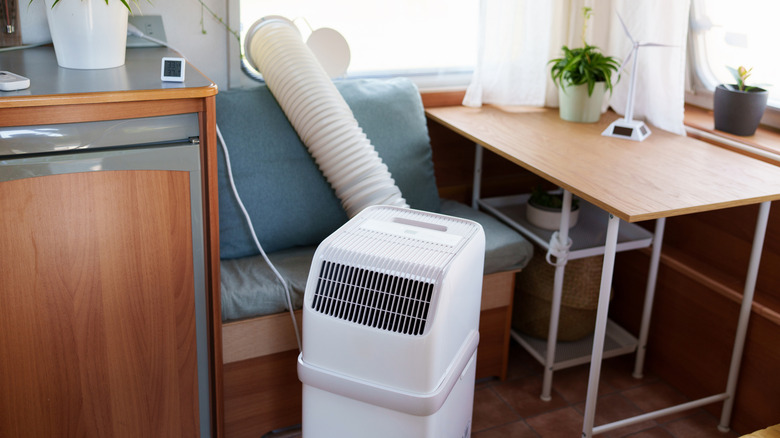
Easy on the wallet and easier to set up, portable air conditioners are great for targeted cooling. And when temperatures are at their peak, an inexpensive second-hand unit can feel like an oasis in the desert. However, some options shouldn't be touched even with a 10-foot pole, like the Royal Sovereign (or Royal Centurian) portable air conditioners. Manufactured in China and imported by Royal Sovereign International in New Jersey, the affected lineup had seven models priced around $290. Over 33,000 units were sold from March 2008 to August 2014 at Costco, Amazon.com, Best Buy, and Home Depot.
The issue with these ACs was a defective drain motor that could ignite the unit's plastic enclosure, posing a major fire and burn hazard. Worse than Daikin's PTAC case, Royal Sovereign didn't promptly notify the CPSC and misled it in 2010 by concealing active fire reports and falsely claiming it had discontinued the products. In 2016, a woman died from smoke inhalation and her two children were injured because their portable AC caught fire. The Department of Justice alleges that there were at least 42 fire reports by 2016.
Following a December 2021 recall, Royal Sovereign was fined $8 million in criminal fines and a $16.025 million civil penalty, the maximum authorized by the CPSA. The company, however, shuttered its consumer division and paid only $100,000 of the civil penalty. Current owners must stop using the unit and follow the instructions on the Royal Sovereign portable AC recall page.
Goodman Packaged Terminal Air Conditioners/Heat Pumps (PTACs)
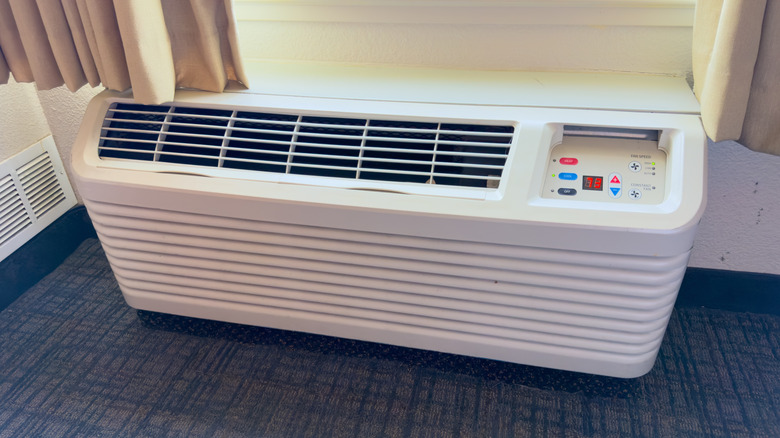
The Goodman PTAC/heat pump recall in March 2018 affected more than 530,000 units in the United States and roughly 3,400 in Canada. These units were sold from January 2010 until February 2018 under four brand names — Goodman, Amana, York International, and Energy Knight. Distributed through Goodman Manufacturing's dealers, these PTACs were commonly installed in hotels, schools, apartments, and commercial spaces, priced from $700 to $1,400.
The firm received nine reports of the units igniting, including one case of smoke inhalation requiring medical attention. The fault stemmed from the unit's outdoor fan motor overheating, turning into a fire and burn hazard. Although this crisis was triggered by a design flaw, high temperatures can damage systems, making it important to identify warning signs that extreme heat is killing your AC.
To correct the issue, Goodman sent consumers free repair kits, authorized technician support, and reached out directly to commercial owners to arrange free repairs. However, the safety hazard continued despite the 2018 recall because PTAC Crew and PTAC USA refurbished and resold some of these units, which were then recalled in 2021.
This failure wasn't an isolated incident for the brand. Back in 2016, Goodman had already paid a $5.55 million penalty for failing to properly inform the CPSC about a different PTAC model's power-cord fire hazard and for understating fire incidents. The official Goodman PTAC and heat pump recall page has more information regarding the 2018 recall models.
Amana Window-Room-Air-Conditioners and Through-the-Wall ACs/Heat Pumps
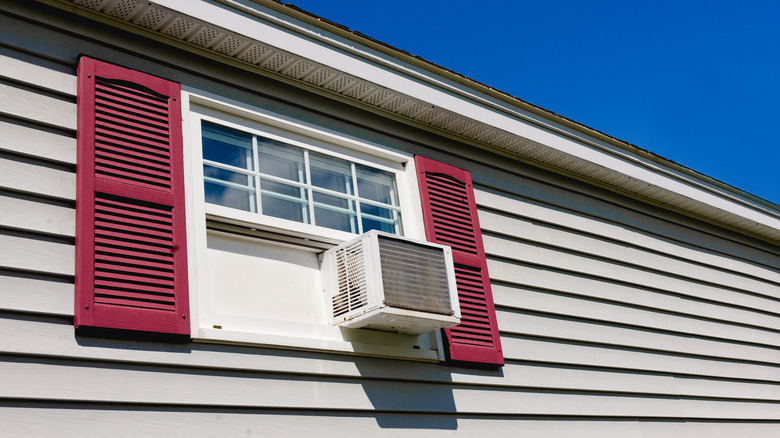
The previous options in this list were spread across the past few years, but the Amana Window-Room-Air-Conditioners (WRAC) and Through-the-Wall (TTW) ACs and heat pumps were recalled just weeks ago on June 25, 2026. It was right at the start of the heatwave that's impacting hundreds of millions of people, when demand for reliable air conditioning is especially high.
These ACs, ranging from $850 to $1,500, were sold from April to December in 2025 via HVAC dealers and direct sales. The affected units have model numbers starting with AE, AH, and PB, and they're commonly installed in apartments, hotels, and commercial spaces. The safety concern with these models was that the heating element would remain active even after the device was turned off — nothing like the common problems with air conditioners. If an electrical fault occurred, the device would become a fire and burn hazard.
Over 13,000 units have been recalled, and as of July 2026, the company has reported a single case of plastic melting on the unit, but no injuries. Unfortunately, there's no scope for repairing these models, and DCT has asked customers to stop using them immediately. Users are eligible for a full refund once they've shared an image of the AC with its cord cut and its serial number with DCT. You can find more information regarding these steps on the official Amana TTW & WRAC recall page.