

What Are Those Vents At The Base Of A Windshield For?
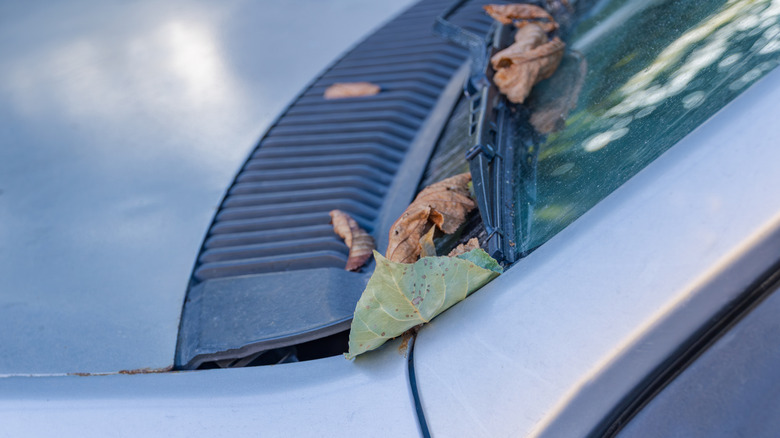
Modern cars are full of cutting-edge technology under the hood, but there are still quite a few parts that are more primitive — stuff we take for granted, if we notice them at all. This particular exterior component is likely among the most looked-at, apart from perhaps your windshield — it's the little vents just below the windshield. You know that big black thing that goes across the whole bottom of the glass, with the little vents in it? That's called the cowl panel.
The cowl panel is easily-identified — on most cars, it's likely black molded plastic or sometimes a painted metal surface, and it usually houses numerous elements, most notably the windshield wipers and those distinctive vents. The vents don't serve a performance function like, say, cowl induction does. The cowl panel takes all the stuff like water, dirty air, and debris, and redirects all of that in a controlled manner. Moreover, it acts as the "throat" of your vehicle's HVAC system, ensuring that fresh air goes through one tube and debris through another.
This isn't just a trim piece; the vents have a geometry to them that's meant to work with airflow in a specific way. Otherwise, water and dust particles can get into delicate electronics and then you have a plethora of cascading problems. Yes, cowl panels can fail, too, just like anything else on your car. Here's more about their function and what can go wrong.
What exactly do the vents do?
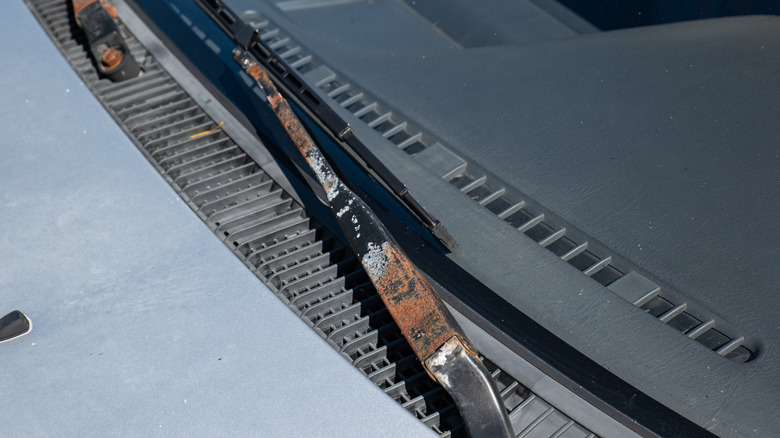
The base of your windshield is one of the most vulnerable parts of your car. Think about it — consider how much water runs down your windshield when it rains, the turbulent air circulating there at highway speeds, the random detritus that falls in that crack like leaves or dust. Imagine if all of that just sort of sat there in that gulley, inviting rust and corrosion as well as blocking up the HVAC systems. That's why the vents are there.
The cowl does more than just HVAC duties, though. Bear in mind that this component sits between the windshield and the engine bay, so it acts as a stiffener and aerodynamic element. The cowl itself braces the windshield and takes up some of the slack from the A-pillars, along with smoothing the transition between front and midsection across the length of the car. The metal bracing underneath all this acts as a crucial support in unibody cars, being located where the doors and hood are mounted. These metal components need to be preserved and kept away from the elements, which is why the panel redirects all that stuff away.
Lastly, the panel directly interacts with the air. HVAC systems rely on air coming in from the cowl, so you need a way to draw good air in without also drawing in all the dust, road salt, and so on, hence the reason for the meshes to keep large debris like leaves out; it's like your car's grille, but for the air conditioning. The cabin air filter acts as the final line of defense — bear in mind that those are perishable items, too.
What happens if it's damaged or missing
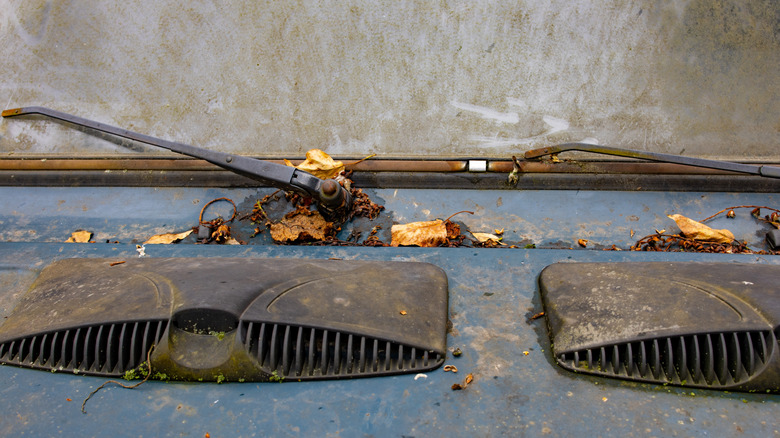
Can you start your car up if it's missing a piece of exterior plastic? Well, yes and no. Remember, that piece of plastic is the main device keeping water away from the delicate circuitry at the firewall. If it rains and you don't have one, you might as well take a jug of water and pour it straight into the dashboard. After that, it's anybody's guess what still works.
There are many different ways a cowl panel can get damaged. Because it functions similar to a gutter on a house, this can similarly get clogged up, especially if you park under trees regularly. So remember to regularly wash your car and periodically check the cowl, removing any errant leaves sitting on the vents. Another way is hairline cracks. These are generally plastic parts, so they may get brittle and crack over time and constant exposure. This can damage your windshield seal, cause leaks inside the dashboard, and eventually lead to corrosion as the water infiltrates the vehicle's frame.
Fixing a cowl panel isn't exactly a trivial exercise, either. You have to remove the wipers and motors, undo any fasteners and seals, and reapply any weather stripping that's damaged. But it's a crucial step if you're experiencing any common symptoms, ranging from a whistling noise at speed (the air is turbulent and producing a weird noise there) to full-blown leaks into the passenger compartment. Because for every leak you can see, there may be two more you can't see.