

Is It Safe To Use A Chainsaw In The Rain? What To Know Before You Cut
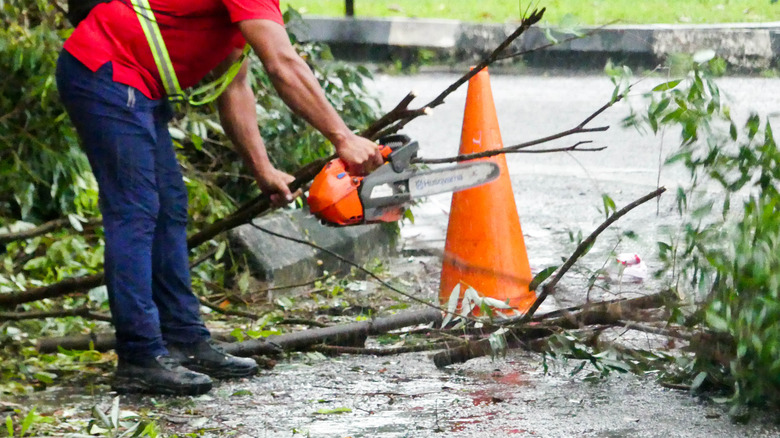
If you have a fallen tree to clear or one that needs a little trimming, you can't always wait for the rain to stop, especially in humid regions where it can rain for hours or days at a stretch. Naturally, you might wonder whether it's safe and practical to use a chainsaw. While it's generally better to avoid using a chainsaw while it's raining (no matter what brand of chainsaw you use), there are several factors at play. And as surprising as it may sound, sometimes it's not as big a problem to use a chainsaw in wet weather, provided you take the necessary precautions.
Operating a chainsaw in the rain is not recommended for several reasons. First, when the chainsaw is wet, it may be more difficult to get a good grip, which increases the likelihood of accidents. Similarly, if the ground is wet and muddy, you run the risk of tripping and falling. Apart from that, when both the chainsaw and wood are wet, it reduces friction between the two, which can also impact the quality of work, despite you taking all the precautions. Lastly, heavy rain affects visibility, making the conditions less favorable for operating any power tool.
When we look at the different chainsaw types (gas, corded, and battery-powered), gas-powered ones are the safest to operate in the rain, followed by battery-powered electric chainsaws (which come with their own pros and cons). On the other hand, corded chainsaws should be avoided, since there's a risk of short circuits and electric shocks. However, if it's raining heavily, you should avoid using a chainsaw altogether, even if you have a gas- or battery-powered one.
Precautions to take while using a chainsaw in the rain
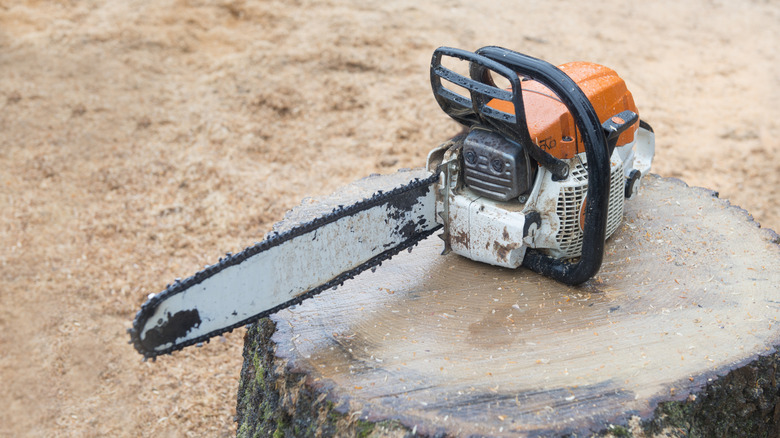
If you have to use a chainsaw in the rain, a few simple measures can significantly reduce the risk of accidents and help prevent long-term damage to the power tool. Before you start, check the chainsaw manufacturer's instructions and verify whether the model can be operated in the rain or on a wet surface. If the manufacturer explicitly warns against it, you shouldn't proceed. If you do have the all-clear to operate the chainsaw, make sure you are wearing non-slip footwear that provides good traction on the ground. Similarly, wear non-slip gloves for a firm grip, and use protective glasses if possible. Also, avoid placing the chainsaw in water or directly on a wet surface. The idea is to avoid contact with water as much as possible. And if the weather conditions deteriorate, you should stop cutting immediately and move to a safe location.
Once you are done using the chainsaw, wipe it dry and lubricate the chain. Proper chainsaw maintenance is a must. If the components retain moisture, it could lead to corrosion over time. Operating a chainsaw on wet wood also means sawdust sticking to the chain, so it's important that you clean it thoroughly. Additionally, if you regularly operate the chainsaw in wet conditions, clean the air filters more frequently, as clogged filters can affect your chainsaw's performance.
All that said, unless your chainsaw can handle rain, it's best to postpone the job. It's the smartest and safest approach, because even a small mistake puts you at risk of serious injury.