

Brock Heger Made Taming This $200k Polaris RZR Race Car Look Easy
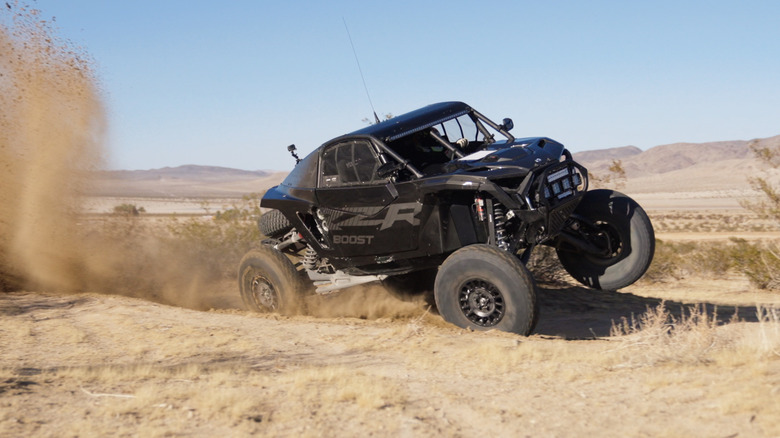
Brock Heger is one of this generation's greatest driving talents, and I bet you have no idea who he is. He doesn't drive a multi-million dollar F1 car or lap the 8.5-mile track at Le Mans. He doesn't hobnob with models and movie stars or have a luxury villa in Monaco.
No, Brock is a farmer who drives a first-generation Ford Raptor with over 200,000 miles on it and a bald front tire. And ever since he joined the Polaris factory race team in 2023, he's won nearly every race he entered in the company's UTVs. Dakar? Won it. King of the Hammers? Won it. Baja 1000? You guessed it. He won it.
And I get to take a hot lap with him.
The Specs
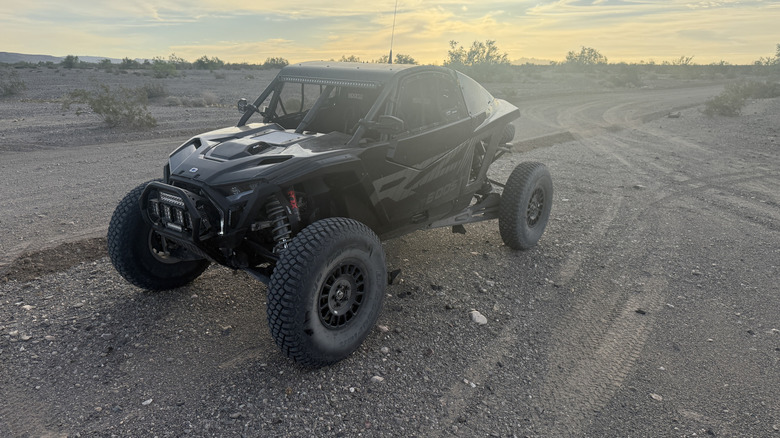
Honestly, I'd take a hot lap with him in a Polaris Ranger 500, the least expensive work-horse UTV in the lineup with 28 horsepower. But instead Polaris shoves me in the right seat of its new RZR Pro R Factory Boost race vehicle.
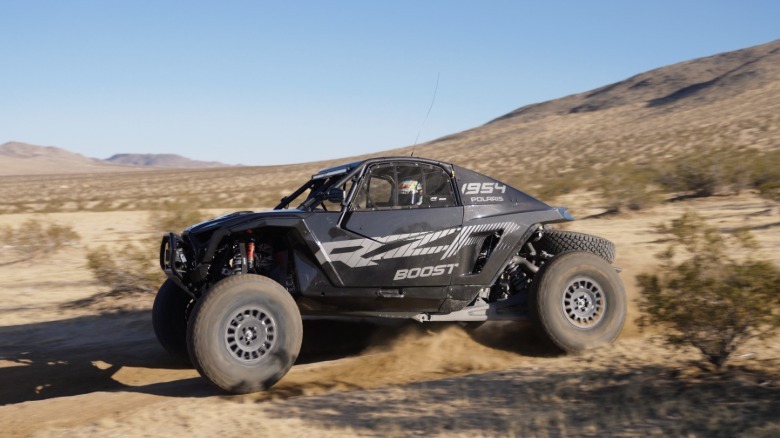
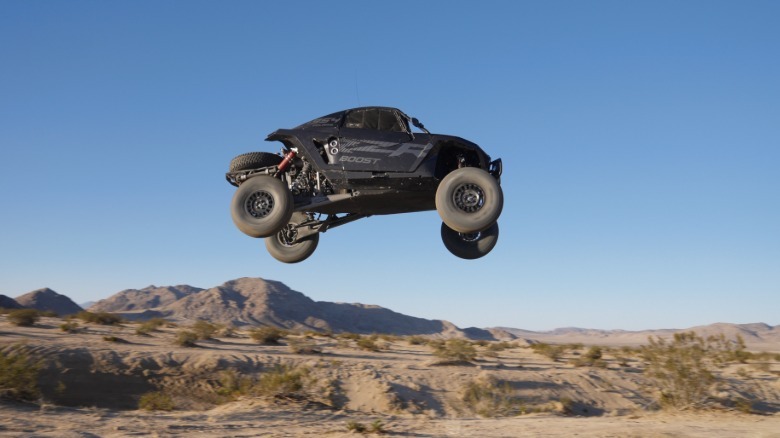
To be clear, Polaris already has a RZR Pro R Boost rig on sale right now for just under $50,000. With 275 ponies on deck, it's the most powerful UTV in the segment. The Factory Boost takes that formula and goes nuts with it. By beefing up the internals in the 2.0-liter four-cylinder engine and turning up the boost on the turbo charger, the Factory car puts out a staggering 400 horsepower. The wheelbase is stretched a bit for more stability, the cage is stronger, and the cab wider. Body panels are made out of carbon fiber and the 3.0 Fox Live Valve shocks are combined with Polaris Dynamix DV system to soak up whoops and ruts with the 35-inch BF Goodrich KR2 tires. Finally, a 45-gallon fuel cell means the Factory car has a range of about 200 miles.
 Emme Hall/SlashGear
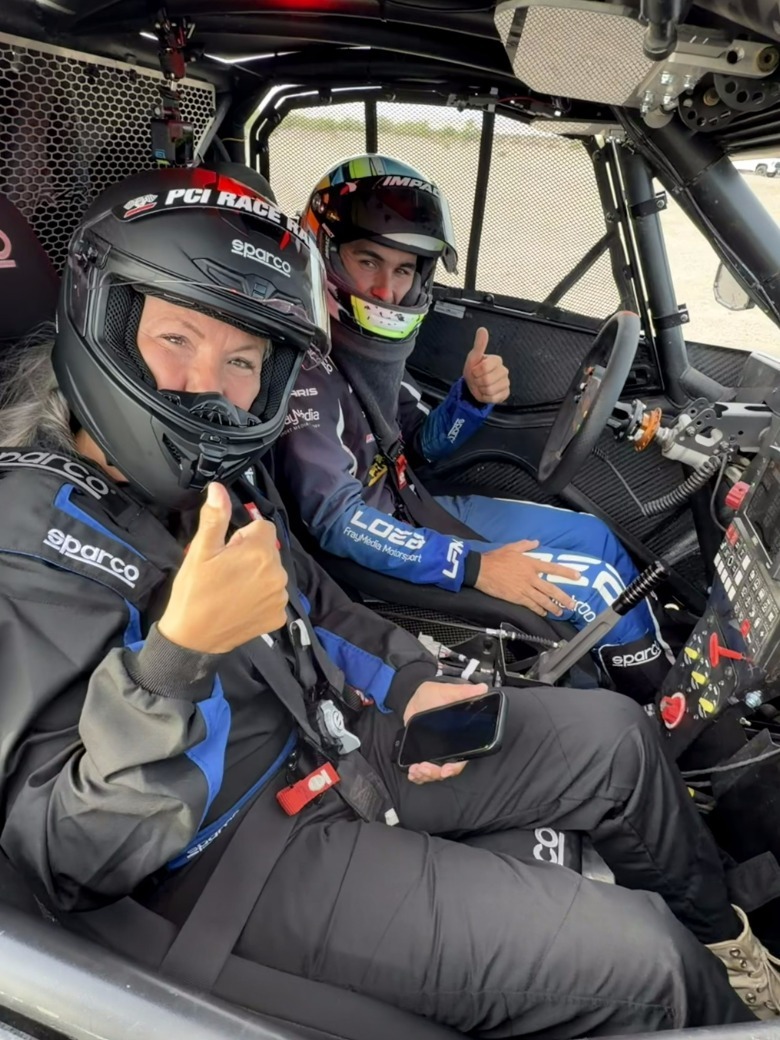
I don my race suit and helmet in the desert just outside of Glamis, California. This isn't a dune ride, instead Heger cut a rug through a flat desert landscape complete with soft washes, cross-grain ruts, and a graded dirt road for a high-speed run.
The Ride
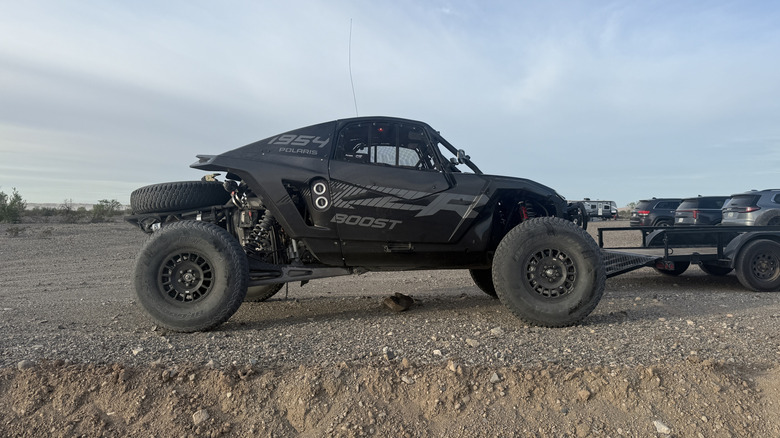
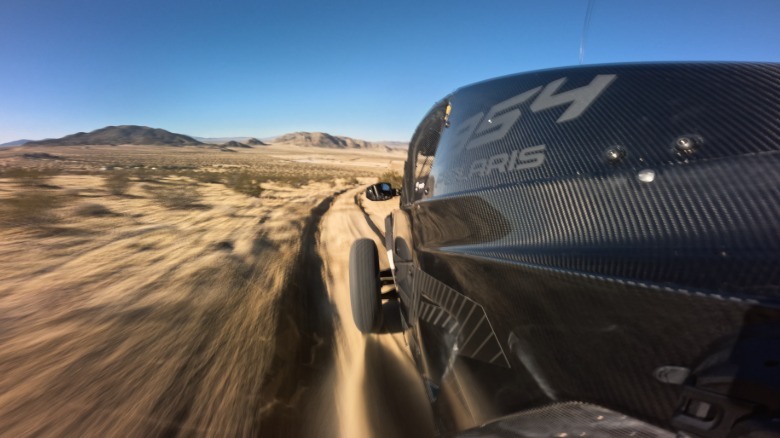
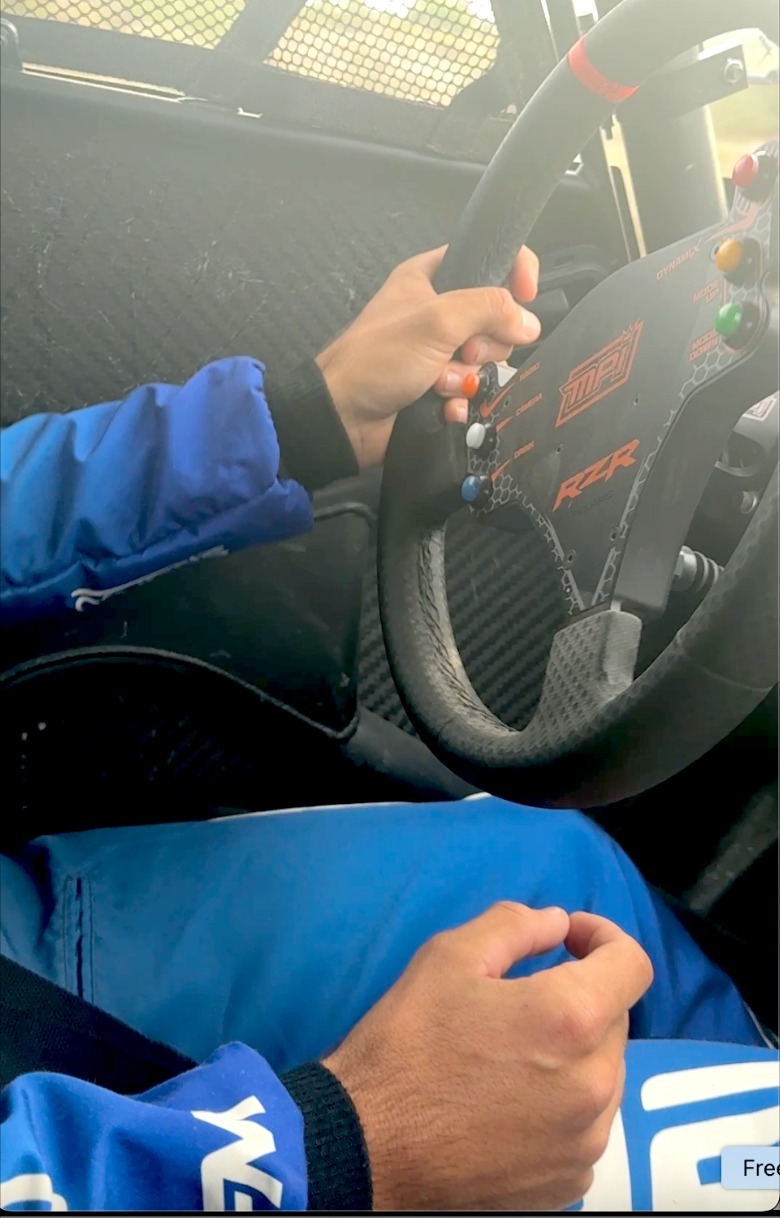
The first thing I notice when I get situated inside the cabin is how roomy it is. My current race vehicle is a lifted Miata and my co-driver and I are definitely crammed in like the proverbial sardines. Here I have plenty of head and leg room. I also notice the steering wheel with buttons for the Dynamix DV — just press it and the shocks will stiffen up instantly — as well as one for drink. Yep, all Heger needs to do is press that button and he gets a little squirt of water delivered directly to his helmet.
 Polaris
We take off on the graded dirt road, Heger flooring it as soon as we are away from spectators. I see 90 miles per hour on the speedometer before I look up to see that we are barreling towards a 90-degree left turn.
"There is no need for a CODE BROWN," I think. "Brock is a professional."
 Polaris
Indeed, Heger brakes easily, the outside shocks stiffen up just a bit, a flick of the wheel and he's back on the gas, the front tires clawing the car out of the corner. There is no understeer and what oversteer there is just helps us get around the turn. It is right about now that I realize I am a mediocre driver.
One Handing It
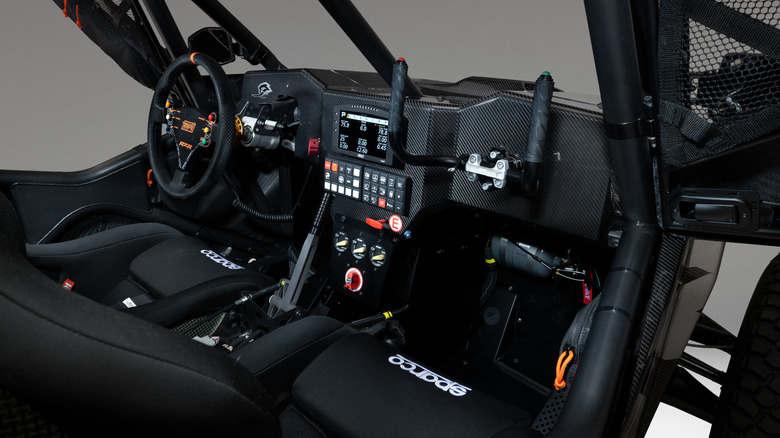
We transition into the open desert and here is where the Factory Boost shines. Sure, it's bigger than the consumer Boost, but it's still small by desert race car standards. Heger can thread the needle between two big creosote bushes and then turn on a dime to avoid a big rock in the wash. I'm no fan of continuously variable transmissions, but it's the right application here, ensuring that the power is always at the ready.
If I hit the ruts and whoops in Buddy the Off Road Miata as fast as Heger is hitting them in this Factory car, I'd be broken in the first five minutes. Racing Buddy feels like a six hour car crash. But this thing just takes it. There is more than enough travel to soak up the rough stuff and the bigger tires literally don't care about anything. I'm continuously tightening my core (and other parts of my anatomy), preparing for a big hit, but they never come.
 Emme Hall/SlashGear
That's when I look over at Heger and notice that his right hand is casually resting on his thigh. Every once in a while it joins the left hand on the steering wheel, but most of the time he is driving one-handed. And still, this is one of the smoothest rides I've ever had. Heger seems to be one with the car. Every input is smooth, every decision confident. He's only done this hot lap one other time, yet it seems like he's known each twist and turn for years.
The Price is Right
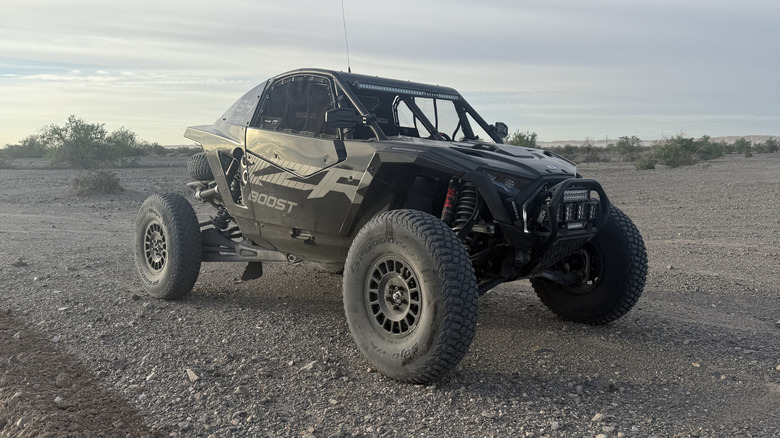
As I unhook my five-point harness and clamber out of the car, I know two things are true: Brock Heger is a maniac, and the competition should be very, very worried.
Polaris will debut the Factory Boost car at the 2027 King of the Hammers where it will race in the Desert Challenge race. Heger has repeatedly beaten more than a few of the 525-horsepower Spec Trophy Trucks in races like Vegas to Reno in the 255-horsepower RZR Pro R Factory car. Now he's got way more ponies in the RZR Pro R Factory Boost car and it weighs about half as much as the Spec Trophy Trucks. That's a great power to weight advantage and I expect Heger to use it accordingly. Heck, if you do the math the Boost car pretty much matches the power to weight ratio of a full-on all-wheel drive Trophy Truck. Will we see Heger mixing it up with the big boys and girls next year?
 Polaris
Race teams can buy a Factory Boost car for $200,000 and the distributor says they have near 20 pre-orders. Now, while $200,000 is nothing to sneeze at, top-performing Spec trucks are around $600,000 while an all-wheel drive Trophy Truck with 1,000 horsepower will set you back at least one million American dollars, if not more.
In short, Polaris has built a turn-key, relatively affordable race car with the potential to embarrass rigs that cost three times as much. It's got all the elements — power, suspension, nimbleness — but it still needs the right driver. A farmer with a clapped out Raptor might not be the most obvious choice, but Heger makes it all look like a Sunday drive in the tractor.