

Trust An Off-Road Expert: That $22,000 Side-By-Side Is Just The Start To Being Trail-Ready
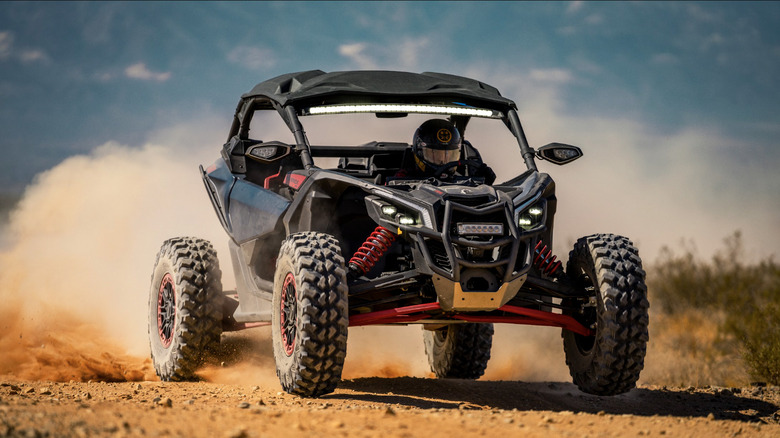
The easiest way to get out in the wilds is to buy a side-by-side. You might have seen them on trailers, being dragged behind an RV heading out to the desert or up to the mountains. They look like little buggies with plenty of ground clearance, nobby tires, and big ol' shocks.
Can-Am is one of the most popular brands you can buy, and with good reason. The company's rigs have dominated at the Dakar Rally and the infamous King of the Hammers race lately and it offers a stunning–if overwhelming–array of side-by-sides to the public.
I recently spent some time in the Maverick X3 RS Turbo, which starts at under $23,000 not including destination. You can go even less expensive with the X3 DS Turbo at $19,999, but I like the RS for its wider stance. The 135-horsepower motor here is plenty, but speed demons can upgrade to 200 ponies. I love the 20-plus inches of travel in this rig. I spent a day out in Johnson Valley, CA scurrying up dunes, blasting across the dry lake bed, and tackling rocks and ruts with ease. Why are these things so fun?
You'll need a LOT more gear
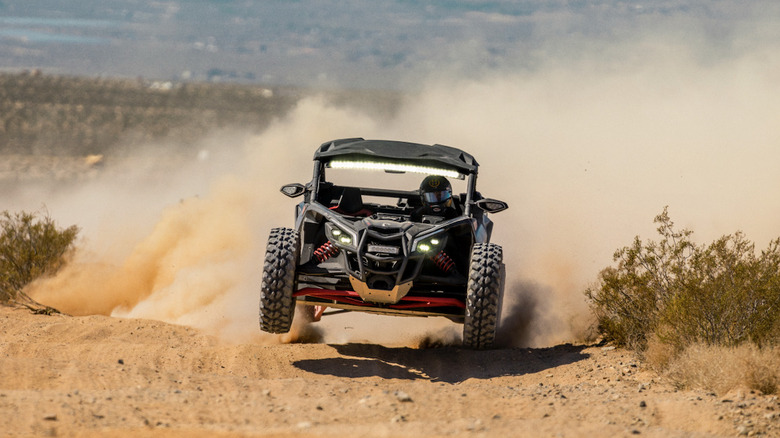
But here's the rub. You're not really hitting the wilds for that price because you're going to need a whole slew of accessories to make your rig livable. Can-Am offers two bundles from the factory. The All-In-One package costs upwards of $10,000 and includes necessary things like side mirrors, a tool kit and a fire extinguisher. However, you'll also be on the hook for a $3,500 stereo system with a $640 amplifier. No thanks. The smaller Essentials package is a more-reasonable $4,400 or so but still includes a few things like door panels and fender flares that buyers might not really want or need.
Here's what I think is really necessary, gained from my decades of off-roading recreationally as well as competing–and sometimes winning–in motorsports events like the Mint 400, the Baja 1000, and the Rebelle Rally.
Safety third - just kidding
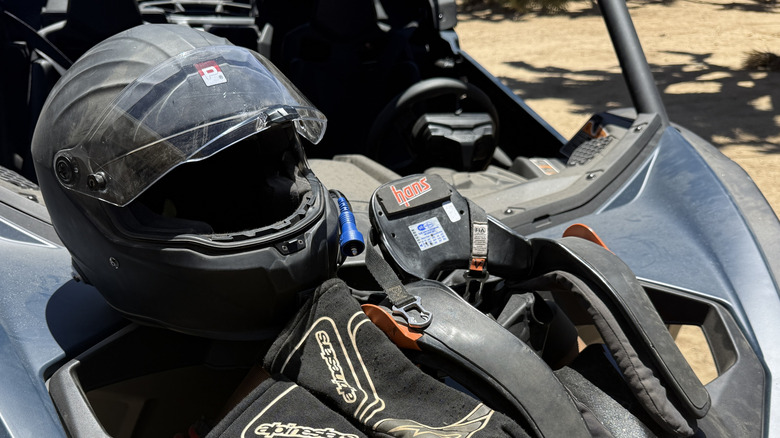
The first thing you need to address in any off-road vehicle is safety. My tester came with traditional three-point harnesses and to these I say absolutely not. Side-by-sides are so capable that it's very easy to drive beyond your limits. Trust me, nothing good ever happens when you're in that space. Upgrade to a four point system at the very least. You can buy a retractable set from Can-Am that allows you to move freely in the seat, but the static kind from a company like Mastercraft Safety is even better. You can really snug yourself in.
You'll also want to buy the correct riding gear that includes a helmet and neck protection. Can-Am recommends a DOT helmet, but I always prefer a helmet with an SFI or Snell rating which means it has been tested for a motorsports application. DOT helmets have only passed minimum safety requirements for the pavement. Neck restraints are usually from Nexgen or Hans and they keep your head from snapping forward in the case of a hard hit. Invest in a good set of gloves, too.
While most recreational drivers do not wear a full fire suit it's always a good idea. During this year's San Felipe 250 a side-by-side caught fire during pre-running and both the driver and do-driver suffered major burns. Fire is rare, but it can happen.
It's gonna break
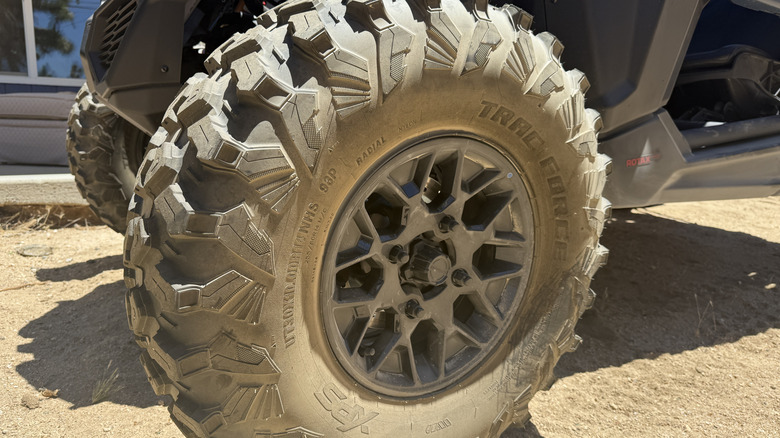
Next you'll need to, pardon my French, prep your $#1t. The last thing you want to happen when you're out enjoying a day on the trail is a mechanical failure. The most common problem you'll have is a flat tire. The Maverick doesn't come with a spare so you'll need to purchase your own, and you'll also need a way to strap it to the vehicle.
You can buy the tire itself from Can-Am but, strangely, not the wheel, so you're on your own there. Regardless, I'd recommend buying at least two spares. If you use your spare on Saturday you don't want to ride on Sunday without one. You'll also need a breaker bar, the correct size socket for the lug nuts, and a jack. I recommend checking out Pro Eagle jacks. They can be a bit spendy but they are optimized for off-road applications.
Remember you'll also need a way to fix your jack to the side-by-side. You don't want a heavy jack bouncing around anywhere. Roll bar mounts are readily available on Amazon. Be sure to do a test run of your tire equipment in your driveway before you head out. You never know what little quirk you might find that requires a special tool.
Speaking of, you'll also need a good tool kit. Can-Am sells a set of pre-selected tools, but you might already have them in your personal tool collection. You should know how to swap the belt for the continuously variable transmission as, aside from flat tires, this is one of the most common failure points on these things. Don't forget to strap your tool kit down. The passenger footwell is a good place.
Even if you never plan to drive at night, you should still look for some auxiliary lights. At the very least get a rear-facing amber light so others can see you in the dust. If you don't want to buy the Can-Am products, aftermarket lighting options are at Rigid Industries and Baja Designs among others. It's also a good idea to get some lighted buggy whips. In fact, these tall lighting poles are mandatory in many places. Check out Buggy Whips for a robust selection. Remember, lights are to see and be seen.
Talk to me, Goose
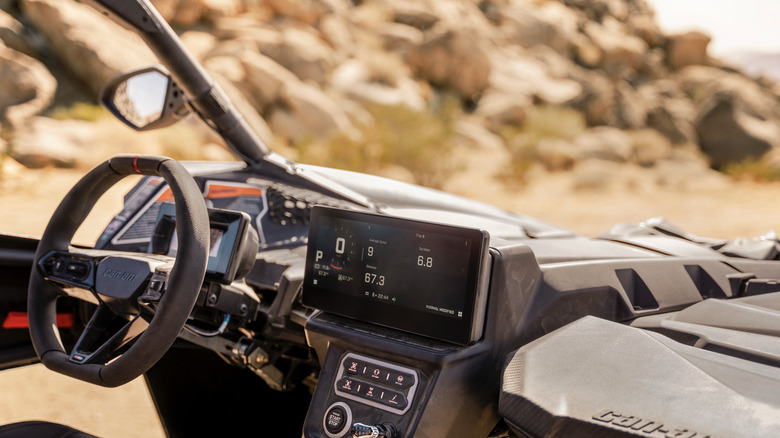
Inside you'll definitely need to spend some money on a communication system. At the very least you'll want an intercom that plugs into each helmet so you can talk with your co-driver, but you should also look at a race radio as well so you can call out to others. While more and more people are mounting their Starlink Mini antennas on their recreational vehicle to access the internet pretty much anywhere, a radio is a good back-up plan. You can check out the resources at Rugged Radios or PCI Race Radios.
Some Can-Am Maverick rigs come with a 10.25-inch touchscreen with navigation and Apple CarPlay, but for many trims you're on your own with navigation. As such, you'll need a mount for your phone or tablet and a subscription to a mapping app like OnX or LeadNav. Remember that unless you have Starlink you'll need to download your maps beforehand to have access. Actually, it's a good idea to do that anyway as you never know what can happen out there. You should also have a good set of paper maps, a compass, and the skills to use both.
You'll likely want to drop some money on some kind of roof and while I don't think a windshield is necessary with a full-face helmet, some find the protection a comfort. Keep in mind there is not much storage inside the cabin, so a set of secure bags is helpful. The Maverick comes with a rear-view mirror but no side mirrors and no back up camera. I do just fine with the one mirror but if you're new you might appreciate the technology.
Now go have fun
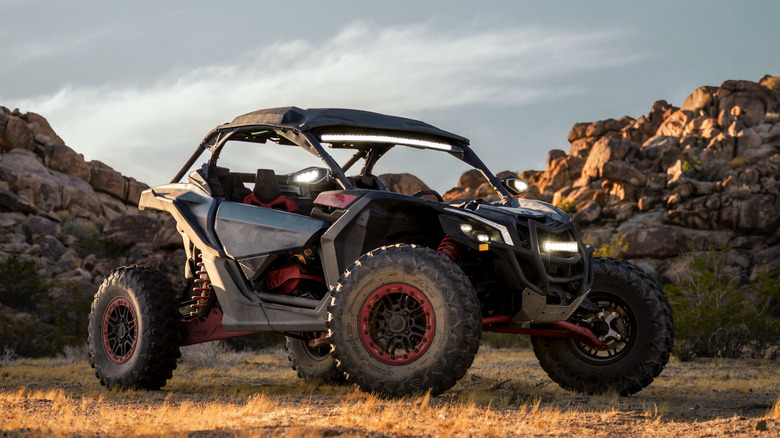
Of course, there is much more you could buy for your side-by-side. I didn't even touch on recovery gear, a cooler for water, molle panels to attach a Rotopax of fuel, upgraded front and rear bumpers... you could drop your next three paychecks on your off-road toy and still not have gone through the whole catalog.
Regardless of how much you spend, be sure to ride with another rig in case you get stuck. Two side-by-sides are always better than one. It can't hurt to get some off-road driving instruction and you should educate yourself on Tread Lightly principles.
Side-by-sides like the Can-Am Maverick are a blast to drive and a relatively affordable way to get out into the wilds. Just remember that you'll need to put up more money than the sticker price would have you think.