

What Can Hard Water Do To A Washing Machine?
We may receive a commission on purchases made from links.
There are a host of issues that can negatively impact the lifespan of a washing machine, and some of them are more easily avoidable than others. Ensuring that you regularly clean the appliance can help prolong its lifespan, alongside making sure you don't overload it while running. Protecting it from the effects of excessively hard water can also help prevent issues later down the line, although whether or not you need to take action to soften your home's water depends on how hard your water is.
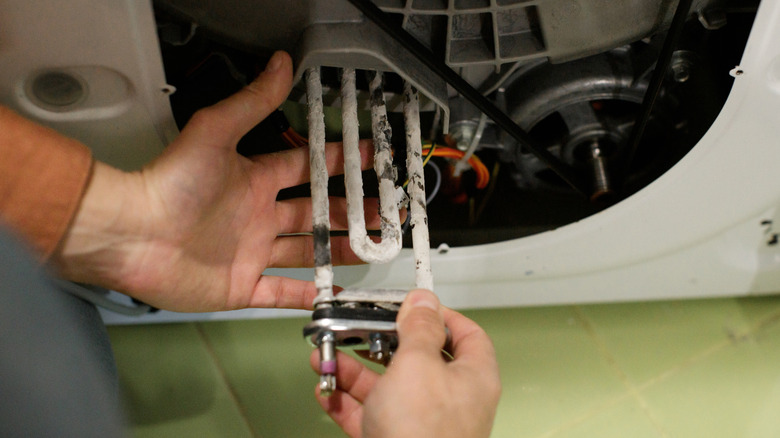
Water hardness varies across the United States, with the Midwest and southwestern regions seeing the highest levels. Harder water has more minerals like calcium and magnesium dissolved in it, and over time, these minerals end up being deposited on the innards of water-consuming appliances like washing machines. This limescale buildup can reduce the effectiveness of heating elements within those appliances, as well as potentially reducing internal water flow.
Additionally, hard water can make soaps and detergents less effective, which might mean you'll have to use more to achieve the same cleaning effect. If that wasn't enough, it can also lead to residue clinging to your washed laundry.
If you've noticed several of these issues and think hard water is the culprit, the first step is to check its hardness using a home hardness test kit. They're widely available on retail platforms like Amazon, and they're the easiest way to get insight into the minerals that are present in your home's water.
There are ways you can help reduce hard water buildup
Homes with very hard water might want to consider installing a water softener, which is a device that can swap the dissolved calcium and magnesium ions in the water out for sodium or potassium ions. Installing a softener will prevent the water that's used by your appliances in the future from causing as much buildup, but it won't be able to fix any damage that has already been caused.
Some washing machine manufacturers suggest cleaning your appliance with baking soda to shift existing buildup, although others caution against it, saying that it can potentially damage certain components. Be sure to check your owner's manual to see your appliance manufacturer's recommendation before you start.
To keep your washing machine running as efficiently as possible, it's also worth making sure that you clean it as regularly as its maker suggests. That might sound obvious, but many people don't clean their washing machines as often as they should. An unclean machine can suffer from blockages or mold growth, which can shorten its lifespan as well as affecting how well it can clean your clothes.