

Why Most Electric Cars Don't Have Traditional Grilles
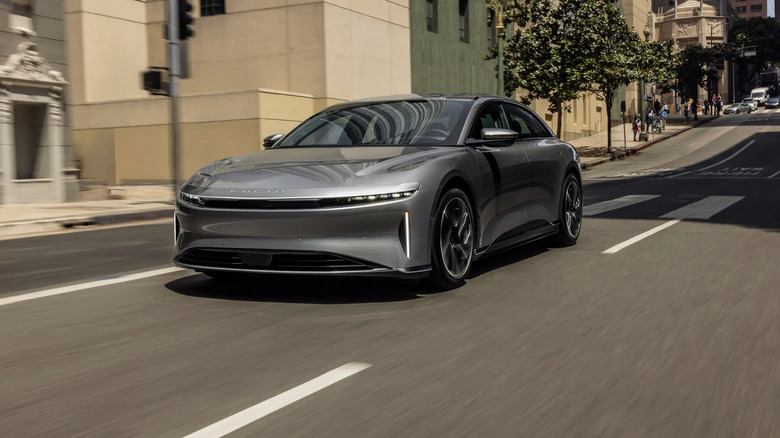
Electric cars are fairly common now, but chances are you've had a moment when you looked at an EV, and something just felt off. Aside from the weird obsession with aerodynamic shapes to improve range, most EVs don't have a traditional grille, the design feature that has defined the look of cars for decades. Some might remember the 1990s Buick Skylark, which made our worst-looking cars list for its bird-beak-shaped grille.
EVs don't have a traditional grille because they don't need one. For context, a grille on an internal combustion engine (ICE) car lets in fresh air, mainly to cool the radiator, though some of it also feeds the engine. This air is then compressed, mixed with fuel, and burned in the engine to produce power. The bigger the engine, the more air it needs, which is why performance cars wear big grilles. As you may already know, this process generates a lot of heat. To prevent overheating, a cooling system circulates coolant through the engine and sends it to a radiator, where airflow helps dissipate the heat.
How do EVs cool down without radiators?
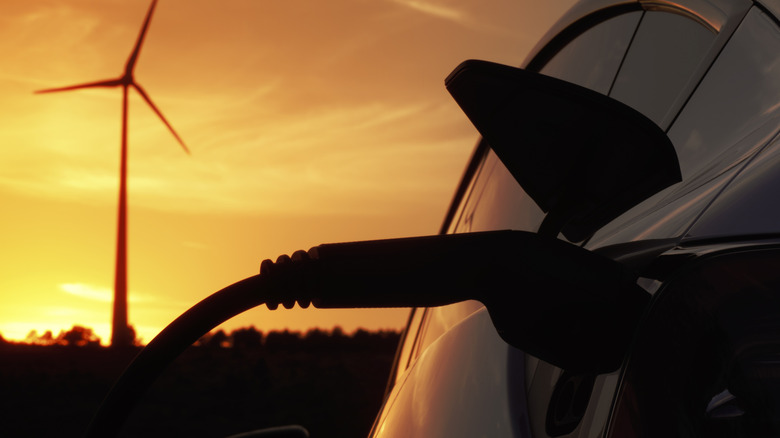
Electric cars have no engine that requires air to be sucked in, so a grille isn't necessary. But that doesn't mean EVs always run cool. Electric car batteries generate a lot of heat during charging and hard driving, and the inverter that converts their direct current into alternating current for the motors run hot too. Add the fact that EVs must operate within a specific temperature range, or else their batteries can degrade, and cooling becomes more important than ever.
Like a PC/laptop at home, an EV can use air or liquid cooling. In a liquid-cooled system, coolant circulates through channels or around components to absorb heat and carry it to a heat exchanger, where it can be dissipated. Some performance-focused EVs like the Porsche Taycan and Audi E-Tron GT use both air and liquid cooling measures. You might have seen EVs with flaps on their grilles. They usually stay closed to not mess up aerodynamics and open only when heat buildup is high.
Why do EVs have a grille-like design?
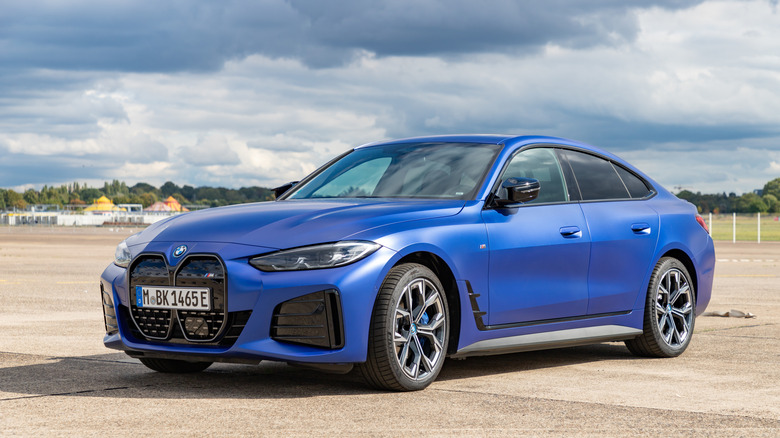
Although traditional grilles serve little purpose, some EVs still keep the design because of how we perceive cars. Grilles have long been a part of automotive design, and they give a car's front end a unique look. Remove them entirely, and the car can feel like something is missing. Carmakers know this, so they keep the familiar styling and make EVs feel like part of the same lineup.
That said, aesthetics aren't the only reason. Some EVs share their platforms with gas- or diesel-powered counterparts. For example, the BMW 4 Series Gran Coupe and the BMW i4 look almost the same. That's because developing a completely different body for an EV can be expensive, so reusing an existing platform and design helps keep the costs down. In simple terms, you remove the engine, fit in an electric motor and batteries underneath the floor, and call it a day. So, if an EV's front end looks a little off, it's not a design flaw. It simply doesn't need to breath like a gas car, and any grille you see is there mostly for looks and balance sheet.