

How The Chevy Laguna's Aero Nose Helped It Dominate NASCAR (Until It Was Banned)
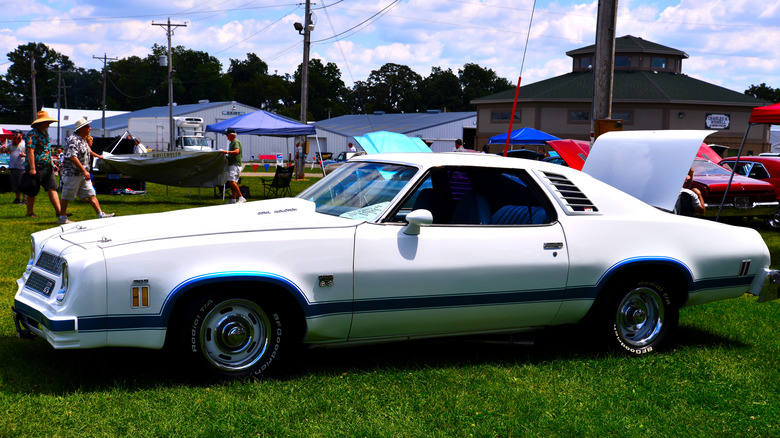
The history of Chevrolet performance cars, particularly in the 1960s and 70s, is a long and rich one, filled with some illustrious and beloved nameplates — Camaro, Corvette, and Impala — just to name a few. Along with those well-known models, there were also some more obscure, shorter-lived Chevies that came out of this era, including the mid-sized Chevrolet Laguna of the mid 1970s.
Less of a bespoke model and more of a unique upmarket version of Chevy's A-body platform Chevelle/Malibu, the Laguna was only in production for a few years, but it made a big impact, not on the street, rather in motorsport. The sometimes overlooked story behind the Laguna's development and its unique styling is a fascinating one with a deep connection to NASCAR competition.
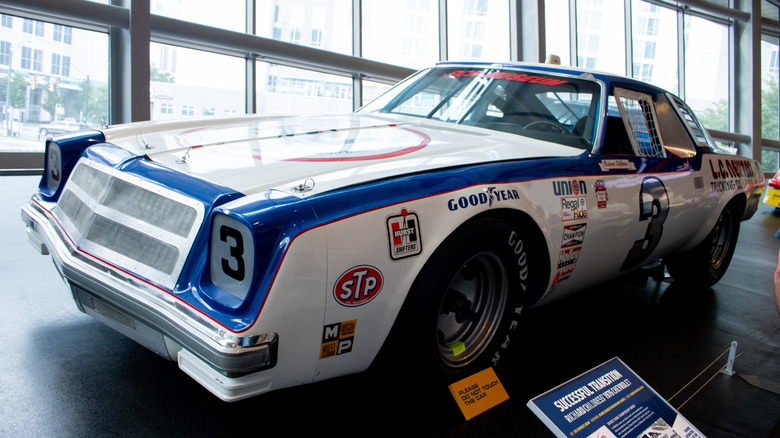
With tightening emissions rules and less powerful engines, the road-going version of the Laguna had modest performance that was typical of mid-'70s American cars, but on NASCAR's ovals, the Laguna was a force. In fact, in professional stock car racing, the aero-focused Laguna was so feared by the competition that the car eventually caused NASCAR to alter its rule book to give competitors a better shot. Today, this makes the Chevrolet Laguna one of the most interesting GM performance cars of the 1970s, and a cult favorite for fans of vintage stock car racing.
From the street to super speedway
For car collectors and muscle car fans, its the earlier iterations of the General Motors A-body platform that get most of the attention, but the later A-body cars aren't to be overlooked. Known as the colonnade cars, the mid-1970s iteration of the A-body platform spawned several memorable cars, including, among others, Pontiac's highly unique 1973 GTO.
The Chevrolet Laguna first appeared for the '73 model year, where it was positioned as an upmarket version of the existing Malibu and Chevelle, with a unique body-colored front fascia. During that first model year, the Laguna was offered in a few different body styles, including a rare station wagon. By 1975, though, the Laguna, which was now known as Laguna S-3 had been refined to a sporty, coupe-only offering, and its front fascia was now sleeker and more wedge-shaped.
That Laguna's aerodynamic front end wasn't just to look cool on the street, though. The nose was honed in a wind tunnel and was designed to give Chevy's NASCAR teams an edge on the track, just as cars like the Ford Torino Talladega and the Dodge Charger Daytona had done in the late 1960s. The Chevy's body may not have been as extreme as those earlier cars, but the new front fascia worked, with the Laguna racking up a long list of NASCAR wins in the mid-'70s.
Real motorsport pedigree
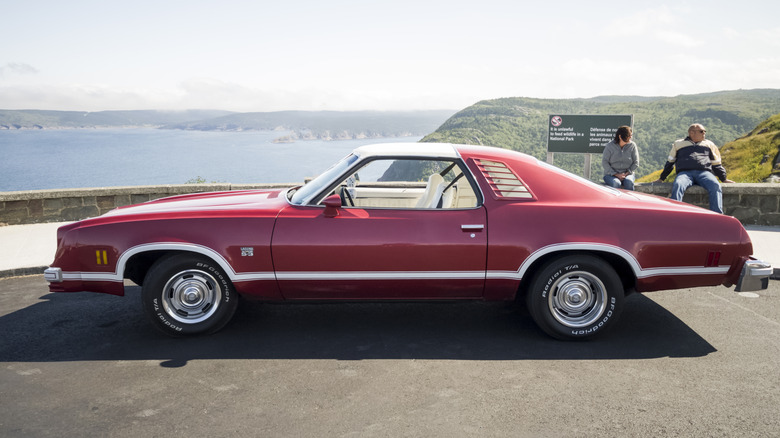
Ultimately, the Laguna's on-track success was so strong that for the 1978 season, NASCAR required the Laguna-bodied cars to be fitted with a restrictor plate to lower horsepower and balance out its aero advantage. By then, though, the end had already come for the Laguna and the mid-sized GM A-body platform itself.
The Laguna left Chevy's production car lineup after 1976. By 1978, General Motors had introduced its new downsized platform, which would eventually start using the G-body designation — and the and the Chevelle itself would be no more. NASCAR, meanwhile, moved to a new smaller wheelbase race car beginning in 1981, with the G-Body cars becoming the new GM entries in stock car competition.
The Laguna might not have the same big power numbers or the out-of-this-world look that the big-winged Plymouth Superbird and Dodge Daytona had several years earlier, but its legend is quite similar, making it one of the more interesting Chevy products of the 1970s. With its NASCAR roots, the Laguna stands apart from earlier A-body cars, and has a connection between street car and race car that you just don't see today. It's not surprising then, to hear that NASCAR legend Dale Earnhardt Jr. has a rare 1976 Chevy Laguna in his collection, which he considers a favorite among his many cars.