

What Does It Mean If There's Oil On A Spark Plug?
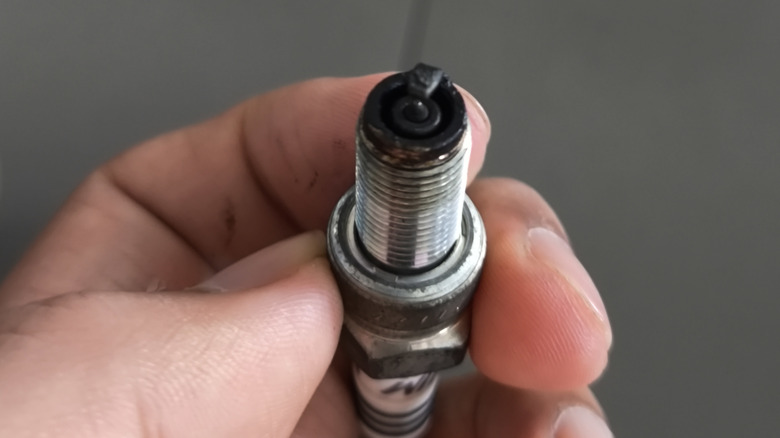
If your car isn't starting up as quickly as it used to or if it just doesn't seem quite as powerful as it usually is, you may have a bad spark plug. But if you get into the engine and discover that one or more of your plugs have oil on them, then you may have a more serious problem. This is a sign that oil is getting to the plug, either inside the engine's combustion chamber or around the plug hole itself.
A worst case scenario is that you have a blown head gasket, which can allow separate fluids to seep into areas where they don't belong, like the well of a spark plug. But this is just one symptom of a larger problem, as the engine's cooling system and cylinders can also be impacted. Other causes can include fatigued valve seals or piston rings, and a compromised ventilation system. At the very least, the oil level in your engine might be higher than it should be.
Spark plugs need an electrical connection to properly function and the presence of oil can prevent that from happening. Eventually the plug could begin to fail, and your car's performance may suffer as a result. Ignoring oil on a spark plug is not a good idea, as you could be risking the overall health of your engine. That's why you should get your vehicle to a service technician as soon as possible so you can correctly diagnose the problem.
Your spark plugs' condition and maintenance schedule
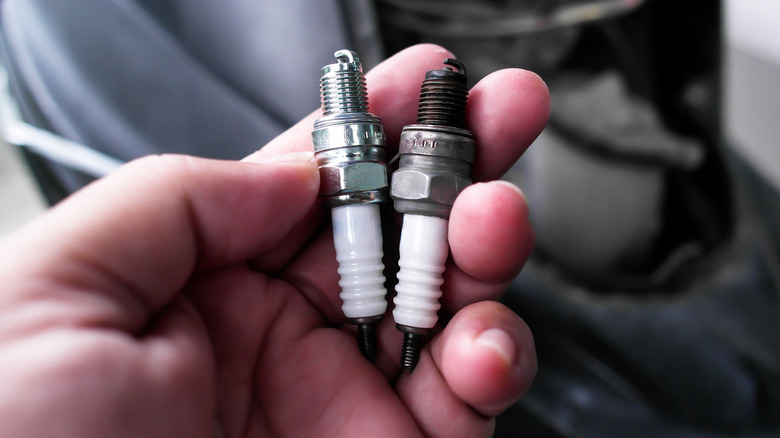
Depending on their condition and what led to oil making contact with them, it may be possible to thoroughly clean your spark plugs and reuse them. The presence of oil on the plugs might not mean that they can't properly function moving forward. However, cleaning the plugs alone won't solve the problem, and if they have accumulated a significant amount of mileage, it might be best to just replace them.
It can also be tough to know if what you're looking at on the plugs is actually oil, especially if they aren't wet. That's because worn out plugs can potentially have a buildup of carbon in addition to grimy deposits. Additionally, spark plugs can break down over time and their electrodes can erode, which could directly impact their operation. If you're unsure about the condition of your plugs, you should consult a technician for advice.
One way to check for oil on your spark plugs, of course, is through a visual inspection. This means following a regular inspection schedule, which you can do based on your vehicle's service guidelines. When it comes to replacing them, Auto Zone recommends changing plugs made of copper and nickel at roughly 30,000 miles. Plugs made of iridium, platinum, or ruthenium should be replaced around 100,000 miles. For information on when your exact model's plugs should be changed, consult your owner's manual.