

Do You Really Need 2TB Of Smartphone Storage?
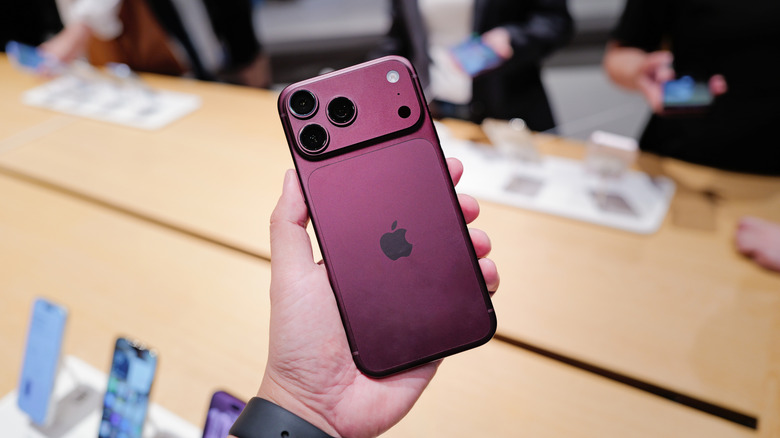
When you are getting a new phone, its storage size plays a major role. If the storage is too low, you might regret your decision down the line. If it's too high, more than what you really need, you are essentially wasting money. Besides, storage and color are the only two choices you usually get. The rest remains constant. So, it's natural to ask what the right storage size for a smartphone is and whether getting a 2TB model is a smart choice.
Generally speaking, an average person won't benefit from a 2TB smartphone, especially when more cost-effective solutions exist. Unless you actually need 2TB of built-in local storage, there's no point spending so much. It doesn't make sense from either a practical or financial standpoint. If we look at the new iPhone 18 Pro, the price difference between the 2TB and 256GB models comes out to $1200. You can get a high-performance 2TB SSD for a fraction of that, and that's after the price hike SSDs and RAM have experienced in recent years. It's worth noting that smartphones, laptops, SD cards, and even flash drives have all become more expensive for the same reason.
If you smartly manage your phone's storage, say removing unused apps, clearing the cache, offloading large files to another device, and streaming from the web instead of downloading everything locally, you are unlikely to run out of space for years. Ultimately, the choice between 256GB–512GB and 2TB storage comes down to individual requirements, preferences, and budget.
Some people may benefit from additional storage

2TB isn't something everyone needs. For the average user, 256GB or 512GB should suffice. You can store thousands of photos and videos, download songs, install a wide collection of games, and still have room left for other apps, system data, and future software updates.
But there are some people who can definitely benefit from the additional storage. They form a very small part of the overall smartphone market which is the reason only a handful of models offer 2TB of storage. By the way, surprising as it may sound, that list is dominated by iPhones.
If you are a content creator, photographer, or vlogger who works with large media files on a daily basis, a 2TB smartphone may be worth the investment. It's undoubtedly faster and more convenient than relying on cloud storage or connecting an external drive. When shooting high-resolution videos, the file size increases, and you will need more storage. Similarly, if the smartphone is your primary gaming device and you have a wide array of titles installed locally, you could go with the 2TB storage option.
What you can do instead
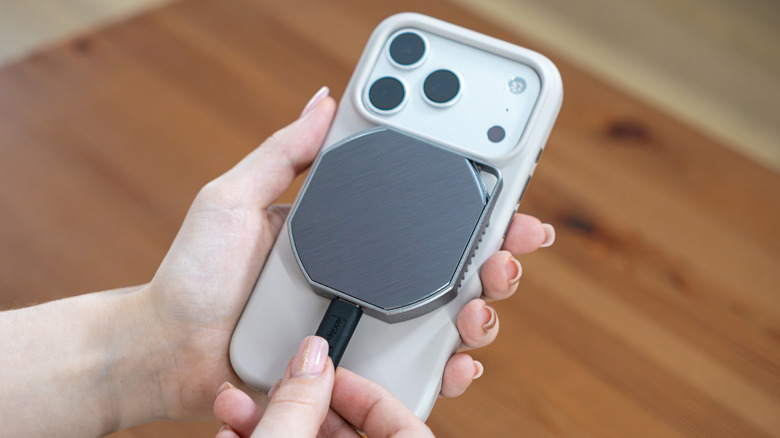
If you want more storage on your smartphone but don't want to pay these premium prices, there are some cost-effective solutions. An external SSD is your best bet, and it's a one-time investment. These are fast, durable, and sleek. You can even find MagSafe-compatible SSDs that cling to the back of your iPhone. You will still need a cable for the connection, though.
If you are on a budget, a fast flash drive will work too. We now have USB-C flash drives that directly connect to smartphones. If you have one with the standard USB-A connector, a USB-C to USB-A adapter will do the trick. The best part is that you can use these drives across all your devices. The expanded storage isn't limited to your smartphone.
Apart from that, you have cloud storage solutions, which can be economical in the long run. If you have an iPhone, the iCloud 2TB plan costs just $9.99/month. That's $120 per year. Even if you use your iPhone for five years, which is close to the average lifespan of iPhones, the total cost comes out to about $600, assuming the prices remain constant. This is much cheaper than spending an additional $1200 for the 2TB iPhone 18 Pro model.
Remember, you should treat the built-in storage as active storage, and reserve it for important data or files that you frequently need. The rest can be offloaded to an external drive or cloud storage. If you do this regularly, you won't need a 2TB smartphone.