

4 Of The Worst Places To Put A Mini Split (And Why)
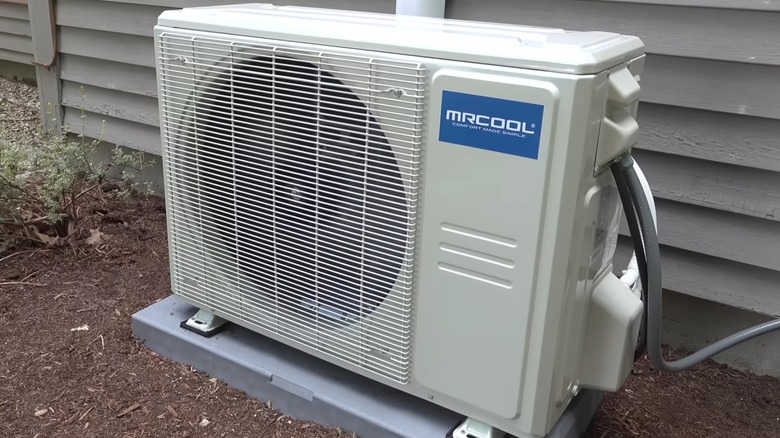
There are several options out there for those in need of air conditioning. While window units and entire house setups remain popular, there's something to be said for the popularity of the mini split. These are ductless air conditioning setups that provide heating and cooling alike for the room they're set up within. Before getting one, though, it's important to be aware of where exactly you plan to set it up. As effective as these machines are, there are some areas and setups where they'll struggle or possibly fail to do their job effectively.
To understand ideal mini split placement, it's worth going over how these machines generally work. It includes two elements, the indoor air handler and condenser, which work in tandem to alter room temperature. When cooling, the handler pulls warm air from inside and sends it out, sending in refrigerant-cooled air for cooling your space. The reverse is seen during the heating process, where the condenser sends in warm air from outside of your living area. There may be minor functional nuances from unit to unit, even within brands. For instance, Daikin has different levels to its mini splits, all with their share of strengths, weaknesses, and ideal use cases.
Regardless of the brand or min split model you opt for, it needs to be strategically placed to work at its best. These are some things to avoid when determining where your unit will go.
Anywhere with obstructions
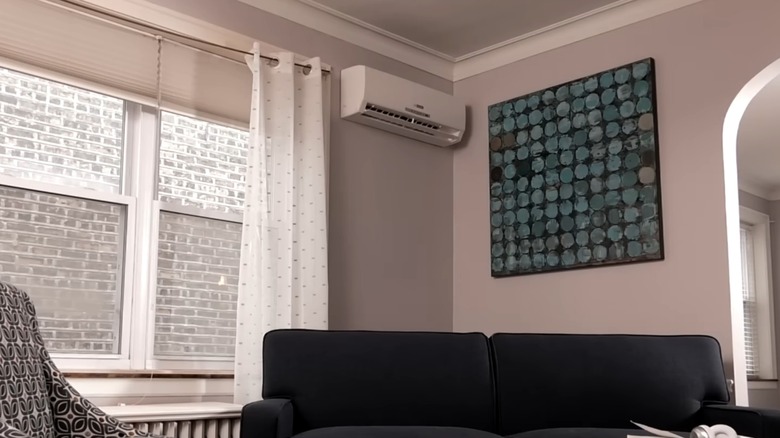
One of the major aspects of mini split air conditioner setup is ensuring proper air flow to the entire thing. Whether it's the part of the set up residing outside or inside, it needs to be able to pull air in without trouble, thus cooling your space. So, for the indoor portion of the unit, the last place you want to set it up is anywhere with things like shelves or large furniture in the way that could restrict air from moving freely. Thus, all furniture or other large, obtrusive items should be situated several inches away from the mini split at the absolute least.
As for the outdoor portion of the mini split setup, similar principals apply. The condenser shouldn't be situated anywhere that would prevent it from pulling in the required amount of air while in use. Keep plants and large growths at bay as well, and keep the grass surrounding the unit at a length where it won't diminish its ability to function. In a similar vein, the outdoor half of the mini split system shouldn't be placed directly on the ground, rather it belongs on a solid, stable platform or, if you so choose and your model is able, mounting it to the side of the house could be a great way to prevent obstruction.
Near heat sources
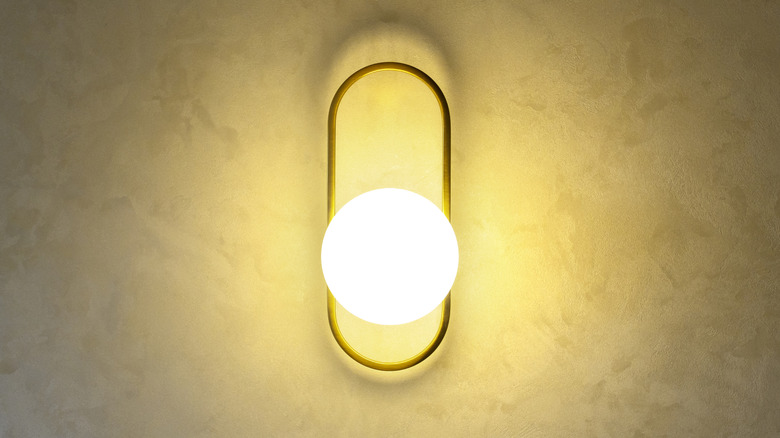
The nice thing about mini split air conditioning systems is that they're smart and self-sufficient. They can run independently, detecting their surroundings to best cool things off or heat them up as you set them to. At the same time, they can be easily tricked, and in such a scenario, the financial consequences fall on you. All of that is to say that when setting up a mini split system, you don't want to position the indoor portion of the unit near something that could give it a false temperature reading, like a heat source.
Generally, you want your mini split situated somewhere that will ensure an accurate read of your space's temperature. If you place it near something emitting heat, like a fireplace, an electronic appliance that pumps out noticeable amounts of heat, or a hot-running or a left on too long light fixture, to name a few, you run the risk of confusing the thermostat.
Thus, the mini split will run longer and harder than it needs to in order to adequately cool the area it's in, fully believing it's warmer than it actually is. Not only does this mean a higher energy bill due to prolonged use, but it also puts more wear and tear on the mini split itself. As a consequence, it might not last as long before repair or replacement time arrives.
Interior walls
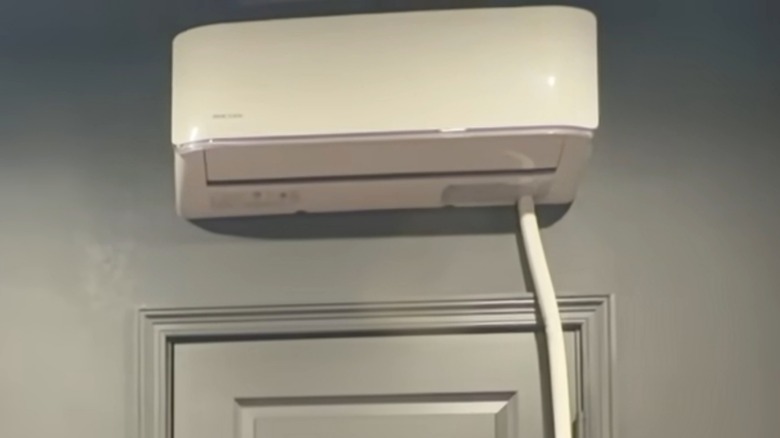
As stated, the setup of the mini split system, including that of mini split systems that are floor-mounted, generally demands easy access to the outside of the house. The air handler is set up indoors while the condenser is right outside on the opposite side of the wall. With this knowledge, it becomes clear that attempting to set up the handler on an interior wall — one that doesn't have access to the outside of the house — is not ideal. If you can't set up a connection to the outside condenser, you're not going to be able to set up the system.
With all of that said, it is technically possible to set up a mini split system where the handler is stationed in an interior room. There are ways to have it wired to a condenser outside, but it will be a more involved and likely expensive process than it would be to make the connection through an exterior wall.
You need to run refrigerant lines, a control wire, and a condensate drain line at the very least through a longer distance, and through more twists and turns of home wall. It's more material and tool-intensive for the DIYer, and with more room for error, while a professional is likely to charge more for this more complicated, specialized process. For the sake of budget and simplicity, if you can, you should stick with an exterior wall.
Near common living spaces
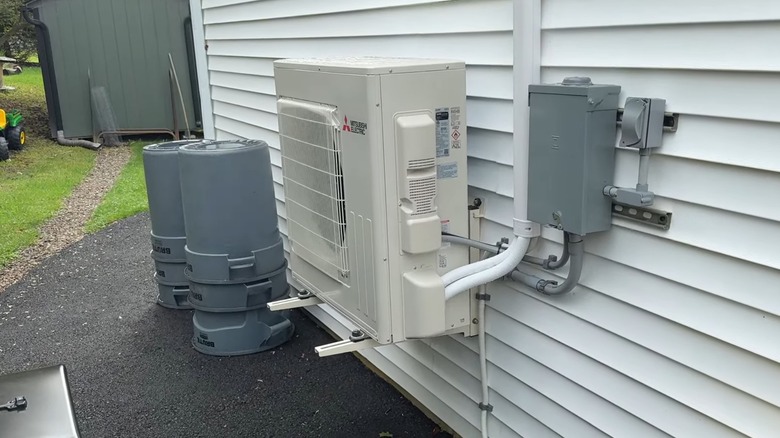
When it comes to both parts of the mini split system, it's a good idea to keep in mind where they'll be set up in relation to your common living spaces. Speaking about the indoor air handler, you don't want to set it up so that it'll blow directly onto seating or sleeping areas, since taking direct heating or cooling head-on could become uncomfortable over time. You may soon find yourself figuring out a way to redo your indoor floor plan before long just to avoid direct air flow and remain comfortable while the mini split is on.
As for the condenser outside, it too should be strategically placed to not become a nuisance. To adequately heat or cool your space, the condenser has to make a lot of noise. Excess noise is even one of the signs that your condenser is going bad. That's why if possible, you should set it up somewhere away from windows, especially those connected to bedrooms, or else the sound may prove frustrating. Additionally, the condenser should be positioned away from outdoor social areas as well like patios and decks. A loud condenser could get annoying during a nice afternoon with friends and family, so if your setup allows for it, it's worth keeping the machine around a corner on a distant exterior wall.