

Toyota Wants To Sell Its Engines & Hybrid Systems To Other Automakers – Here's Who Could Buy Them
Toyota hopes to sell its new line of gas engines to rival automakers, generating a large share of income from external powertrain sales alone. Per reporting from Automotive News, Toyota expects to make about $562 million from the revenue source in 2026, which it estimates will ramp up to $1.7 billion by 2028. As you can guess, those are not insignificant numbers. But what's more interesting is who those buyers are. Toyota doesn't disclose any brands or partners directly, but we can make some educated guesses based on companies it is and has been associated with. For the uninformed, Lexus and Daihatsu are subsidiaries; meanwhile, Toyota owns equity in Subaru, Mazda, Suzuki, and Isuzu — the Subaru stake above 20% is enough to have voting rights.
While not a guarantee, any one of those brands could incorporate Toyota's next-gen engines into production. The idea is that this would help spread production costs of the new line, including initial research and development, but also secure a relatively new revenue stream at a time when many automakers are actually moving away from ICE technologies. The new engines are designed to be used alongside hybrid configurations, focusing on cleaner, more robust gas power versus conventional designs.
Why would other automakers buy the next-gen engines from Toyota?
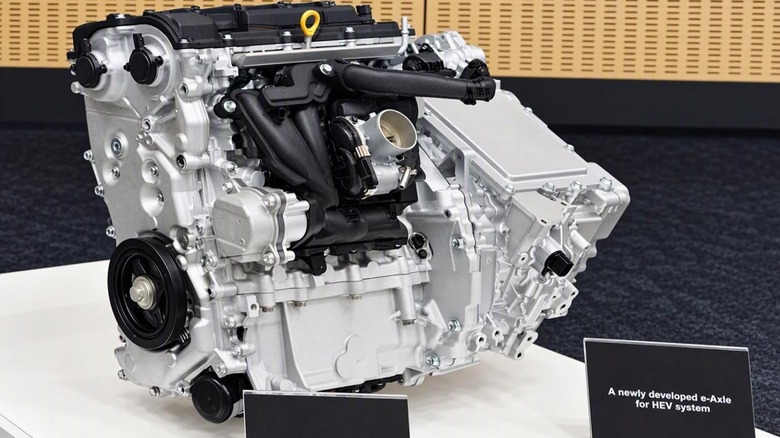
It's clear what Toyota gets out of the deal by selling its newly developed engines, but how do the other manufacturers benefit? Why would they buy from Toyota over building their own? Well, that's the million-dollar question, and there are also examples of the mentioned brands working on variants internally. Mazda is currently developing a new Skyactiv-Z engine for hybrid models set to arrive by 2027. Though, the Mazda CX-50 currently uses Toyota technology.
If Toyota can make a case for sharing in the development costs and timelines, that could open up some of these other brands to using the ready-made designs. This isn't the first time something like this has happened, either. Toyota, Subaru, and Mazda have all worked together in years past for this very thing. There are also many more examples of automakers using technologies from competitors, forming alliances to share in the burdens of new development.
With development costs rising and new technologies being just one facet of those increased expenses, it's not out of the question to imagine car manufacturers working collaboratively to minimize them. Adopting Toyota's new engines could also free up automakers to focus on additional technologies or offerings. Toyota has a longstanding history with hybrid engines, which are known to be quite reliable, so other companies could benefit from that experience and cut down on the growing pains of utilizing less tried-and-true designs. If parties are willing, it could help lower the sticker prices of new vehicles coming from the brands that didn't have to invest in comparable designs.
Exploring the next-gen engine specifications
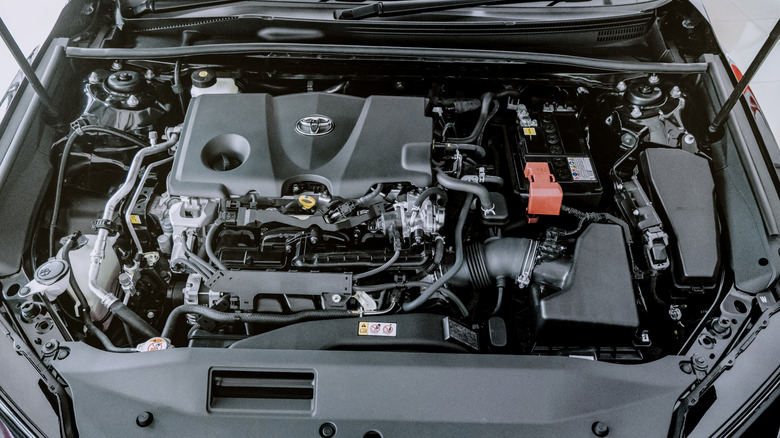
Toyota has already shown off the inline-four engines, originally announced in May 2024, which follow one basic premise: they're smaller and more compact than previous iterations, but still both efficient and powerful compared with older technologies. At the time, that joint announcement conference was held in conjunction with Mazda and Subaru.
But as for the engines, there are three types. Starting with a standard 1.5-liter four-cylinder, a turbocharged 1.5-liter, and a 2.0-liter turbocharged four-cylinder, the latter of which impressively aspires to overtake larger 2.4-liter turbo engines from past generations. Toyota hasn't shared any fuel economy numbers for the engines, but it has promised they will be less demanding, especially since they're optimized for use in hybrid or plug-in hybrid vehicles. It's targeting a 15% bump in fuel economy achieved thanks to enhancements like better thermal management, lower friction, and optimized electrical systems.
With revenue projections that include orders from this year, it shouldn't be long before we see these engines in active use. When the pedal hits the floor, it will be interesting to see what other automakers have opted to use Toyota's next-gen designs.