

What Are The Rules For Overtaking Or Passing A Boat When You're On The Water?
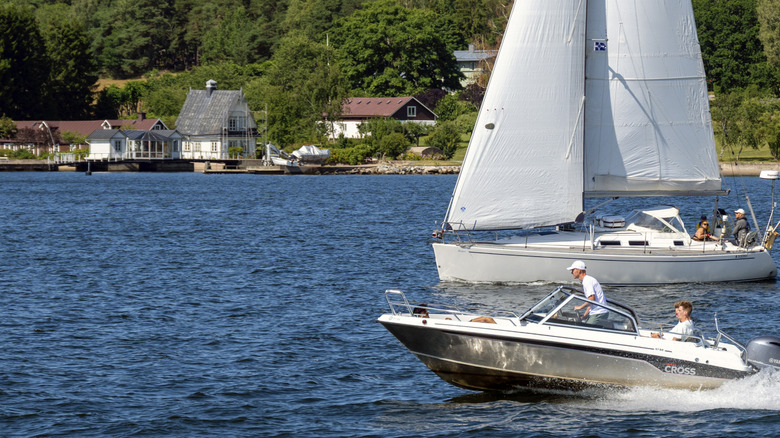
Operating a boat is very much like driving a car in certain essential ways. For example, just as motorists must observe the rules of the road, boaters and mariners must also obey safety laws and regulations. While some boating "rules," such as the 100-feet rule or the one-third rule, are actually informal guidelines, there are plenty of official statutes that dictate what you can and can't do on the water. An instance when such laws may apply is when one vessel overtakes another.
The U.S. Coast Guard defines overtaking as coming up from behind another vessel in such a direction and position relative to the other vessel that, at night, it would typically only be possible to see its sternlight but none of the sidelights.
The Coast Guard's main summary of the rule is that a mariner should stay "out of the way" of the vessel they're overtaking. However, what this actually looks like in practice can vary depending on a number of factors. That's why the Coast Guard makes it clear that certain other rules may also apply when overtaking another boat on the water.
How to let another boater know you're overtaking them
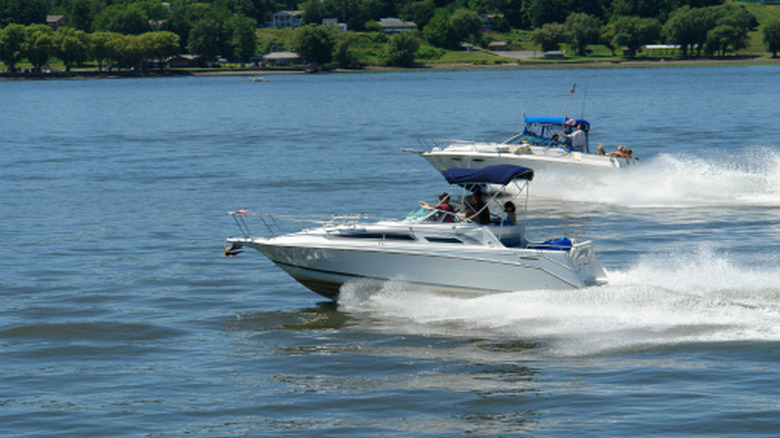
The Coast Guard publishes both inland and international navigation rules, as different rules apply depending on where you are. Familiarizing yourself with the Coast Guard's COLREGS demarcation lines will help you understand which waters you're in. For instance, mariners should also know how to signal their intentions when overtaking. Outside the demarcation lines, when two boaters are in sight of one another in a narrow channel or fairway, two prolonged blasts followed by one short blast of a whistle indicate an intention to overtake on the starboard side. If a boater wishes to signal they intend to overtake them on the port side, they can issue two prolonged whistle blasts followed by two short blasts.
On inland waters, when a power-driven vessel's operator intends to overtake another power-driven vessel, one short whistle blast indicates the intention to pass on the starboard side, and two short blasts to signal passing on the port side. The operator of the vessel being overtaken must also signal agreement. Under the International Rules, they may do so with the following whistle blast sequence: prolonged blast, short blast, prolonged blast, short blast. On inland waters, the vessel being overtaken should merely sound a signal similar to the one the overtaking vessel sounded.
Important general safety rules to follow when overtaking a boat
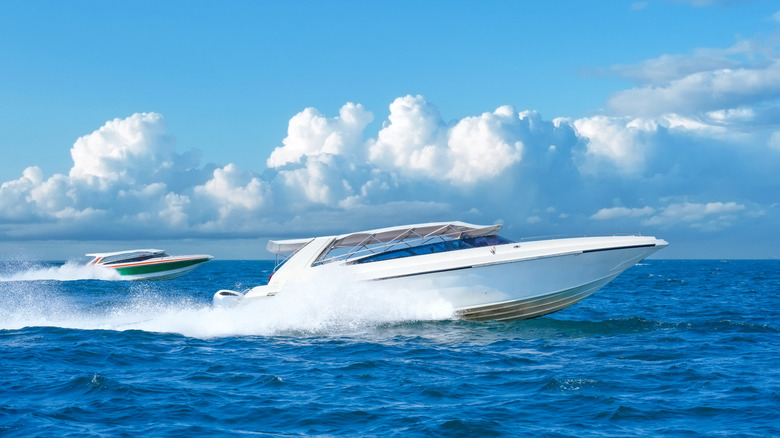
Per the Coast Guard's safety regulations, all mariners must ensure they can properly see and hear the conditions around them in order to make informed decisions. Vessels must also travel at a safe speed, which can mean more than accounting for the speed limit in a given area. The rules may not specify the exact speed or distance a mariner should maintain when passing another boat. However, they do state that a mariner changing their speed and course to overtake a vessel should do so early enough to ensure there's sufficient room to avoid a collision.
It's sometimes not entirely clear whether a vessel is actively overtaking another. In these situations, the Coast Guard instructs mariners to assume they are overtaking another vessel, and to adhere to safety rules accordingly. It is ultimately the responsibility of the overtaking vessel to keep out of the way of the vessel being overtaken.
Just remember that knowing how to safely and legally overtake another vessel is only part of what you should know when first launching a boat. Because your choices on the water affect both your safety and that of others, you need to take all steps to reduce the chances of an accident occurring. You're much more likely to enjoy your trips if you obey all the relevant safety laws.