

These Cartoonish-Looking Buoys Are Helping Save Birds' Lives At Sea
Whether they're seasoned professionals or hobbyists, virtually every fisher will have at some point had the experience of accidentally catching something they didn't want. Occasionally, that catch might be something really strange, like a U.S. Air Force attack drone, but most of the time, they end up catching other animals, which is referred to as bycatch.
For commercial fishers, accidentally catching seabirds is an especially significant problem. It's thought that hundreds of thousands of birds get caught in nets each year, and the vast majority are drown while trying to escape. Researchers have attempted to solve the problem in many different ways, including by using illuminated nets and acoustic devices, but recently their attention has turned to above-water devices like looming-eye buoys (LEBs).
These buoys are cheaper to implement than some other methods and easier to retrofit to existing fishing equipment, and studies suggest that they're a promising way of keeping birds away from fishing nets. A recent study published in the Conservation Letters journal found that birds off the coast of the United Kingdom were less likely to get entangled in fishing equipment when it was fitted with LEBs. The study monitored the catch rates of various different animal species, but by far the most common in the control data were common guillemots and razorbills. When LEBs were fitted to the nets, the recorded numbers of both species that were caught decreased significantly.
How do looming-eye buoys work?
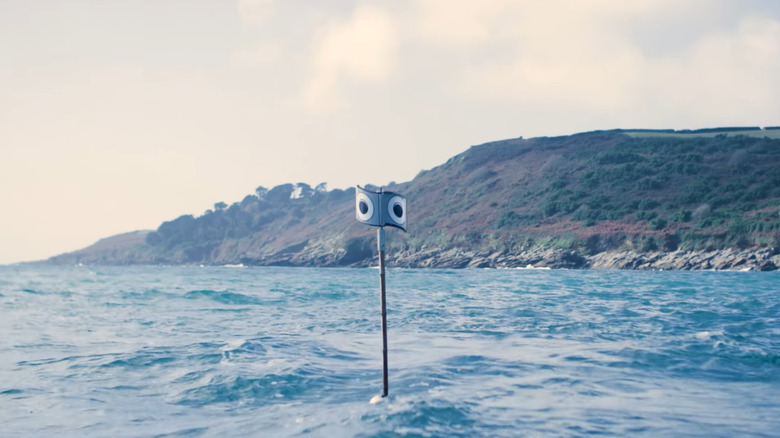
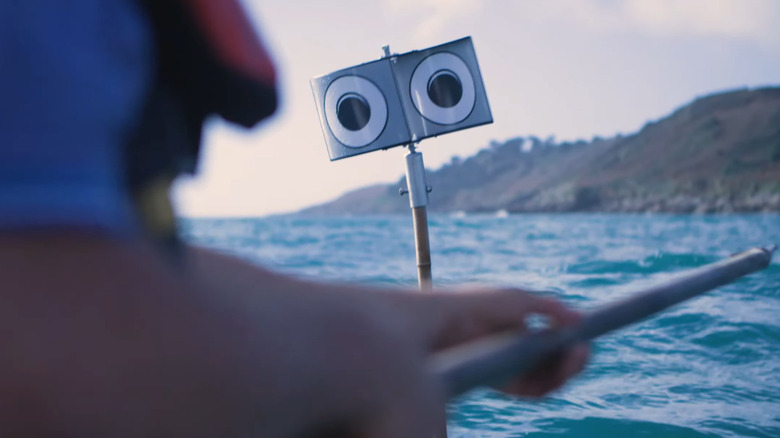
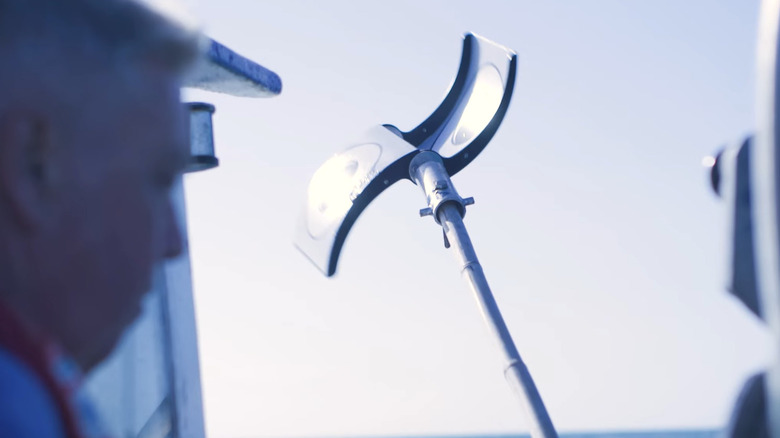
Looming-eye buoys might look strange, but that's because their rotating heads are designed to resemble the eyes of an approaching predator. The theory is that seabirds will be scared away from the area by the possible presence of that predator, and will therefore be less likely to become trapped in the nets while trying to catch fish. The U.K. research suggests that, for some bird species, this method does seem to work, and that areas of the nets closest to the LEBs saw the least bycatch recorded. However, it's not a perfect solution. Although only a very small number of shags were recorded in the overall data, the study couldn't establish whether the buoys had a deterrent effect on them or on cormorants.
Concerningly, nets equipped with the buoys also caught a larger number of seals than those without any deterrent devices. The researchers suggested that this might have been caused by seals using signals from other perceived predators to find areas with lots of prey, but noted that more research would be needed to confirm if that was indeed the case. Bycatch levels also varied depending upon the time of year, with the winter seeing significantly higher levels of seabirds becoming trapped. This led the researchers to suggest that LEBs might be most effective when they're used only during peak bycatch season, rather than all year round.
Some birds might learn to ignore them
Another potential problem with LEBs is that some birds might eventually get used to their presence, realize they don't pose a danger, and eventually ignore them. The researchers in the U.K. study noted that this behavior change, which is called habituation, could eventually reduce the effectiveness of the buoys.
Another recent study published in Royal Society Open Science seems to back that theory up. A different set of researchers in Denmark looked at the effectiveness of LEBs when they were used around fixed fish traps called pound nets and found that they only had a short-term effect. In the days immediately following the installation of the buoys, fewer great cormorants and gulls were observed around the nets, but after a month, seabird numbers went back up to around the same level as before. Evidently, the giant-eyed buoys aren't a foolproof way to keep seabirds of all kinds from becoming trapped in nets indefinitely, but the studies still suggest that they're a promising deterrent if they're used in the right circumstances.
Meanwhile, other researchers are developing new ways to reduce bird fatalities caused by different human-made structures. Studies have found that wind turbines become safer for birds when they're given a new paint job, while floating solar farms might help reduce the chance of birds getting lost during migration.