

The Original Passport Wasn't Made By Honda: It Was A Thinly-Veiled Isuzu SUV
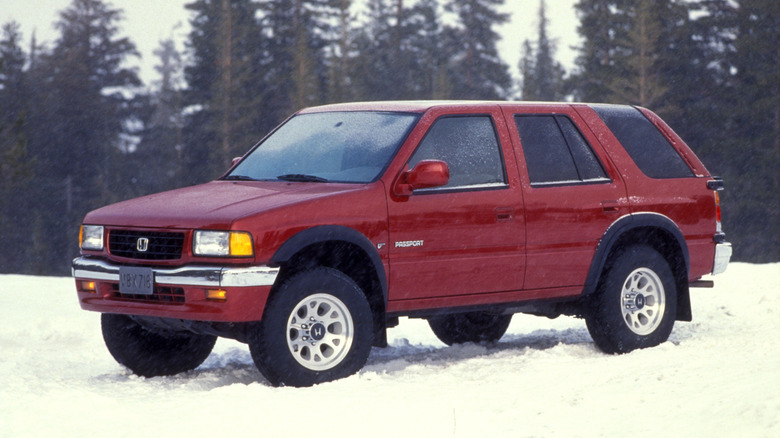
While the Honda brand doesn't have quite the same rugged, off-road-ready image as Japanese rivals like Toyota or even Subaru, the brand's current Honda Passport crossover has proven to punch well above its weight when it comes to off-road capability. The Passport may lack the body-on-frame construction you get in the Toyota 4Runner, or the symmetrical all-wheel-drive system that makes Subaru's CUVs so capable off the pavement, but the Passport — especially in its rugged TrailSport trim – has received lots of praise from drivers.
With a naturally aspirated V6 engine under the hood, and Honda's i-VTM4 all-wheel-drive system providing traction, the Passport has won people over with its blend of real all-terrain capability with the on-road manners and smart packaging you expect from Honda's other models. The current iteration of the Passport is a relatively recent addition to the Honda lineup, having debuted for the 2019 model year, slotting above the CR-V but below the three-row Pilot in size — but the Honda Passport SUV has a history that goes back much further than that.
The origins of the Passport actually stretch way back to the early 1990s, when Honda sold a rebadged Isuzu SUV bearing the Passport name. The original Passport came at a unique time in the partnership between Honda and Isuzu.
An Isuzu with a Honda H
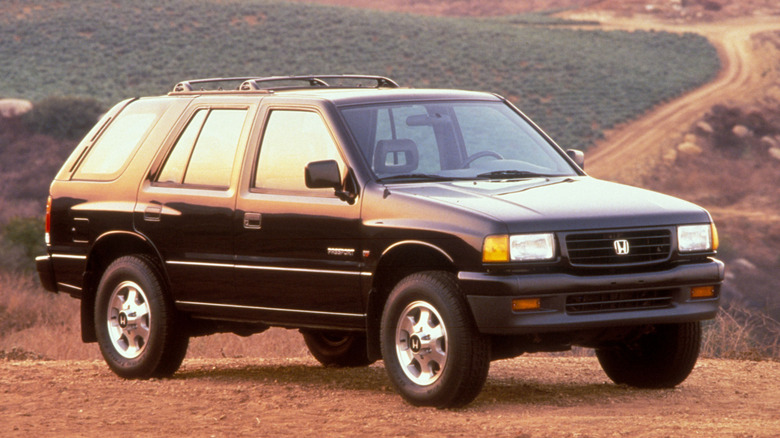
Before we can talk about the original Honda Passport, we have to talk about the Isuzu Rodeo — which is the SUV that the Passport was based on. Isuzu was always a small player in the American market, but the company deserves credit for being ahead of the curve during the SUV boom of the 1990s. A traditional, body-on-frame SUV that could be optioned with four-wheel drive, the Isuzu Rodeo arrived in the U.S. for the 1991 model year, where it competed against models like the Toyota 4Runner and the new Ford Explorer.
In the early '90s, Honda's lineup didn't include any SUVs at all, and the debut of the Honda CR-V was still several years away. In order to broaden its lineup and attempt to capture a piece of this growing SUV market, Honda worked out a deal with Isuzu to sell the Rodeo at its U.S. dealerships under the Passport name. That's right, Honda's first SUV actually wasn't made by Honda at all.
Among other names, the Rodeo was also sold as the Isuzu Wizard in Japan, and thanks to Isuzu's partnership with General Motors, the Chevrolet Rodeo in South America and the Holden Frontera in Australia. The Isuzu Rodeo would stick around in the U.S.market until 2004, when Isuzu's lineup had shifted to GM-based models like the Ascender SUV and the i-Series pickup. By 2008, Isuzu announced it was pulling out of the U.S. passenger car market completely.
The Passport wasn't the only Isuzu-Honda collaboration
Notably, the original Passport wasn't the only U.S.-market product that was born of the Honda-Isuzu partnership. For example, when Acura wanted an entrant in the growing SUV market of the '90s, it used a rebadged Isuzu Trooper as the Acura SLX. Honda returned the favor by giving Isuzu dealers a rebadged version of the Honda Odyssey minivan known as the Isuzu Oasis, and in the Japanese market, Isuzu sold a version of the Honda Accord sedan badged as the Isuzu Aska.
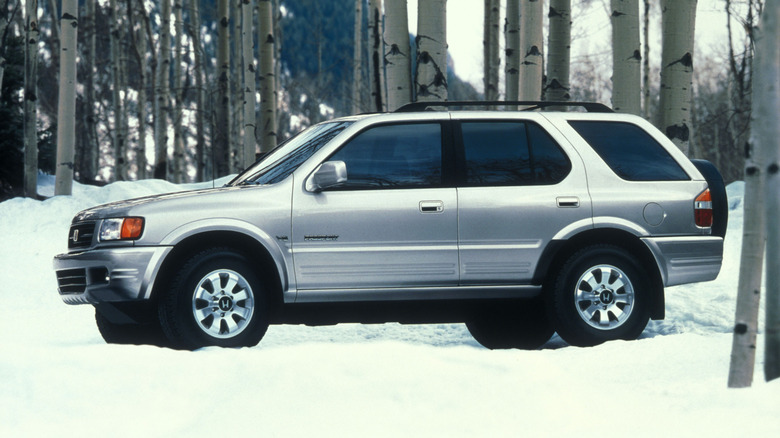
As for the Isuzu-based Honda Passport, it survived through two generations and until the 2002 model year, when the Honda-Isuzu partnership came to an end. By then, Honda not only had its own CR-V to offer customers, but also the new midsize Pilot, which replaced the Passport in the brand's lineup. In 2019, after a hiatus of over 15 years, Honda decided to bring back the Passport nameplate on its new two-row SUV based on the Pilot platform.
Interestingly, Honda has yet to build its own dedicated body-on-frame SUV platform, but it may not need to. Given the strong niche it's established with the Pilot and Passport SUVs, as well as the Ridgeline pickup and the continued expansion of its TrailSport lineup, the company is showing it can do a whole lot without building a "real 4x4."