

How Much Size & Power Are You Actually Losing With A Mini Truck Vs A Full-Size Model?
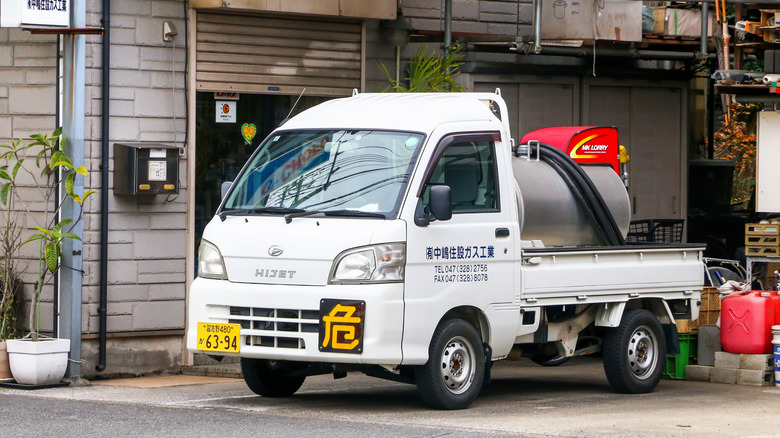
If you've spent any time recently in the automotive sections of social media, you may have seen memes and posts comparing the cargo capacity of Japanese mini trucks — or kei trucks, as they are known in their homeland — to full-size American pickups. While the posts are often humorous, some also criticize the overwhelming popularity of full-size trucks and show that Americans are buying way more truck than they actually need.
While micro-sized Japanese kei trucks can be handy, with a great size-to-utility ratio that has made them quite popular among American enthusiasts, the reality is that kei trucks and full-size American pickup trucks simply aren't comparable. When it comes to power, payload capacity, towing, interior space, and suitability for American highways, full-size pickups easily take the cake.
Now, this doesn't mean that kei trucks don't do their intended job well. It's just that the engineers behind Japanese-market trucks like the Daihatsu HiJet or Honda Acty never designed them to compete with a Ford F-150 or Chevy Silverado. Pitching a used JDM kei truck as a genuine alternative to an F-150 actually does a disservice to both trucks, which were built for two entirely different countries and use cases.
Is bigger always better?
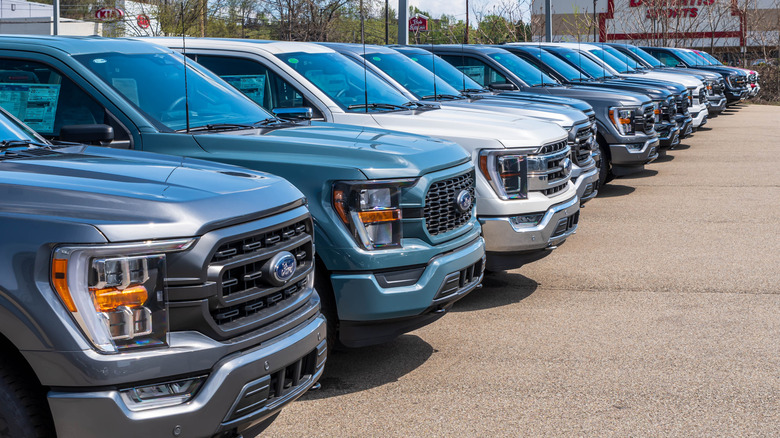
While it's true that many Americans who drive full-size trucks daily rarely use their trucks' capabilities, truck buyers who genuinely want to downsize may still find that a used Japanese kei truck likely gives up too much to be a real alternative to a full-size pickup. For starters, kei trucks are small even by Japanese standards, with regulations that limit their dimensions and engine displacements, the latter to just 660 cc.
Sure, kei truck fans like to point out the similar bed lengths to half-ton trucks, but there's more to carrying cargo than bed size. With its larger, more robust frame, a full-size truck can typically carry double or more the weight of a kei truck. Kei trucks are also very small, and while they balance bed capacity and overall size brilliantly, the constrained size becomes very apparent inside the cab.
Kei trucks typically only have two seats, and their small cabins can be extremely tight if you're a taller person. You're also out of luck if you're carrying more than one passenger. The most popular full-size trucks in the U.S., meanwhile, are spacious four-door models with interior room to spare, and a lot of their popularity comes from the fact that many modern pickups can double as family haulers.
Two very different kinds of trucks
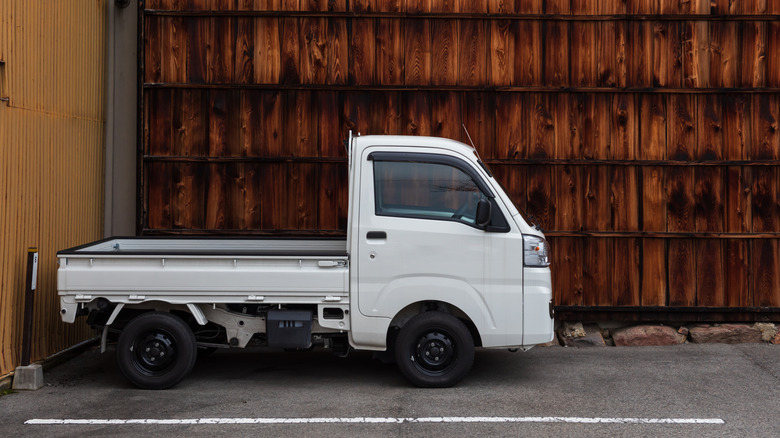
Smaller, lighter kei trucks obviously don't need the same horsepower as full-size trucks. Still, their tiny engines are extremely underpowered by general American standards, let alone compared to the torquey, powerful engines used in modern full-size trucks. For example, even the turbo version of the latest Subaru Sanbar kei truck makes just 63 horsepower. A base 2026 F-150, meanwhile, makes 325 horsepower from its 2.7-liter EcoBoost V6.
Even the fastest kei truck models struggle to reach U.S. highway speeds and would be totally maxed out on your typical American interstate. They can still be great on farms, in dense cities, or on slow-speed rural roads, but they simply aren't suitable for highway driving.
This is all before you get into other limitations of kei trucks, including extremely limited towing, a possible lack of safety features, and whether you can even legally register one in your state. There's no doubting the growing popularity of Japanese kei trucks in America, but despite what the memes say, they really can't compare to full-size models. Instead, it's better to think of kei trucks as a fun, unique — and potentially very handy — small utility vehicle, not a serious alternative to the larger, multi-purpose pickups that dominate America's new-vehicle sales charts.