

What Are Plow Anchors Used For In Boating?
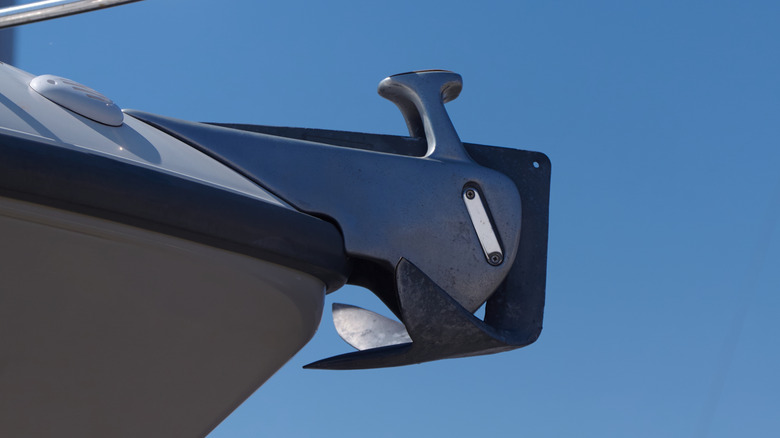
Anchors are an essential part of boating and a must-have for any boat, which is important to know if you're just starting out and launching a boat for the first time. There are many types available, due to different boat sizes and seabeds. One of those is the plow anchor, which routinely ranks among the most versatile types. They're easily recognizable by the distinctive plow-like shape, and their versatility comes from their ability to grip well in most seabeds. When deployed, a plow anchor lands on its side before burying itself as tension is applied. It relies on a heavy, pointed tip and a wide blade to dig deep into the seafloor, staying firmly hooked even when wind or water movement pulls the boat in different directions.
Due to their usability in a wide range of seafloors, boaters frequently use plow anchors as their main, go-to anchor for everyday use. They're a good choice for large vessels and long-distance cruisers. Since plow anchors work well in multiple seabeds, they're ideal for boaters who travel to different spots, as they provide a dependable primary anchor that eliminates the need for frequent equipment changes between voyages. Plow anchors also tend to be sturdy, being forged from either galvanized steel or stainless steel, with the latter adding more corrosion resistance, but at a higher price.
The good and not-so-good characteristics of plow anchors
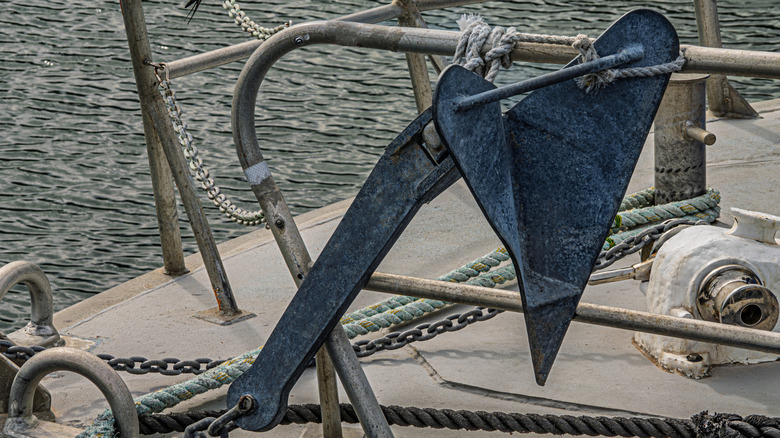
Because of their build, plow anchors have great holding power in various seabeds, like sand or gravel. They're a solid option in weeds or grass, which makes plow anchors better in this area compared to, for instance, claw anchors. Thanks to their shape, plow anchors can quickly pivot and dig themselves back into the seafloor if shifting winds or tides cause the boat to move around. However, unlike Danforth anchors, plow anchors are less effective in soft mud or loose silt. Additionally, plow anchors will struggle with extremely hard bottoms and underwater debris, as this can keep the anchor tip from digging in when first dropped.
Many plow anchors are shaped to flip themselves upright and can fit right onto a bow roller for easier storage, although this depends on the boat. Still, they're not as compact as Danforth anchors, which are more commonly used in small to mid-sized boats. While plow anchors are a good all-around choice, boating experts recommend keeping two different types of anchors on board for maximum safety. As such, a plow anchor and a Danforth anchor would make a good duo.