

How Many Miles Is Too Many For A Hybrid Car? What To Look For In A Used Model
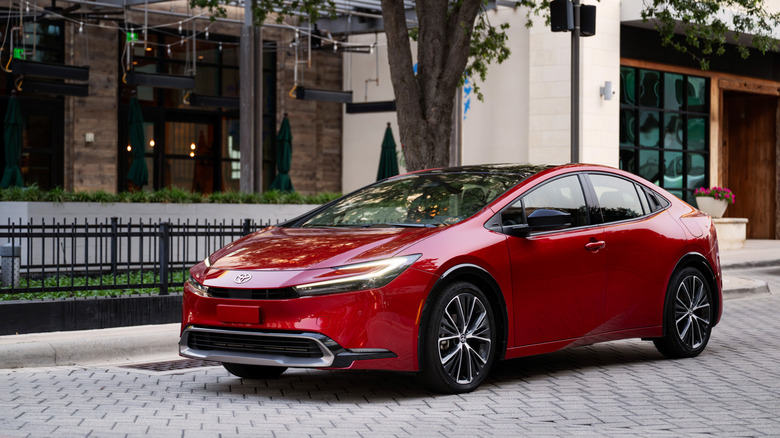
Due to two powertrains, a hybrid car is inherently more technologically complex than a purely gas car. Alongside the gas engine, a hybrid also features an electric motor that needs a high-voltage battery to run. This combination, and especially how long the battery in hybrids lasts, is what makes shoppers nervous.
The good news if you're in the market for a hybrid, though, is that it's pretty common for a well-maintained car to make it to the 150,000-200,000 mile range and beyond. The same extra hardware people fear actually ends up helping: Since there's an electric motor involved, it takes over some of the gas engine's work, helping it run less often and, as a result, wear out more slowly. In fact, Consumer Reports saw this play out firsthand when it tested a Toyota Prius. Despite covering over 200,000 miles and using the original engine and transmission, the car performed about as well as a nearly new one in terms of fuel economy and acceleration.
While specific numbers around longevity are scarce, Consumer Reports has been tracking vehicles to check their reliability and has published its findings in a 2025 report. Around 380,000 vehicles have been a part of the survey, ranging back as early as the 2000s. Hybrids specifically were found to have 15% fewer problems than gas-only cars on average. Ultimately, you shouldn't worry about purchasing a hybrid any more than purchasing a gas car. However, to be sure, it's still recommended to check the battery health and, preferably, choose a model with a warranty.
What to check as the miles climb
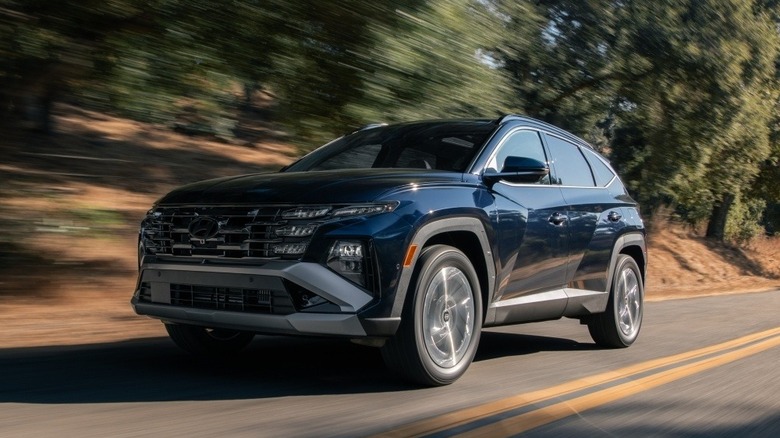
If you really like a car and it's got everything going for it, but the battery health is still somewhat poor, it's best to set an asking price that leaves room for a replacement down the line. Again, warranty comes super handy here. For instance, Toyota, on its 2020 and newer hybrids, provides a warranty covering 10 years or 150,000 miles. This carries over to any later owners.
It's not just Toyota either, since Honda and Ford provide such warranties as well on some of their models in certain states. The battery isn't the only part with a warranty clock on hybrids either. The electronics that run the whole system are usually covered as well, so it's worth checking their terms out, too.
If there's no warranty, getting the car inspected — especially the battery — by a dealer is a smart move. You can also learn a lot from driving it yourself a bit. If the pack is worn, it keeps the battery gauge from ever filling up. To compensate, the gas engine kicks in more often than it should as well, resulting in lower fuel economy.
Finally, take a quick look at the battery's cooling vent. Some hybrids have these vents near the seats that help keep the battery cool. Ensure that this vent is clean on a used hybrid — if it is, it's a small hint that the last owner kept up with maintaining the hybrid battery's health. A blocked vent can overheat the battery, even damaging it.
Model rankings are also worth paying attention to
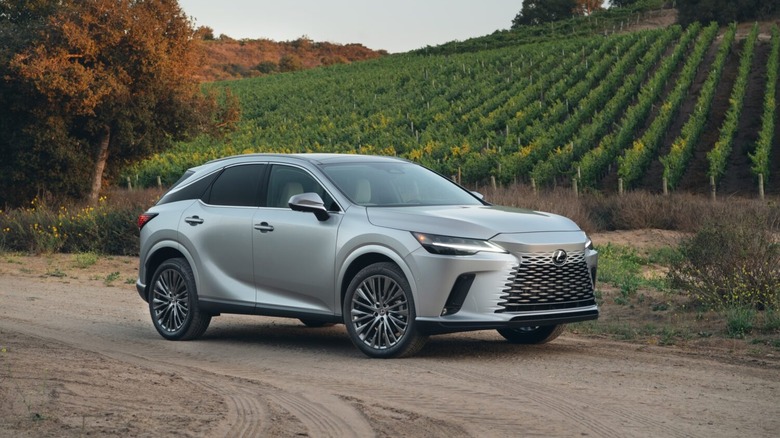
Of course, besides the additional stuff you need to keep in mind above, the checklist looks the same as any other car. And individual factors aside, it also helps to know which model as a whole tends to hold up. Car-search site iSeeCars did just that when it analyzed data on over 395 million cars to work out how likely each model is to last for 250,000 miles. For the average vehicle, those odds sit at just 5.4%. However, hybrids as a group do better, with an average of 8.2%. Some of the highest-performing on the list were models by Lexus and Toyota. For instance, the Lexus RX hybrid leads the hybrids most likely to make it that far, at 28.9%. Toyota's Highlander Hybrid comes in right behind it. Within hybrids specifically, the Ford Escape Hybrid sits near the bottom with odds under 1%.
Now, those numbers don't really tell you much about the battery health since they also depend on how much owners drive each model. However, a low score still suggests fewer examples of that model have proven themselves at very high mileage. Some cars are ultimately more reliable than others, so it's smart to dig around and see which ones hold up best.