

Alef Hits Back At Tesla's 'Flying Car' With Video Of Its Car Soaring Over A Roadster
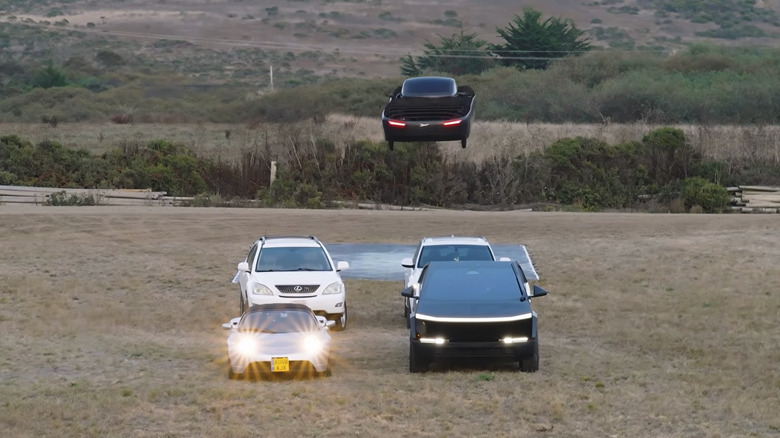
The Tesla Roadster performed its first public airborne maneuvers on October 16, 2026. (Or, more likely, a hollow/significantly lightened mockup version of the Roadster did.) But California-based flying car startup, Alef Aeronautics, just completed its 1,000th logged flight, and to mark the milestone, it put out a clip of its electric flying car literally soaring over a Tesla.
The stunt also shows Alef's Model Zero Ultralight flying over a Tesla Cybertruck. The demo literally puts Alef Aeronautics over the two biggest things Tesla is trying to get people excited about in 2026. The company has good reason to feel a little protective over the flying car space: Alef CEO Jim Dukhovny said the company had spent 11 years without a rival in the category.
The company framed the video as a welcome to a new competitor, but people can speculate what the real intent was: To prove that Alef's technology has already established its place in the flying car industry, and that the Roadster still has a long way to go until it could ever hope to compete. that said, the underside of the soaring Alef model looks similarly hollow or lightened, based off its reflection in the Cybertruck in the video.
Two very different types of flying car, same major hurdles
Though Alef and Tesla share some common ground, including electric powertrains, all-wheel drive, and early investor Tim Draper, their proposed methods of achieving flight are quite different. Alef uses distributed electric propulsion, while the Tesla Roadster is supposedly going to incorporate thrusters. The Alef also uses air to lift off instead of compressed gas, and its design has a body that forms wings as well as a rotating cabin. It also includes a full-vehicle ballistic parachute with its cars. The Roadster, by comparison, borrows mainly from the look of the Cybertruck.
Of course, it's worth noting that neither Alef nor Tesla have a flying car ready for people to drive (or fly) off the lot in. For that reason, anything either company says (or any stunts they show off) should probably be taken as nothing more than bait for investors to continue funding research and development. Alef is definitely a lot closer to the finish line than Tesla, what with its Federal Aviation Administration Special Airworthiness Certification and hundreds upon hundreds of logged flights, but the point remains: Commercial adoption will depend on a lot more than either car's ability to fly. Pricing, controlled testing, regulatory requirements such as a pilot's license, and the practical demands of operating a vehicle on both the road and in the sky are the true tests.