

How Much Electricity Would The US Need If Every Gas Car Was Replaced With An EV?
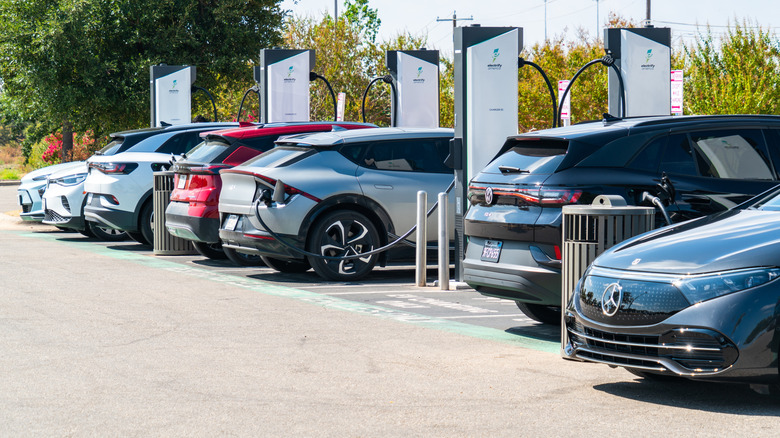
Imagine if every car in the U.S. was suddenly replaced by an EV, which some people believe could cause power blackouts in the U.S. While it's true that the amount of electricity required to charge them all would be considerable, it would still be less in terms of energy than what we use for our gas-powered cars.
The actual total amount of electricity consumption with 100% EVs is estimated at between 800 and 1,900 billion kilowatt-hours (kWh), based on 2019 information from the Department of Energy that EVs cost 35% to 75% less than the cost of fueling gasoline-powered cars on a per-mile basis. A lot of electricity generation is produced by fossil fuel plants, so that pollution source remains. Numbers from 2021, estimated by Motor Finance Online revealed that, based on average mileage driven and the total number of U.S. drivers, we'd need an extra 1.32 trillion kWh, or 1.32 million GWh, of energy generation each year with 100% EVs.
However, once that you deduct the amount of gasoline required to fuel these vehicles, you are saving a total of 142.8 billion gallons of fuel in 2019 numbers, which equates to an electric equivalent of 4,800 billion kWh devoted to gasoline-fueled cars and light trucks. And since the 800 to 1,900 kWh needed to charge all of those EVs is much less than the 4,800 billion kWh required to fill them with gasoline, we are coming out way ahead, even if we need to build some additional electrical generating capacity by the time we get to 100% EVs.
What would be the impact on the electrical grid if every gas car was replaced with an EV?
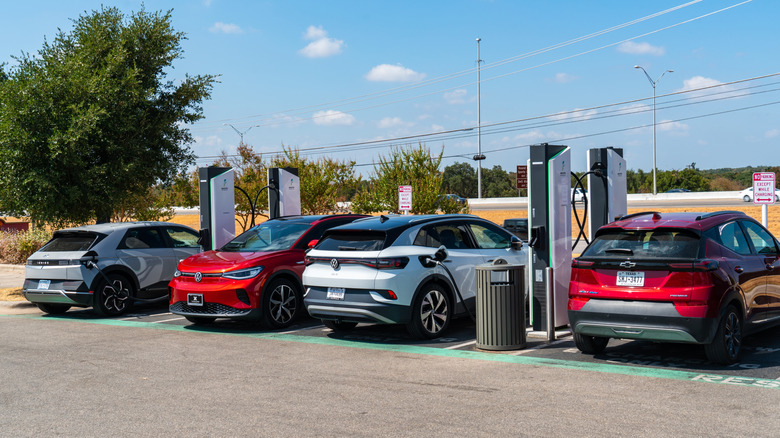
Let's put this into perspective, based on where we came from and where the grid is now. In 1980, we had around two million GWh of generation capacity, compared to four million GWh of capacity today. Accounting for just the increase needed to reach the charging level required for 100% EVs, we would need to reach a total of 5.32 GWh of capacity to charge them all. Considering that we have a long way to go to reach 100% EVs in the U.S., with third-quarter 2026 EV sales equal to 6.4% of all light vehicle sales, we have plenty of time to get there. It can be done, especially if you use these ways to get more range out of your EV.
A world in which all gas-powered cars are replaced by EVs is achievable, especially in a country where a very low percentage of sales are currently being claimed by EVs. If we can build out enough additional electricity generation capacity as we grow the percentage of EVs in the U.S. vehicle fleet, along with increasing the size of the U.S. charging infrastructure along with it, it should be possible to see steady growth toward this goal. Interestingly, high gasoline prices are pushing more and more consumers to consider an EV, a hybrid, or a plug-in hybrid as their next vehicle, boosting the share of all electrified vehicles to almost 25% in 2026's third quarter. This represents one more good reason to educate yourself about the common electric vehicle myths you need to know the facts about.