

4 Disadvantages Of Tankless Water Heaters
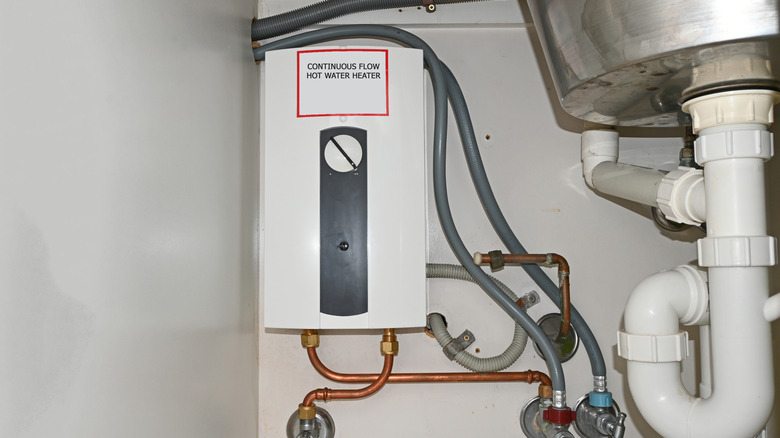
On the face of it, a tankless water heater might seem to have all the bases covered — hot water on demand, no tanks of unused hot water slowly losing energy to the environment, and no finite hot water supply that suddenly runs out mid-shower. However, there are downsides to most water heating systems, including solar water heaters, which have their own list of pros and cons to consider. That being said, tankless systems are efficient, and cutting hot water bills is one of the best home energy-saving tactics.
These systems work on a simple principle: instead of storing a reservoir of pre-heated water, they use gas burners or electric elements to heat water on demand. The system uses a flow sensor to detect when a hot water faucet has been opened; this activates the gas burner or heating element in a heat exchanger. As noted, this is an efficient process that avoids standby losses and also the space demands of traditional systems.
All good so far, but there are some distinct downsides of tankless systems you should be aware of. From higher installation costs to flow-rate limitations, there are several drawbacks that homeowners should note before they take the 'plunge'. Even the way these systems work can introduce sudden cold spots or temperature drops that wouldn't be pleasant mid-shower. However, tankless doesn't necessarily mean thankless — in the right circumstances, these can be a smart choice. Determining whether the circumstances are right begins by understanding their limitations. Let's look at four of the biggest disadvantages of tankless water heaters.
High upfront installation costs
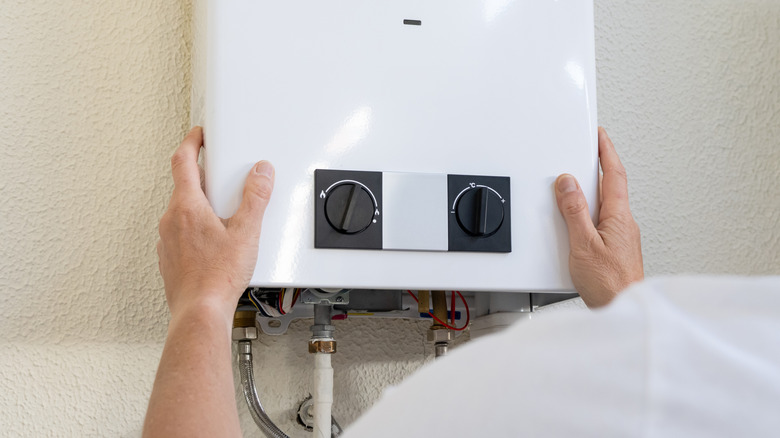
Installing a new hot water tank is a relatively simple task that involves swapping one unit for another along with the associated tidying-up work. However, installing a tankless system can be a complex task that involves more than just a quick swap job. While every installation will vary depending on the circumstances, these systems often require upgraded venting, additional work to existing gas and electrical systems, and possibly a professional installation that meets whatever code requirements exist in your area.
For instance, according to Angi, a platform that tracks national contractor pricing, a tankless system installation could cost you somewhere in the region of $1,400 to $3,900, with the cost going as high as $7,000, depending on what additional work is needed to retrofit your home. As a comparison, Angi quotes costs of between $882 and $1,826 as being the average cost of replacing a tank system water heater.
Of course, the circumstances surrounding the installation could make the investment a little easier to bear. As an example, if you're already renovating your home or doing major re-plumbing work, some of the costs associated with installing a tankless system may be incorporated into the bigger project anyway.
However, on the whole, these systems are more expensive, so it's wise to make sure you know all the upfront costs before you decide whether a tankless water heater is for you or not. Similarly, it's also worth looking at whether an electric water heater will save you money over a gas one and vice versa.
Flow rate limitations
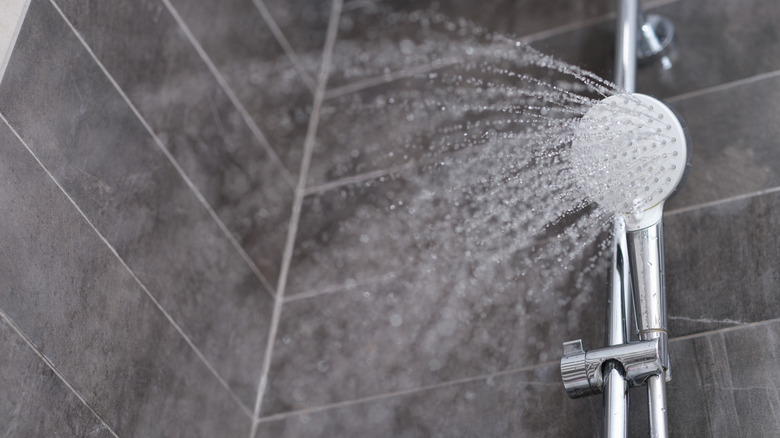
The convenience of on-demand hot water means you can jump into the shower in the morning and not have to worry about whether there's enough water in the tank — bliss. And then the washing machine goes on, and the hot water tap in the kitchen gets used, and then the dishwasher too; and suddenly your hot morning shower becomes decidedly cooler. This is one of the drawbacks of these systems: while they can feed instant hot water in decent amounts, they aren't without limits.
Flow rates vary depending on the fuel and the particular system. Generally, flow rates range from five to 10 gallons per minute for gas systems, and from two to five gallons per minute for electric systems. This will be less of a problem for smaller households, but for larger homes where a lot of people might want to use hot water simultaneously, this is certainly a consideration. For a bit of perspective, the average showerhead uses 2.5 gallons of water per minute, and even those that carry the WaterSense label can use up to two gallons per minute. Add a running tap to the equation and a couple of appliances, and you could soon find these limits being pushed.
In short, a tankless heater can only heat a certain amount of water, and when that limit is reached, there will be a noticeable fluctuation in water temperature.
Reduced performance in cold temperatures
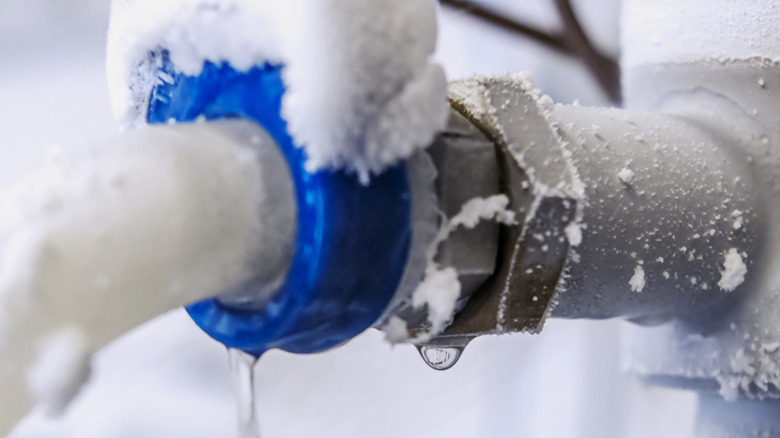
While these systems will work in cold temperatures, the laws of physics dictate they won't work as well as they do in warmer temperatures. The premise is simple; if the thermostat on your unit is set to 125 degrees Fahrenheit and the incoming groundwater is much colder — say 40 instead of 70 degrees — the heater has to work far harder to reach the set temperature. This can lead to reduced water flow as the heater struggles to reach the desired temperature. Not ideal in any circumstances, but a reduced flow rate in a system that's already limited could be what ruins that morning shower.
Of course, choosing the right water heater brand can help here, but the fact remains that heating water on-the-fly will take more energy in colder temperatures and may result in a loss of performance. While a similar argument can be applied to tank systems, at least with these you've got a reservoir of pre-heated water that, in a modern, well-insulated tank, can retain heat for up to a couple of days. This also highlights another downside of tankless systems — they need electricity to work, so during a power outage is another time when having access to a stored reservoir of hot water, even when it's limited, can be useful.
Increased maintenance costs
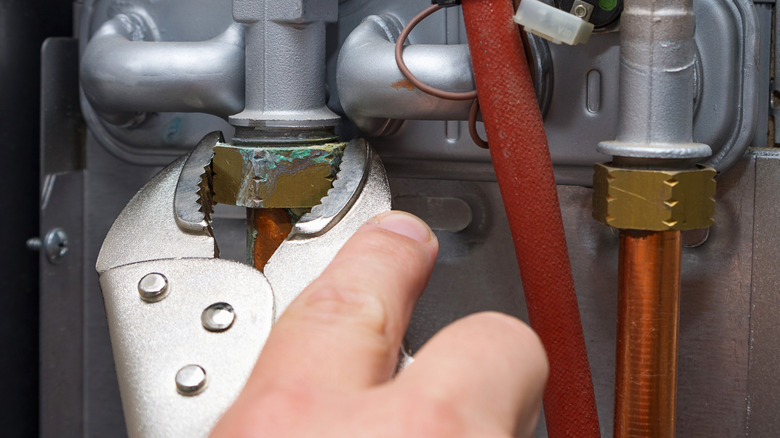
A tankless system is more complex than a tanked system, and where there's complexity there's often increased maintenance and repair costs. For comparison, a tank system is really just a metal cylinder with a heating element and a thermostat. Of course, they do go wrong and repairs can be expensive; but there's less to go wrong.
A tankless system uses a range of components including a heat exchanger unit, sensors, thermostat, electronics, and more. The cost of repairing these varies, but according to Angi, you can expect to pay between $500 and $1,300 to repair a heat exchanger and between $150 to $400 for a sensor or thermostat repair.
Maintenance costs can also mount, especially in hard water areas. In these circumstances, minerals like calcium and magnesium can build up in the system and this needs addressed or damage to components to like the heat exchanger can occur. It's recommended that units installed in hard water areas are descaled at least once a year, a process that can cost up to $350. In total, Angi notes that the average annual total repair bill for tankless systems is $600, with repair costs typically falling in the $200 to $900 range. That being said, and looking at the bigger picture, the average lifespan of a water heater varies from about 15 to 20 years for a tankless system; which compares favorably with the expected 8 to 12 years lifespan of a tank water heater.
To summarize, in the right circumstances, a tankless water system can cut your energy bills, and supply you with on-demand hot water. But they aren't for everyone, and knowing their limitations can help you make an informed decision.