

Yes, You Can Fill Motorcycle Tires With Nitrogen - But Should You?
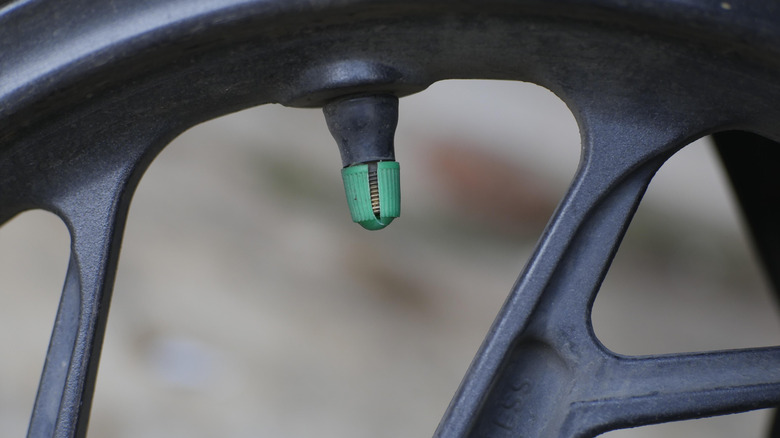
Nitrogen is often seen as "premium air," a better option than the regular air you can fill your tires with. But while there's plenty of information available around the benefits of nitrogen for your car, motorcycles are a different story. If you're wondering if it's safe, it definitely is. Due to the composition of the Earth's atmosphere, the air coming out of a regular pump is already 78% nitrogen. A nitrogen fill simply bumps that percentage to near 100%. So, yes, you can put nitrogen in your motorcycle tires, but whether you should is a different story, since there are upsides and downsides.
Dealerships and tire shops will often tell you that nitrogen leaks out more slowly, and according to them, that supposedly leads to better safety and fuel economy. Most of their claims are true as well — even if slightly exaggerated — which is why dealerships often charge extra for the gas.
Nitrogen does, in fact, bleed out more slowly than air does. Since nitrogen molecules are bigger than the other molecules in regular air — like oxygen — they are slightly less prone to seeping out. Nitrogen also carries far less moisture in the form of water vapor. According to General Motors, removing this vapor keeps the tire's pressure relatively steady as temperatures change. This is especially beneficial for motorcycles since temperature swings are more apparent — their tires use a lower air volume and softer compounds. However, GM also observes that these benefits are only noticeable under controlled conditions. Motorcyclist also concluded that, for the typical rider, both these gains shrink considerably.
Why nitrogen matters less on a motorcycle
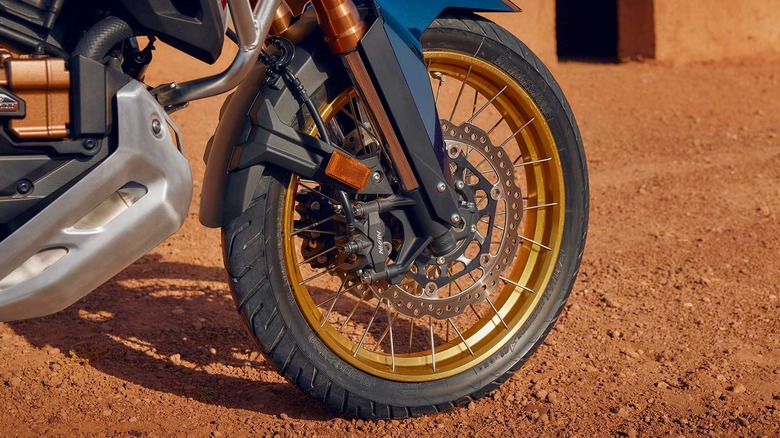
As for the differences between nitrogen and regular air, in terms of pressure loss, Consumer Reports did put things to the test. While they used car tires, the same principles do apply to motorcycles as well. After filling matching tires with nitrogen and regular air, they actually left both outdoors for a year. At the end, the nitrogen-filled tires did lose less, but only by about 1.3 psi, which is negligible over such a lengthy period of time.
Moreover, riders are held to a pretty strict routine with tire pressure. Indian Motorcycle, for one, wants its riders to check tire pressure before every ride — even on bikes that have a tire pressure monitoring system (TPMS). When you're checking your tire pressure that frequently, the tire pressure benefits brought about by nitrogen over a period of time are negated. Additionally, some riders change their tire pressure from time to time. In fact, according to the Motorcycle Safety Foundation, it's advisable to check the tire pressure pre-ride to adjust it to match the load they're carrying.
All in all, motorcycles are required to top up and adjust more frequently than cars are. However, finding nitrogen every single time can be difficult — for most riders, the only option is whatever air pump is nearby at a gas station or dealership. Whenever regular air is used to fill a tire, it waters down the nitrogen already inside, and slowly a rider's nitrogen drifts back toward ordinary air. Some drivers do have a ready supply, though, as car buyers at Costco get their new tires filled with nitrogen.
Where nitrogen can still make sense for riders

Since it's difficult to maintain pure nitrogen, and even regular air is mostly nitrogen, the small benefits may not be worth the trouble. However, nitrogen does make sense for one specific thing: Racing. If you're someone who takes your superbike to the track often, then you probably already know that nitrogen has been a staple in motorcycle racing tires.
The main draw is how little moisture it holds, according to an expert who spoke to Powersports Business. He saw it as a good fit for not just road racers, but motocross riders as well. In both cases, because of how hard the tires are pushed, they end up building up a lot of heat. And in tires running that hot, less moisture translates to smaller swings in pressure.
Touring riders are another group that would benefit from nitrogen. A manager at Pirelli told the same publication that it caught on with owners of Honda's Gold Wing tourers and with sport-touring riders. He said that the riders of those bikes liked nitrogen because it kept their tire pressure steady.
That manager did have one worry about nitrogen, though. He feared it could make riders lazy about looking after their tires, and Pirelli had seen how often riders already neglect them. The company regularly joined its dealers at motorcycle rallies, where it checked the tire pressure on bikes. On average, 85% of those bikes were underinflated. In the end, even with nitrogen, tires should be checked just as frequently as they would've been with regular air.