

The World's Largest Lithium Mine Isn't In China Or The US
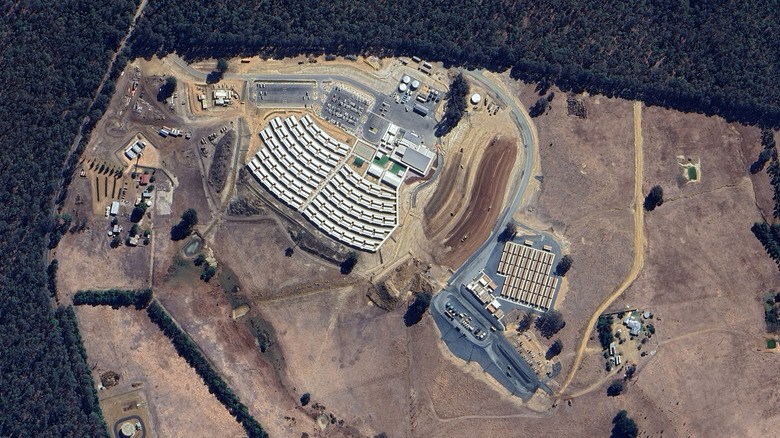
The largest lithium mine in the world is not located in either China or the U.S. It happens to be found in Western Australia, where Greenbushes Lithium Operations are located. This lithium mine is under operation by Talison Lithium. The original lease for mining activity in Greenbushes goes back to 1888, when alluvial tin mining began there, making it the oldest location in Western Australia that has seen mining on a continuous basis. Lithium mining and production began more recently, in 1983. Australia is the world's leader in terms of lithium production from mining activity, with an output of 92,000 metric tons in 2025. Runners-up were China, with 62,000 metric tons, and Chile, with 56,000. The U.S. is also getting into the lithium market, with a new lithium operation for the first time since the '60s.
The Greenbushes Lithium Operation is acknowledged as possessing the highest grade of lithium ore of any mine in the world. This inherently high level of material quality makes Greenbushes the low-cost producer of lithium derived from minerals. The site is made up of a big mine with an open pit, along with four different plants that process the lithium. These include two chemical-grade plants, a technical-grade plant, and a tailings retreatment plant. These plants can produce up to 1.5 million metric tons of concentrated lithium per year, with another plant coming online in December 2025, adding 500,000 metric tons per year at full output.
What else should you know about the world's largest lithium mine?
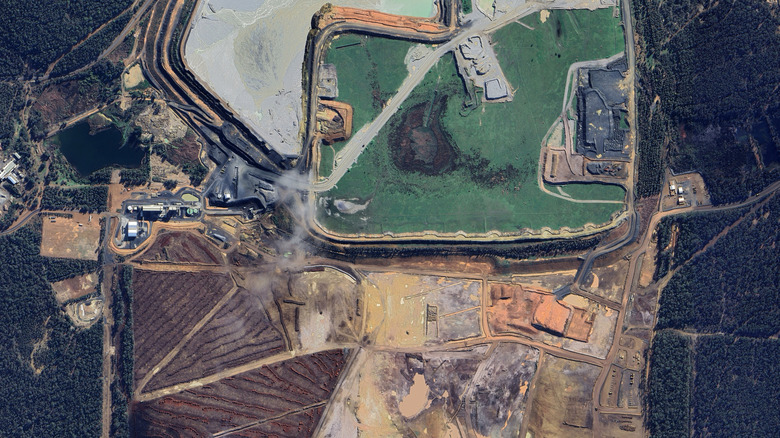
The Greenbushes Lithium Operations has seen many different types of mining operations take place on its grounds since its first tin mining claim, which lasted from 1888 until 1930. From 1935 until 1943, weathered tin oxides were produced through sluicing activities. In 1945, earthmoving equipment permitted the dredging of tin, which continued until 1956. Then in 1964, tin mining utilizing the oxidized rock commenced. Lithium mining at Greenbushes began in 1983, when its first lithium mineral concentrator was commissioned. Tantalum for the electronics industry was the next material that would be mined there, starting in 1992. Demand for tantalum went through the roof in the late 1990s, but the market crashed in 2002, reducing that demand. Tantalum mining resumed in 2011.
As far as the history of lithium mining at Greenbushes Lithium Operations goes, output has steadily increased over the years. Its current projected production level will be two million metric tons per year of lithium concentrate, when all of its processing plants have come online at full capacity. This will be the result of processing 8.9 metric tons of high-grade lithium ore each year. But the high-demand lithium markets are always subject to change, like in Germany, where one of the world's largest lithium deposits could reshape the future of EVs.
Thanks to having the highest quality lithium ore available, the future of Greenbushes Lithium Operations seems secure. But when new tech resurrects end-of-life lithium batteries back to 95% capacity, it may turn out that we reach the point where we never need to mine lithium ore ever again.