

New Tech Resurrects End-Of-Life Lithium Batteries Back To 95% Capacity
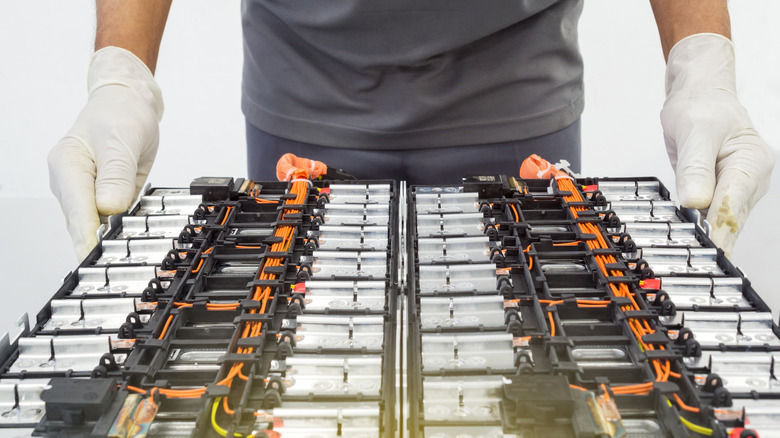
While EVs are often considered eco-friendly, the lithium batteries they rely on are notoriously resource-hungry to manufacture and recycle. However, researchers at Cornell University claim to have developed a cheap and energy-efficient way to recycle spent lithium-ion batteries.
The typical recycling process involves breaking lithium batteries down using extreme heat and harsh chemicals to extract valuable raw materials. Traditional recycling methods destroy everything, including the expensive battery management system, to recover raw materials, such as lithium, cobalt, manganese, nickel, copper, and aluminum, using energy-hungry processes like pyrometallurgy and hydrometallurgy. This is wasteful because lithium batteries are usually considered end-of-life when they reach about 70-80% of their as-new capacity. Even in this state, key components like electrodes are still salvageable despite accumulating chemical gunk over a lifetime of recharge/discharge cycles.
Researchers have developed a novel recycling technique to reverse this process chemically, without destroying the entire battery cells. Cornell University researchers dubbed this process Direct Electrode-to-Electrode Regeneration (DEER) in a research paper published in Energy and Environmental Science. The process chemically removes the solid electrolyte interphase (SEI) layer that has accumulated on the electrodes of end-of-life lithium-ion batteries, returning them to 95% of their original capacity.
Regenerated batteries degrade slower than before
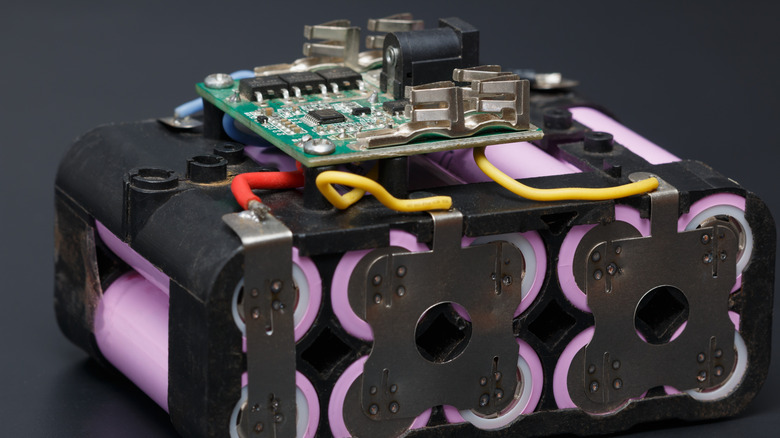
While traditional lithium battery recycling involves pulverizing entire batteries into a "black mass" to extract raw materials, the novel DEER technique instead focuses on reconditioning the batteries' electrodes. After the batteries are dismantled, the electrodes are submerged in an electrochemical bath containing 1,3-dimethyl-2-imidazolidinone (DMI), which rejuvenates them by removing the thick SEI layer that impedes the passage of electrons and therefore the battery's ability to supply power.
This process not only reverses interphase growth, but also leaves a thin lithium fluoride layer that slows down SEI growth in subsequent cycles. The researchers also found that battery degeneration dropped from 0.072% per cycle for untreated degraded batteries to only 0.042% per cycle for batteries regenerated via DEER, with refreshed batteries taking 800 cycles before the degradation rate increased. DEER is repeatable, too, with a second regeneration cycle bringing a previously refreshed battery back to 90% of its original capacity.
The renewed electrodes are now ready to be reused in new battery packs, transforming battery recycling from a resource-extraction problem to one of refurbishing. This significantly shortens the time, effort, and energy required to maintain the circularity loop. DEER, of course, isn't the only innovation in battery recycling that scientists have put forth: in 2025, a team at the Worcester Polytechnic Institute showcased a hydrometallurgical recycling process that recovers 99% pure lithium from EV batteries.
The technology shows promise for EV battery recycling
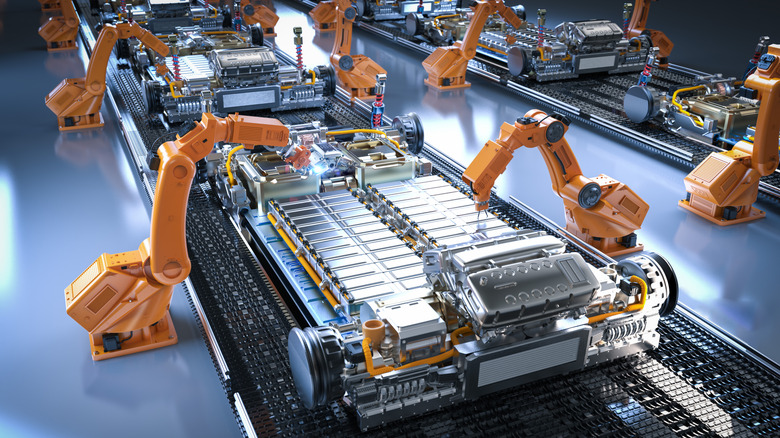
Despite its promising results, this novel DEER recycling approach isn't a total replacement for existing lithium-ion battery recycling techniques. That's because DEER is only useful for still-operational batteries that have lost capacity due to SEI accumulation. Batteries that have lost capacity or failed due to lithium loss, particle cracking, structural damage, and mechanical failure will require traditional recycling methods. As such, the DEER technique seems limited to EV battery recycling, where batteries at 70 to 80% are already considered end-of-life.
However, even the EV application has its challenges. The researchers' attempts to simplify the process by injecting the DMI electrolyte directly into a cell to regenerate the electrodes without disassembly produced poor results. Thus, DEER will require removal, processing, and washing of spent battery electrodes. While the complex process works well in lab conditions, replicating it reliably on a large scale won't be easy.
That said, the researchers estimate DEER-recycled cells will cost $15.25 per kg compared to $26.31 per kg for traditional pyrometallurgical and hydrometallurgical recycling methods. That cost can be reduced further, as their calculations didn't include the recycling of the expensive DMI solution, which accounts for roughly 63% of DEER recycling costs. DMI recovery will therefore bring costs down as the technology matures in the lab. While DEER's application seems niche, widespread EV adoption might make it feasible in the real world, especially in nations like China, where EV battery recycling poses serious challenges.