

2026 Yamaha R9 Review: It's No R1 Replacement (And That's A Good Thing)
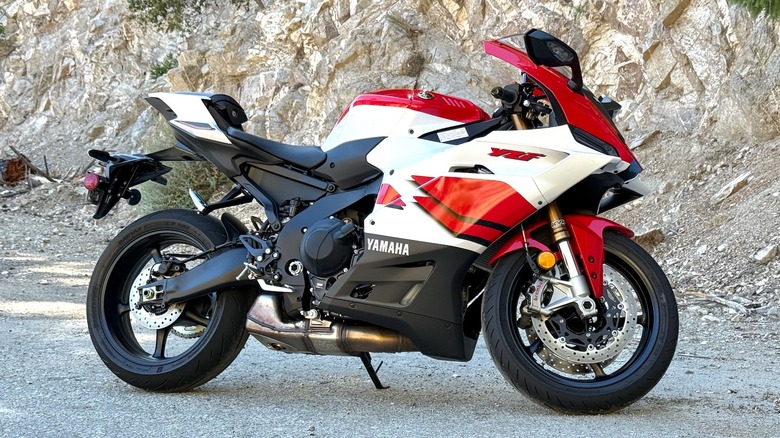
The Yamaha R9 isn't meant to replace the R1, but it gets brought up a lot in that context, and with good reason. The much-beloved, four-cylinder Yamaha R6 was discontinued not too long ago, and around the same time the parallel-twin R7 was inserted into the lineup with less performance. So, even though the R7 is an excellent bike, and it's cheaper than the old R6, it takes the blame for Yamaha discontinuing the R6. And as a result, enthusiasts are suspicious of any new bikes coming around, potentially organizing a coup behind the R1's back — that's where the R9 comes into play.
Really, though, global emissions standards are what killed the R6. The R7 was just an approachable way to get people interested in middle-of-the-range sport bikes. And while it isn't meant to replace the R1, I think the R9 can pull off a similar trick. The R1 has already been discontinued in Europe, and it may soon leave showrooms in the U.S. as well, but that's irrelevant. The R9 can be approachable as a second or third bike, especially to someone upgrading from the R7, but without the hardcore track focus of the R1 and its massive price tag. That's its potentially winning strategy.
 Travis Langness/SlashGear
After riding it, I think that's the strongest case for the R9. I got the bike on loan from Yamaha for a few months and rode it in just about every street scenario you can — city, highway, canyon, etc. And it was seriously likable, even if it wasn't a screaming superbike. If Yamaha decides to eliminate the R1, keep it around in its current form, or even replace it with some sort of ultra-fast race-inspired V4 bike, so be it, but no matter what happens, the R9 stands on its own.
A respectable powertrain
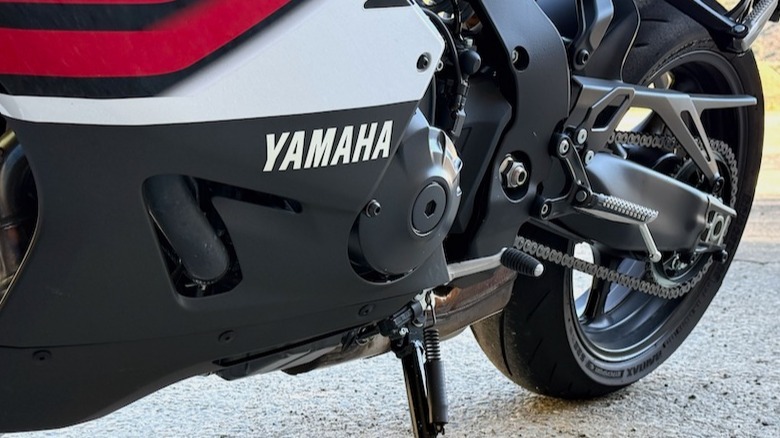
The R9 uses Yamaha's CP3 engine, an 890cc three-cylinder that produces 117 horsepower and 67 pound-feet of torque. According to Yamaha, the R9 weighs just 430 pounds, so that power number is certainly enough for a bit of speed. It's no 200-horsepower superbike engine, but it gets the job done in lots of other applications. I'm pretty familiar with the CP3 engine, having owned a 2017 XSR 900 for the last several years, but that's the older, smaller-displacement (847cc) version of the CP3. This larger-displacement version of the inline-three delivers power in a much more predictable and less chaotic way.
Where my XSR is an excitable and wheelie-happy machine, the R9 feels much more measured in its delivery of power. First gear bogs a bit below 5,000 rpm, but then the CP3 wakes up and revs quickly to the 10.5k redline. At first, that shift in character might seem like it's less exciting. And a three-cylinder that's less powerful and lower-revving than an inline-four does feel a bit less spicy, but it's still happy to perform. The engine is smooth and linear, which for my purposes, is an easier way to get acquainted with a new motorcycle — especially one with a sporty attitude.
 Travis Langness/SlashGear
There's a medium-to-deep growl through the rev range, peaking a bit as you approach the top of each gear, but the R9 doesn't scream like a four-cylinder. An aftermarket exhaust would be a great addition to the R9, and I'd certainly purchase one to liven things up if I owned this bike.
Settling into the saddle
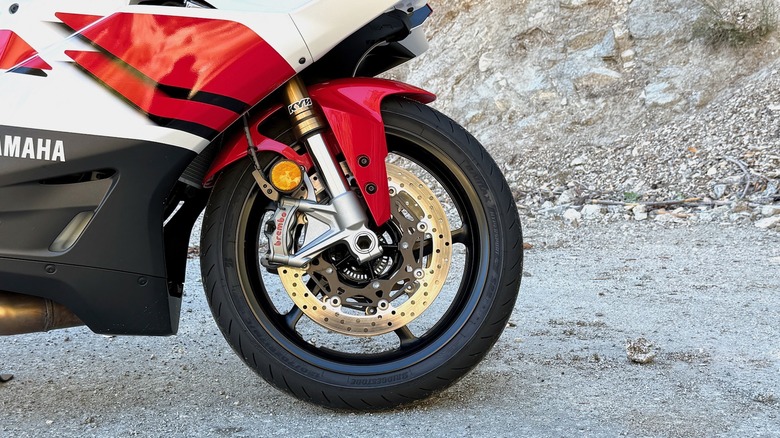
Once I'd spent a bit of time riding the R9 and getting used to the various settings (more on that in a moment), I got more comfortable leaning, cornering, and going full-throttle a few times, and it didn't disappoint. The brakes, both with good feedback from the front lever and the rear pedal, were extremely strong. Even after a few hours of enthusiastic riding, they didn't fade. I'd only bother changing out these pads if I were serious about regular track days.
The clutch lever has a long travel before it grabs, but that really only mattered when I was trying to accelerate from a stop. Otherwise, rolling up or down through the gears via the six-speed and its light quick shifter was a breeze.
 Travis Langness/SlashGear
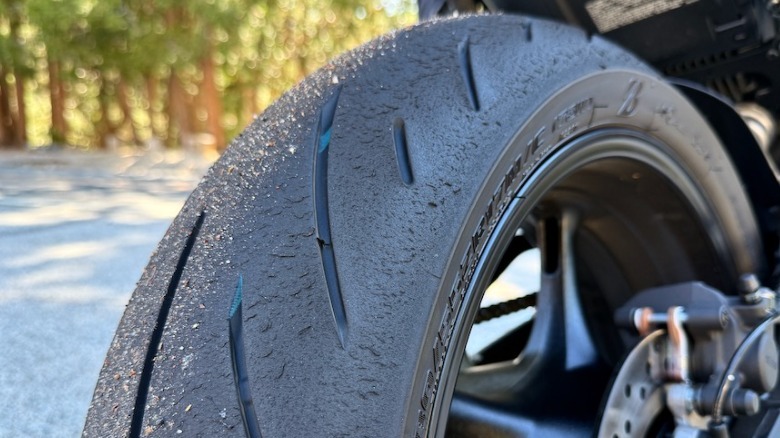
Everything about the R9, especially at speed, felt smooth. The throttle application, in all the available power delivery modes, was smooth rather than jerky or twitchy. The brakes, while powerful enough to bring the bike to a stop quickly, weren't grabby. Turn-in required some extra intentional force compared to smaller, lighter bikes, which made it feel a bit heavy or lazy at first, but eventually I got used to the R9's dynamics and gave it a bit more lean, which was followed up by a rewarding experience provided by the Bridgestone Battlax Hypersport tires and their excellent mid-corner grip — all a part of the smooth series of inputs and feedback.
Making adjustments and riding it to all the right places
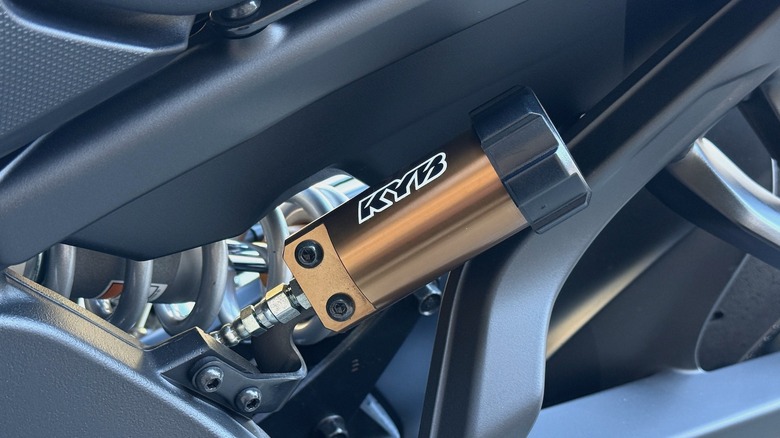
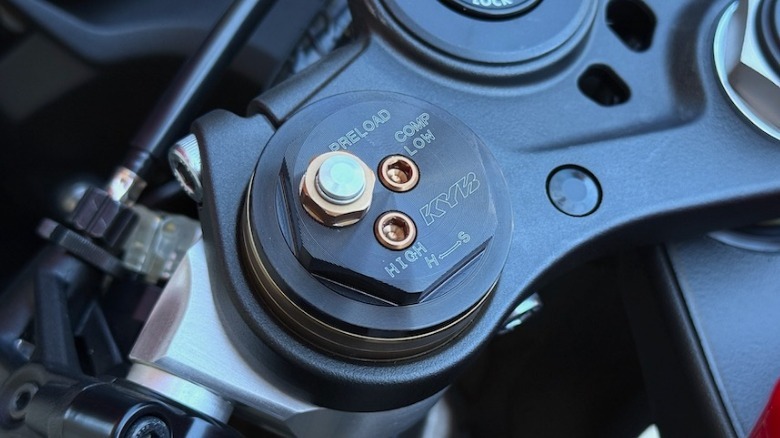
Up front, the R9 gets a 43mm KYB fork, adjustable preload, adjustable high- and low-speed compression and rebound, and a total travel of 4.7 inches. In the rear, a KYB shock with all the same adjustments comes standard, with a near-matching 4.6 inches of travel. In short, you can adjust the R9's suspension in a number of ways, and it has enough travel to soak up most bumps.
 Travis Langness/SlashGear
In practice, that meant that mid-corner surface changes didn't bounce the R9 around much. On my rides around Los Angeles, freeway surface imperfections were pretty strongly felt, as were expansion joints, but most of the little stuff didn't bother me in the saddle. The seat itself, while pretty simple, was comfortable enough for regular rides without giving me a sore butt. Only on the worst roads would I call the R9's suspension and ride quality stiff. Everywhere else, it was as firm as you'd expect, but not uncomfortable. The riding position, however, was another story.
Perched up on top
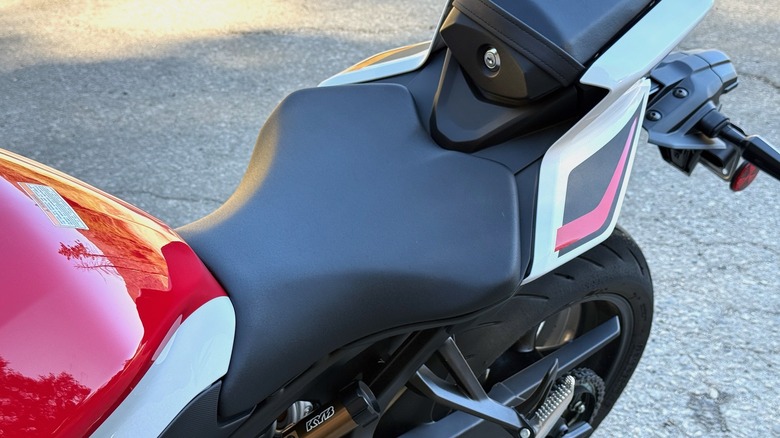
The R9's seat height is 32.7 inches, and while I've got a 30-inch inseam, I could pretty easily swing a leg over the seat or flat-foot the bike at a stop sign when I was wearing any sort of moto boots. Once the bike was underway and my feet came off the ground, though, things felt a bit cramped. The R9's rear sets felt perched relatively high, even for a sport bike. With my feet so high up, I found myself needing to extend my legs and stretch more often than I would on most short rides. Anything over an hour and I'd get pretty tight in the knees.
The benefit of this high riding position was being able to easily reach the handlebars and easily rotate my body around the tank if I assumed a more leaned-over riding position. Approaching a corner, turning my head, and adjusting my body position was an easy task. The longer I rode, though, the more track-focused this riding position felt. The R9's tank is relatively long from front to back, but it's also slender and easy to move around on: great if you're tucking your helmet below the wind flowing over the windscreen, but less ideal if you just want to commute for 30 to 60 minutes.
It's as modern as you need it to be
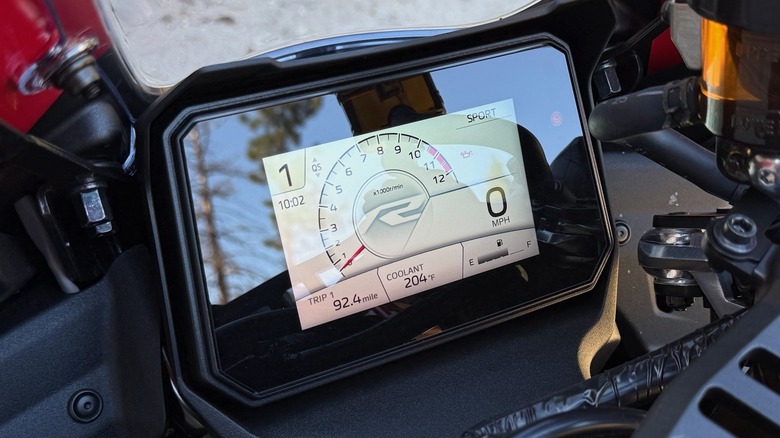
Displaying all the important numbers and navigating all the important electronically-controllable settings on the R9 is a five-inch rider display. You can connect your smartphone to the screen, and it shows off the various rider controls like power delivery, traction control, and wheelie control. Adjusting engine braking is also on the menu, as well as launch control, and naturally, there's cruise control, too.
I used cruise control on the highway a few times, and it worked well (it can be engaged at speeds over 25 mph in gears above third), without any jerkiness. When the bike's systems sensed a need to accelerate up a hill, for instance, it did so with smooth application of the throttle.
 Travis Langness/SlashGear
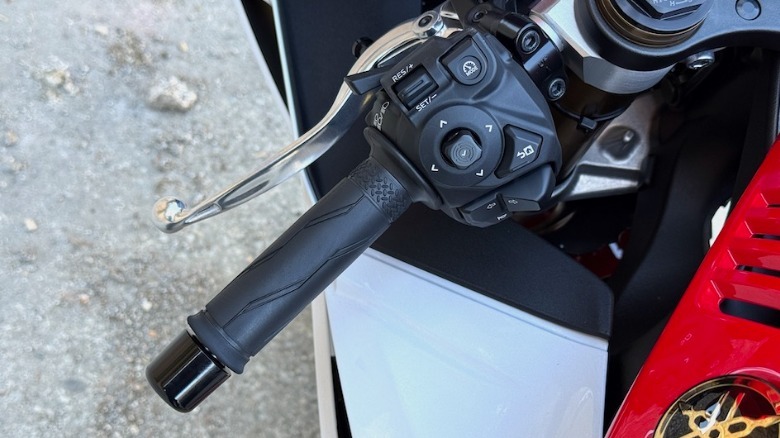
Scrolling through the various menus and selecting my preferred settings was pretty easy. When I took delivery of the bike, the Yamaha folks went over all the important stuff, but even without a guide, the left-hand thumb controls are mostly self-explanatory — any new rider should be able to get used to them on their first few rides. The screen itself was easy to see, uncrowded by excess information, and it didn't get blasted out in the sun, either.
It's the little things
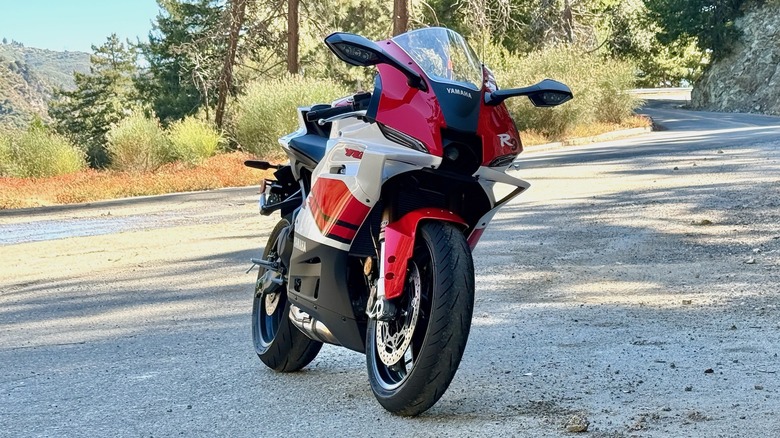
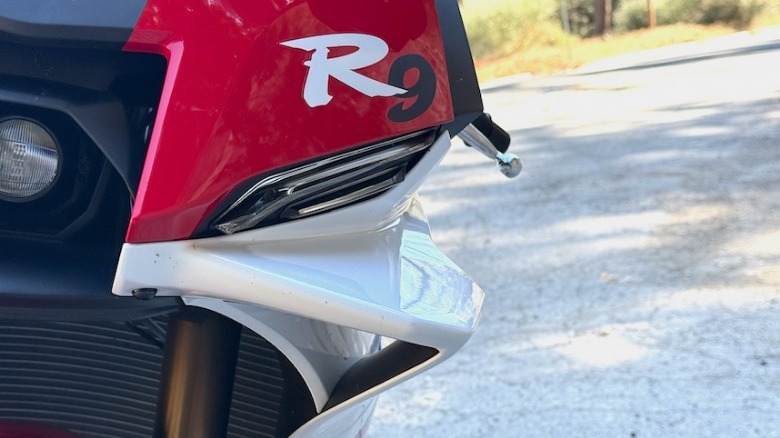
More than just liking the way the R9 performed and rode, I liked the look of it, too. And during my test of the bike, I got time to appreciate the little details. Things grew on me, like the look of the winglets on the front fairing. I wasn't a fan of them in photos, but riding the bike and seeing it parked, they blend pretty well into the overall shape of the R9 and become much less offensive.
 Travis Langness/SlashGear
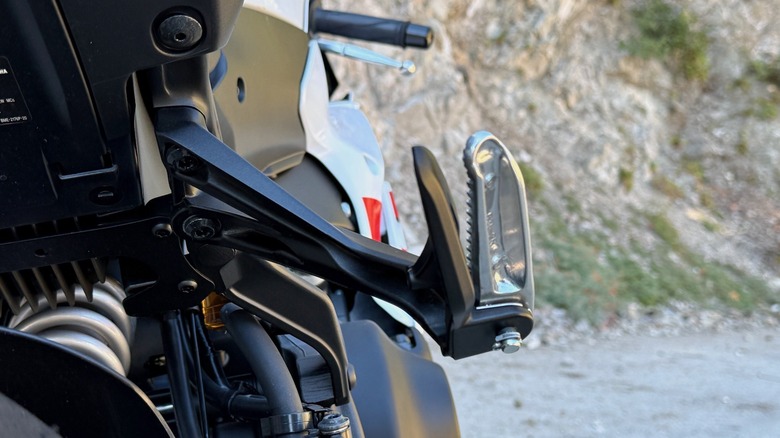
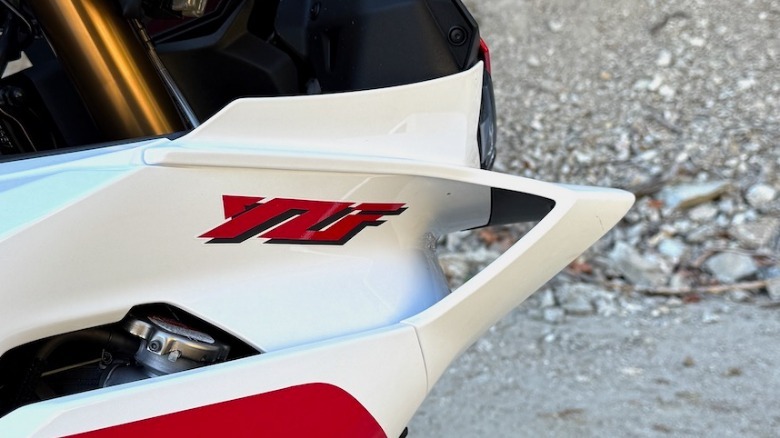
Checking out all the various nuts and bolts, I noticed impressive build quality, but also that the passenger pegs weren't attached to anything other than the rear subframe. Why would that matter? Well, on a lot of other bikes, sport bikes in particular, the rear brake fluid reservoir is mounted to the passenger pegs, meaning some sort of bracket has to be attached if you plan on removing the pegs.
Want to go racing? Lose a pound or two and improve aero by taking off the pegs? Well, you can do that on the R9 without having to move the rear brake reservoir. Just four bolts in and out and you've got a one-rider bike.
 Travis Langness/SlashGear
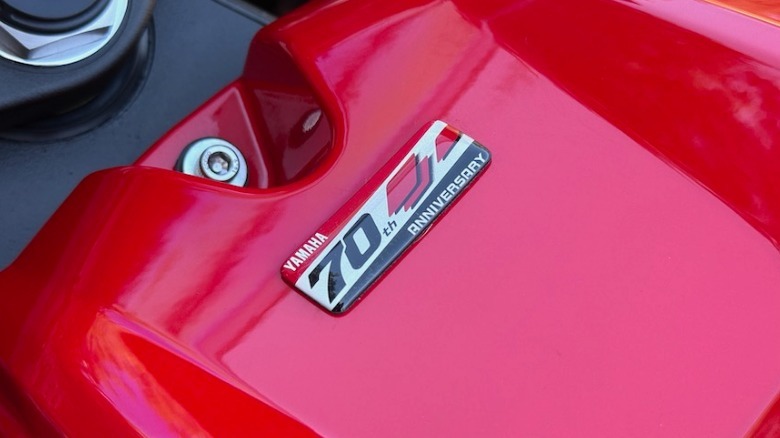
The Yamaha's 70th Anniversary color combo grew on me, too. Don't get me wrong, I love Yamaha blue, but the red and white combination is excellent as well. Several strangers complimented the bike while I was riding it, commenting on the color scheme and saying that it reminded them of bikes they once owned. Yamaha nailed the nostalgia and the little details on this one.
2026 Yamaha R9 Review verdict
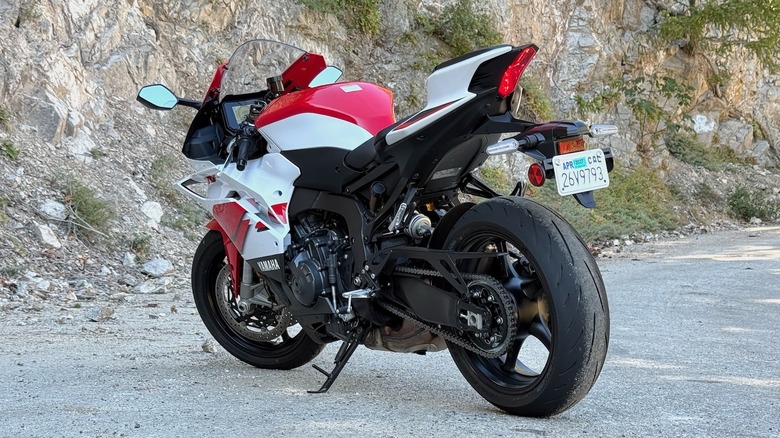
The R9 isn't an R1, but it's worth remembering that it isn't supposed to be. It has its own unique characteristics, and it's also a much less expensive machine. While its engine doesn't share the high-revving attitude of Yamaha's most popular sport bikes, the R9 does have a lot of impressive hardware and software to go along with some pretty good looks and riding dynamics. Fully adjustable suspension, large 320- and 220-mm front and rear brakes, and the big rider display screen are all part of a pretty comprehensive package.
The 2026 Yamaha R9 has a starting price of $13,199 (including a $700 destination fee), which I think is totally reasonable. There are some pretty attractive bikes from other manufacturers, however, especially when you start the price-for-horsepower comparisons. The high-revving Honda CBR600RR has about the same horsepower as the R9, and it's priced lower at just $12,699, which is appealing, but the Honda is a far less modern bike. The Suzuki GSX-8R and the GSX-R750 flank the R9 in terms of both price and performance, so they should be considered, too.
Probably the most compelling rival is the latest ZX-6R, which is priced below the R9 and has more horsepower. You'll have to rev the Kawasaki out a bit higher to tap into that power, but the juice is certainly worth the squeeze.