

How Does A Laser Car Wash Work & Is It Safe For Your Vehicle?
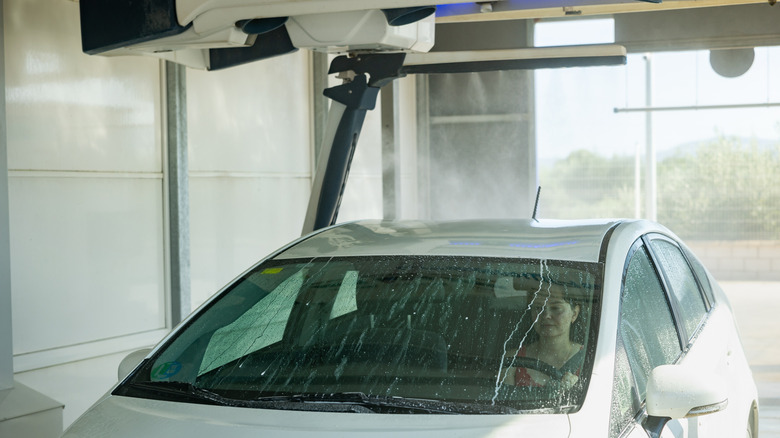
If you are taking your car out for a wash, choosing the type of car wash you should visit can be confusing. With so many options, each offering distinct benefits and downsides, you may have a hard time picking one. But if you want a touchless experience, meaning no brushes or materials come in direct contact with your car's surface, a laser car wash can be a good choice.
As surprising as it may sound, a laser car wash doesn't actually use lasers to clean your car. It's simply an automated, touchless car wash, where lasers are used to scan your vehicle and assess its precise shape and measurements. This allows the setup to auto-adjust according to the car, instead of applying the same set of parameters every time. As soon as your car enters the bay, a stream of water provides an initial pre-soak. Right after that, the system uses laser beams and 3D scanning technology to identify the size and precise shape of your vehicle. Based on this data, the system automatically fine-tunes the spray angle for the water nozzles, ensuring a touchless wash.
After the system is adjusted, high-pressure nozzles spray water on your car, followed by cleaning solutions, and another round of water spray to remove any residue. At the end, powerful air blowers are used to dry your car. During the entire process, no machine, brush, or cloth comes in direct contact with your car. And since it's largely automated, you are unlikely to need assistance from anyone.
Laser car washes can be a better choice for some
Laser car washes, or the touchless technology in general, can be a better choice for car owners who prefer a quick and convenient experience. It typically takes 5-7 minutes for a laser car wash to wash your vehicle, from the initial water spray to the final blow-dry. So, when time is of the essence, say between running errands, a laser car wash should do. They're also safer than standard car washes, where you risk automatic brushes scratching your car. Since there's no physical contact between the setup and the car, your vehicle typically leaves the bay without any scratches or swirl marks. That's why people often recommend laser car washes for new cars.
All that said, laser car washes have a few downsides. The biggest problem is that the final result isn't always as good. Generally speaking, laser car washes aren't as effective when it comes to dirtier vehicles. You may still notice dirt or marks, especially in areas that are harder to reach. Apart from that, the car's surface often has water marks post-cleaning, unless you pat the surface dry right away. There's also the possibility of high-pressure water peeling off the paint if the car's surface is already flaky. So, for older vehicles, this car washing technique may not be the best choice. Lastly, laser car washes won't help you with the interiors, and if that's something you need, it's better to go with full-service car washes.
They are generally safe
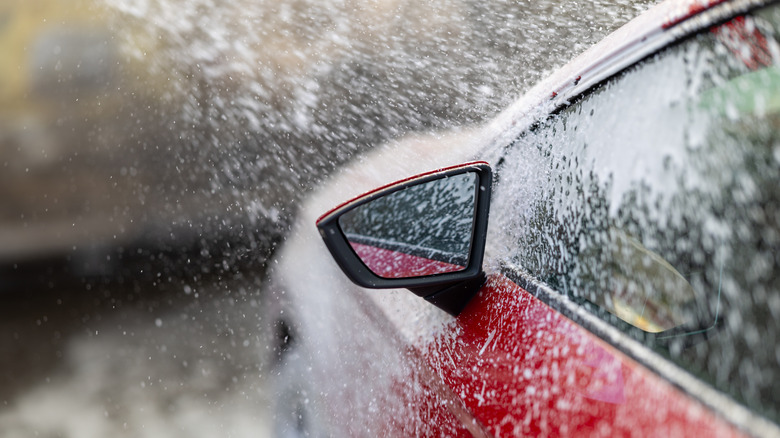
In general, laser car washes are considered safe. First, a properly functioning laser car wash won't leave scratches or aggravate the paint's surface, as is sometimes the case with standard car washes. It's also worth noting that the lasers used for 3D scanning are advanced and highly precise, ensuring that your car remains safe throughout the process. Some car owners, however, claim that touchless, laser car washes use stronger chemicals to compensate for the lack of physical scrubbing, and repeated exposure may impact the paint and plastic or rubber parts over time. It may not be a problem if you visit the car wash occasionally, though. Similarly, car manufacturers recommend against using high-pressure washers close to the cameras and sensors to avoid damage.
Keep in mind that DIY, at-home cleaning works too, and should be the preferred approach if you have the time and space for it. With the right car cleaning tips, you get a safer experience, and the vehicle looks new. A laser car wash, on the other hand, suits you if you're short on time, want a quick wash, and don't mind leftover dirt patches and water marks. Some car owners also prefer touchless, laser car washes when the weather is cold, and in summer they wash their car at home, which is also a feasible approach. It ultimately comes down to your preferences and requirements.