

What Happens To Buoys In Winter When Water Freezes Over?
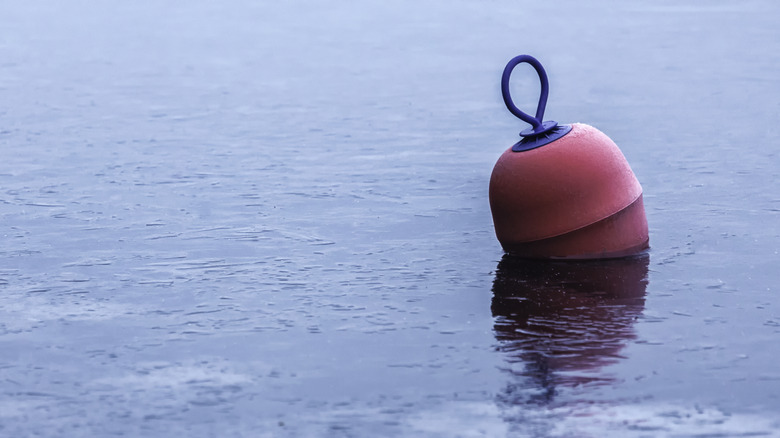
Buoys are like the traffic signs and signals of the water. They provide boaters with important information regarding everything from the location of channels to the presence of hazardous conditions nearby. Naturally, given the vital role buoys play, you might wonder how they survive the elements. For example, what happens to buoys in the colder months, when the waters they float in ice over?
There's no universal answer to this question. Sometimes, the U.S. Coast Guard's Aid to Navigation Team removes buoys from the water in anticipation of the winter season. The Canadian Coast Guard has similar policies. In some instances, they replace these buoys with upgrades or seasonal buoys that can withstand ice and other such conditions.
Some ice-resistant buoys can even be used indefinitely. Specifically, the Canadian Coast Guard has begun replacing some buoys in the St. Lawrence River with long-term buoys that can stand up to ice and remain in the same spot throughout the winter. These buoys require less maintenance than other types, potentially saving both time and money.
Ice can cause problems for buoys
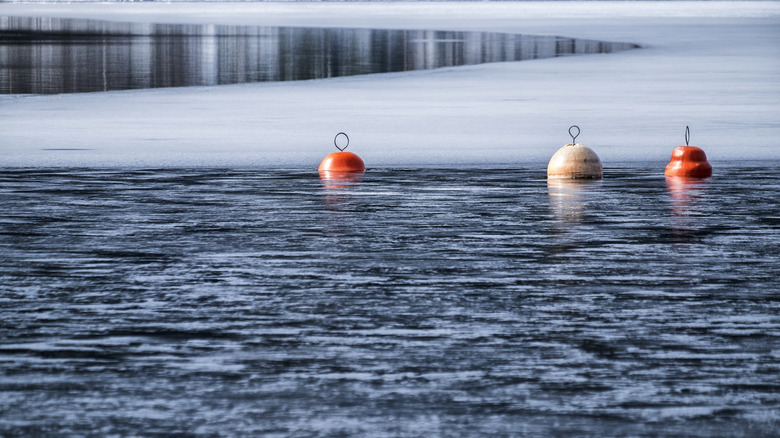
Not all buoys are designed to function properly in winter conditions. Ice and other such factors can significantly harm buoys if they're not removed in a timely manner.
For example, accumulation of ice can interfere with a buoy's sensors. In some cases, ice floes can carry buoys away from their original positions, rendering them useless to boaters who rely on them for navigation or safety purposes. Even if this doesn't happen, ice can build up to the point where buoys lose their stability and turn horizontal. This may negatively affect everything from proper equipment functioning to a buoys' visibility.
The Coast Guard and other equivalent organizations from countries around the world have plans in place accordingly. Again, these plans can involve temporarily removing buoys or permanently replacing them with upgrades.
Of course, not all buoys are created equal. Some are meant to stay in place for long periods of time out in the deep ocean. Others are research buoys that drift throughout the ocean and collect data. In waterways where winter ice poses a threat, navigational and research buoys may be removed seasonally or replaced with smaller, ice-resistant alternatives.