

Mission Accomplished: US Supercarrier Kennedy Completes First Aircraft Recovery
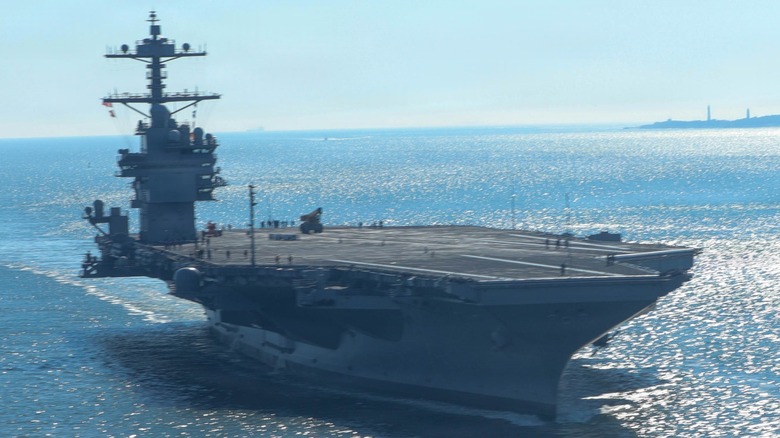
The USS John F. Kennedy (CVN-79) is the second of the Gerald R. Ford-class carriers, and while it was christened in 2019, it's not yet in active service. This is due to several factors, including delays, but it's also not finished with testing. That said, since its delivery, the Kennedy has reached several milestones on its way to full operation. In 2022, it successfully tested the Electromagnetic Aircraft Launch System (EMALS), which was followed by sled tests in 2024, so the Kennedy hasn't been sitting idly by and has gone through several advancements.
One of the carrier's biggest achievements finally came in October 2026 when the first F-35C Lightning II made a successful cable arrest and EMALS launch. The successful recovery was the carrier's first, and since Congress has mandated that it be fully capable of deploying the F-35C when it begins full operations, it's a significant milestone for the carrier that's been under construction since its keel was first laid in 2015. The landing demonstrated the carrier's capability, taking it one step further toward completion.
The carrier was mandated to complete this pivotal step prior to its post-shakedown availability, which is when it's delivered to the Navy for operational use. As of this writing, that's scheduled for sometime in Spring 2027. It comes after the USN conducted preliminary acceptance of the Kennedy on September 29, 2026, following the successful completion of its Acceptance Trials, which concluded in August. Once the Navy begins operating the carrier, there will no doubt be numerous F-35Cs housed in its hangar bays.
The USS John F. Kennedy and the F-35C Lightning II were made for each other
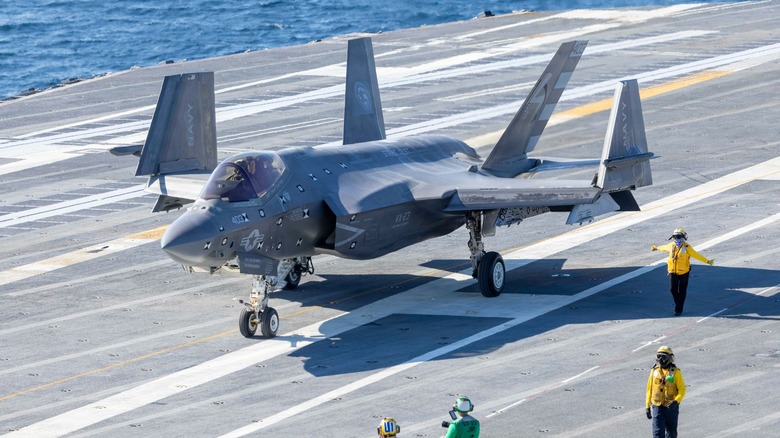
The F-35C is the USN variant of the 5th-generation Joint Strike Fighter aircraft, so having one land and take off from the USS John F. Kennedy was a major step in the carrier's road to full activation. The F-35C differs from the other two variants in that its wingtips fold up, ensuring it takes up as little space below deck as possible. Additionally, it has stronger landing gear and an overall stronger airframe that can put up with the rigors of aircraft carrier launch and recovery operations.
There are other minor differences, but for the most part, it's ruggedized for operation around saltwater and is one of the USN's primary multirole fighters. For its part, the Kennedy was designed with the F-35C in mind, as it boasts all of the necessary features required to operate the advanced aircraft. The first ship in the class, the USS Gerald R. Ford (CVN-78), was designed prior to the full implementation of the F-35C's shipboard standardization, which pushed several upgrades further in time to future retrofits.
For that reason, the Ford operates F/A-18 Super Hornets as the backbone of its air wing, while the Kennedy will be ready from day one to operate the F-35C. In fact, the October 13, 2026 landing of an F-35C on the Kennedy marked the first time the aircraft has landed on a Ford-class carrier, showing just how well suited the new ship is to the nation's second 5th-generation fighter jet.